Division of Pharmacotherapy and Experimental Therapeutics, Eshelman School of Pharmacy, University of North Carolina at Chapel Hill, Chapel Hill, North Carolina 27599, United States.
Department of Microbiology, UNC School of Medicine, University of North Carolina at Chapel Hill, Chapel Hill, North Carolina 27599, United States.
Mol Pharm. 2023 Sep 4;20(9):4491-4504. doi: 10.1021/acs.molpharmaceut.3c00199. Epub 2023 Aug 17.
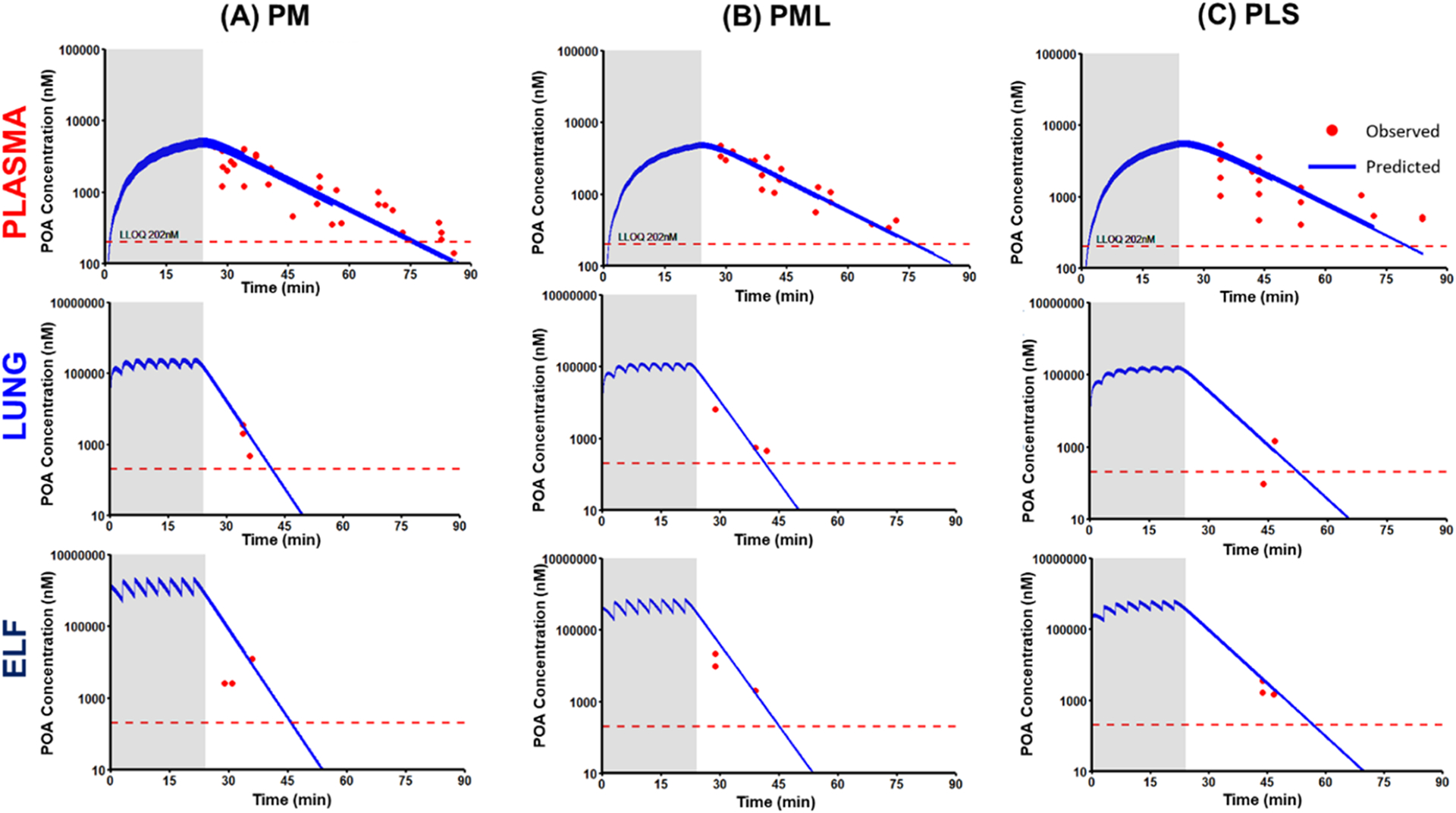
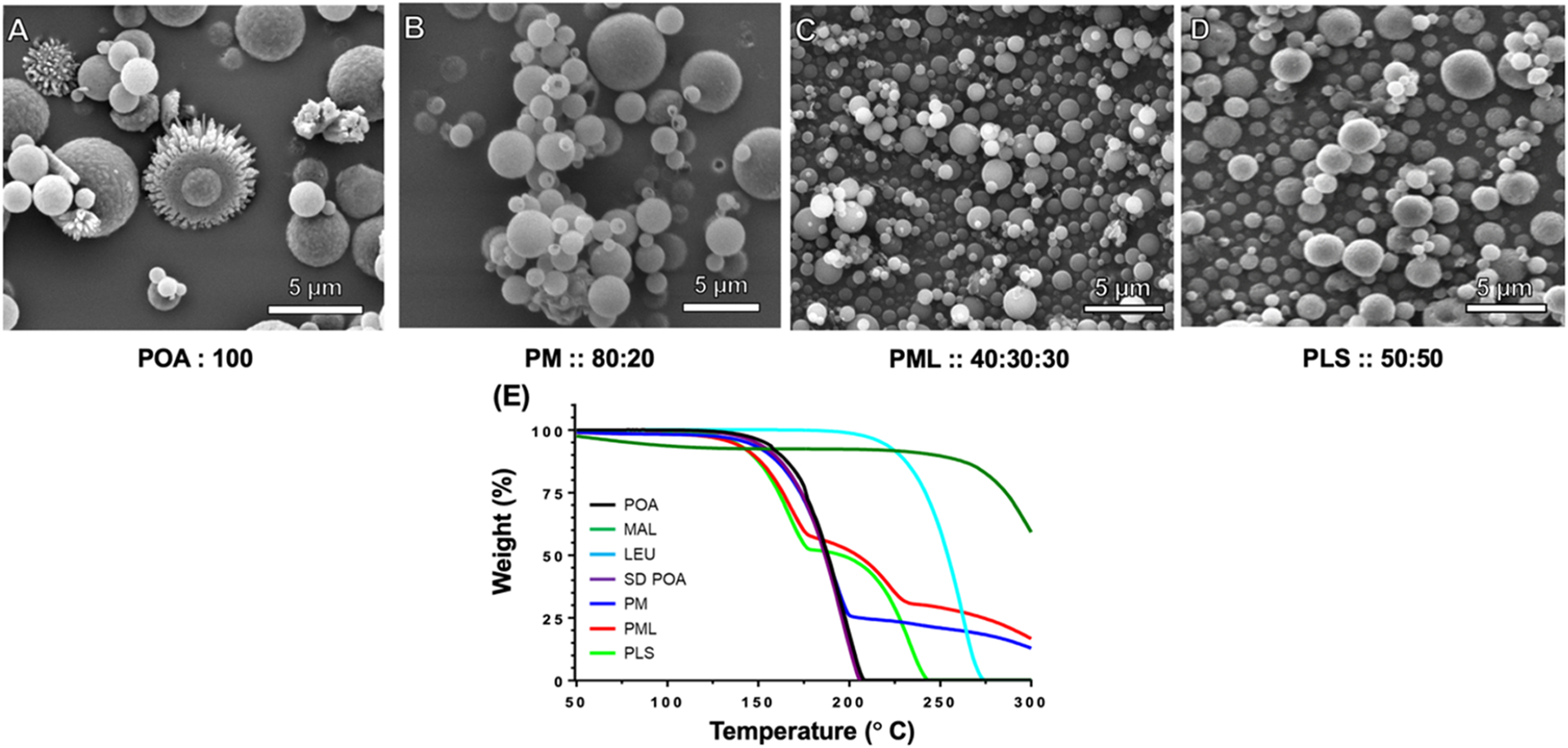
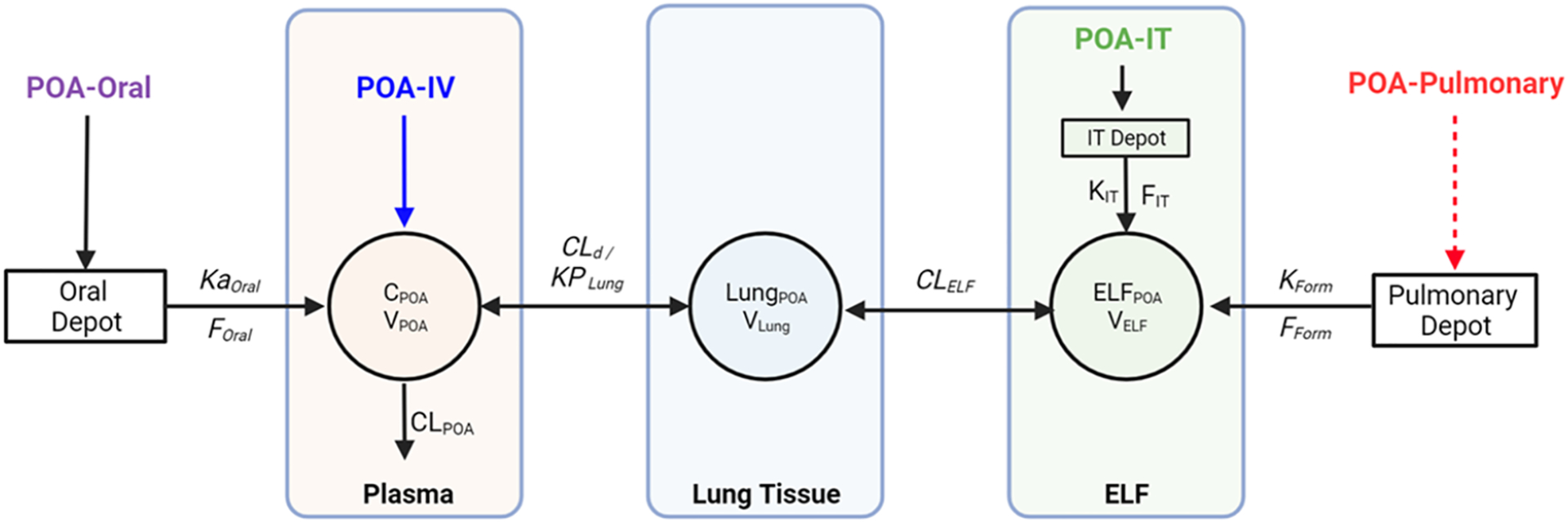
Tuberculosis (TB), caused by (), remains a leading cause of death with 1.6 million deaths worldwide reported in 2021. Oral pyrazinamide (PZA) is an integral part of anti-TB regimens, but its prolonged use has the potential to drive the development of PZA-resistant . PZA is converted to the active moiety pyrazinoic acid (POA) by the pyrazinamidase encoded by , and mutations in are associated with the majority of PZA resistance. Conventional oral and parenteral therapies may result in subtherapeutic exposure in the lung; hence, direct pulmonary administration of POA may provide an approach to rescue PZA efficacy for treating -mutant PZA-resistant . The objectives of the current study were to (i) develop novel dry powder POA formulations, (ii) assess their feasibility for pulmonary delivery using physicochemical characterization, (iii) evaluate their pharmacokinetics (PK) in the guinea pig model, and (iv) develop a mechanism-based pharmacokinetic model (MBM) using PK data to select a formulation providing adequate exposure in epithelial lining fluid (ELF) and lung tissue. We developed three POA formulations for pulmonary delivery and characterized their PK in plasma, ELF, and lung tissue following passive inhalation in guinea pigs. Additionally, the PK of POA following oral, intravenous, and intratracheal administration was characterized in guinea pigs. The MBM was used to simultaneously model PK data following administration of POA and its formulations via the different routes. The MBM described POA PK well in plasma, ELF, and lung tissue. Physicochemical analyses and MBM predictions suggested that POA maltodextrin was the best among the three formulations and an excellent candidate for further development as it has: (i) the highest ELF-to-plasma exposure ratio (203) and lung tissue-to-plasma exposure ratio (30.4) compared with POA maltodextrin and leucine (75.7/16.2) and POA leucine salt (64.2/19.3) and (ii) the highest concentration in ELF (: 171 nM) within 15.5 min, correlating with a fast transfer into ELF after pulmonary administration (: 22.6 1/h). The data from the guinea pig allowed scaling, using the MBM to a human dose of POA maltodextrin powder demonstrating the potential feasibility of an inhaled product.
结核病(TB)由()引起,仍然是全球死亡的主要原因,2021 年全球报告有 160 万人死亡。口服吡嗪酰胺(PZA)是抗结核方案的重要组成部分,但长期使用可能会导致 PZA 耐药性的发展。PZA 由编码的吡嗪酰胺酶转化为活性成分吡嗪酸(POA),而与 PZA 耐药性相关的大多数突变都位于中。常规的口服和胃肠外治疗可能导致肺部治疗浓度不足;因此,直接肺部给予 POA 可能为治疗 -突变型 PZA 耐药性提供一种挽救 PZA 疗效的方法。本研究的目的是:(i)开发新型的 POA 干粉制剂,(ii)通过理化性质分析评估其用于肺部给药的可行性,(iii)在豚鼠模型中评估其药代动力学(PK),(iv)使用 PK 数据建立基于机制的药代动力学模型(MBM),以选择在肺上皮衬液(ELF)和肺组织中提供足够暴露的制剂。我们开发了三种用于肺部给药的 POA 制剂,并通过豚鼠被动吸入对其理化性质进行了表征,同时检测了它们在血浆、ELF 和肺组织中的 PK。此外,还在豚鼠中描述了 POA 经口服、静脉内和气管内给药后的 PK。MBM 用于同时对不同途径给予 POA 及其制剂后的 PK 数据进行建模。MBM 很好地描述了 POA 在血浆、ELF 和肺组织中的 PK。理化分析和 MBM 预测表明,POA 麦芽糊精是三种制剂中最好的一种,并且是进一步开发的优秀候选物,因为它具有:(i)与 POA 麦芽糊精和亮氨酸(75.7/16.2)和 POA 亮氨酸盐(64.2/19.3)相比,ELF 与血浆的暴露比(203)和肺组织与血浆的暴露比(30.4)最高;(ii)ELF 中的浓度最高(171 nM),在 15.5 分钟内,这与肺部给药后 ELF 中的快速转移(22.6 1/h)有关。来自豚鼠的数据允许使用 MBM 对人类 POA 麦芽糊精粉末剂量进行缩放,表明吸入产品的潜在可行性。