Maffezzini Nicole, Turner Simon P, Bolhuis J Elizabeth, Arnott Gareth, Camerlink Irene
Institute of Genetics and Animal Biotechnology, Polish Academy of Sciences, Jastrzębiec, Poland.
Animal Behaviour and Welfare, Animal and Veterinary Sciences Department, Scotland's Rural College (SRUC), West Mains Rd., Edinburgh, EH9 3JG, UK.
Front Zool. 2023 Aug 17;20(1):28. doi: 10.1186/s12983-023-00508-w.
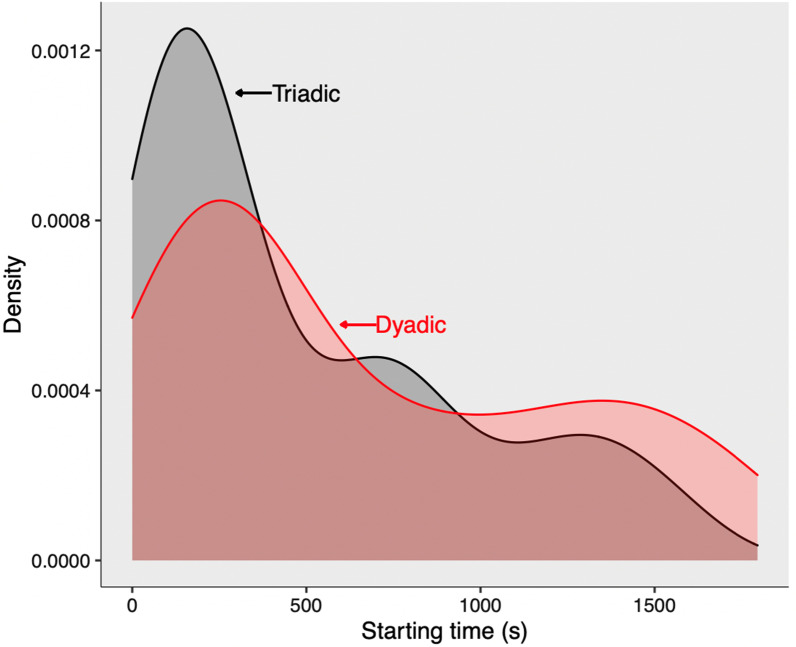
Third-party interference in agonistic contests entails a deliberate intervention in an ongoing fight by a bystanding individual (third party) and may be followed by post-conflict social behaviour to provide support to a specific individual. The mechanisms behind third-party intervention are, however, still largely understudied. The aim of this study was to investigate third-party interference, with the predictions that (1) the interferer derives benefits from its action by winning a fight, (2) that patterns of intervention depend on familiarity, (3) that dyadic fights last longer than triadic fights, and (4) that interferers engage in non-agonistic social behaviours afterwards. Pre-pubertal pigs (Sus scrofa) (n = 384) were grouped with one familiar and four unfamiliar conspecifics (all non-kin) to elicit contests for dominance rank. Third-party interference was analysed for the first 30 min after grouping, along with the behaviour (nosing or aggression), contest duration, contest outcome, and interferer behaviour after the fight (post-conflict social behaviour).
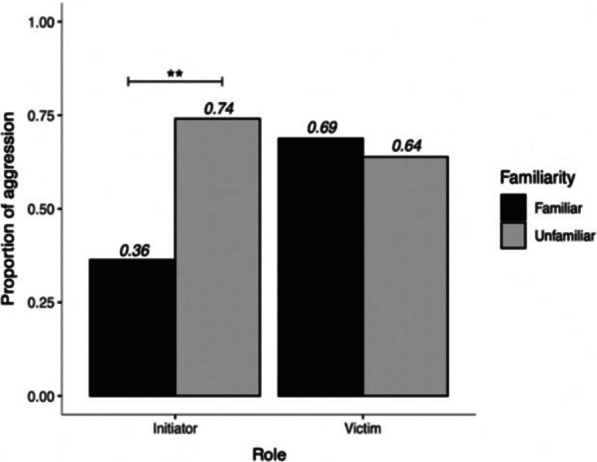
Three types of interference were observed: non-agonistic involvement (nose contact) by the interferer in a dyadic fight; a triadic fight with each of three contestants fighting one opponent at a time; and triadic fights with two opponents jointly attacking the third one (two-against-one fights). The likelihood of a third-party intervention to occur did not depend on the presence of a familiar animal in the fight. However, once intervention was triggered, interferers attacked unfamiliar fight initiators more than familiar ones. Two-against-one fights lasted longer than other triadic fights and occurred more often when both initial contestants were females. Results of 110 triadic fights (out of 585 fights in total) revealed that interferers were more likely to win compared to the initial opponents at equal body weight. The most common post-conflict behaviour displayed by the interferer was agonistic behaviour towards another group member, independently of familiarity.
The general lack of discrimination for familiarity suggests interference is not driven by support to familiar individuals in pigs. The results show that intervening in an ongoing fight gives the interferer a high chance of contest success and may be a strategy that is beneficial to the interferer to increase its dominance status.
第三方对争斗性竞争的干预指的是旁观者个体(第三方)对正在进行的争斗进行蓄意干涉,冲突后可能会有社交行为来支持特定个体。然而,第三方干预背后的机制在很大程度上仍未得到充分研究。本研究的目的是调查第三方干预,并预测:(1)干涉者通过赢得争斗从其行为中获益;(2)干预模式取决于熟悉程度;(3)二元争斗比三元争斗持续时间更长;(4)干涉者随后会参与非争斗性社交行为。将青春期前的猪(野猪)(n = 384)与一只熟悉的和四只不熟悉的同种个体(均无亲缘关系)分组,以引发争夺优势地位的竞争。对分组后的前30分钟内的第三方干预进行分析,同时分析行为(拱鼻或攻击)、竞争持续时间、竞争结果以及争斗后干涉者的行为(冲突后社交行为)。
观察到三种干预类型:干涉者在二元争斗中进行非争斗性介入(鼻接触);三元争斗,三名竞争者依次与一名对手争斗;以及三元争斗中两名对手联合攻击第三名对手(二对一争斗)。第三方干预发生的可能性并不取决于争斗中是否有熟悉的动物。然而,一旦触发干预,干涉者攻击不熟悉的争斗发起者的次数多于熟悉的发起者。二对一争斗比其他三元争斗持续时间更长,且在最初的两名竞争者均为雌性时更常发生。110场三元争斗(总共585场争斗)的结果显示,在体重相当的情况下,干涉者比最初的对手更有可能获胜。干涉者最常见的冲突后行为是对另一个群体成员的争斗行为,与熟悉程度无关。
总体上缺乏对熟悉程度的区分表明,猪的干预并非由对熟悉个体的支持所驱动。结果表明,介入正在进行的争斗会使干涉者有很高的机会在竞争中获胜,这可能是一种对干涉者有利的策略,可提高其优势地位。