Liebler E M, Pohlenz J F, Woodmansee D B
Infect Immun. 1986 Oct;54(1):255-9. doi: 10.1128/iai.54.1.255-259.1986.
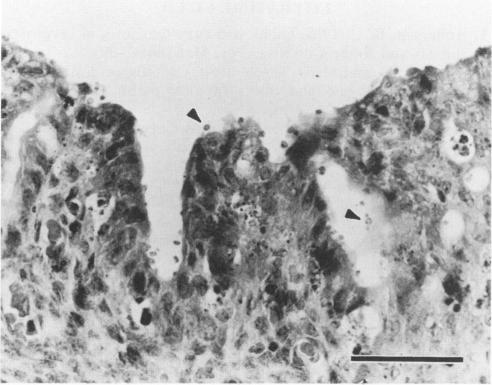
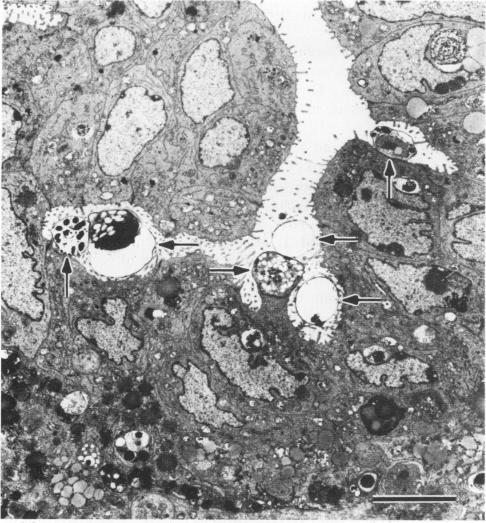
Inoculation of adult, female BALB/c mice with 2 X 10(5) bleach-treated Cryptosporidium sp. oocysts isolated from calf feces resulted in infection of the uterine mucosa in more than 50% of the animals. Cryptosporidium sp. completed the entire life cycle in the uterus, and infectious oocysts were passed into the vagina. Two methods of application were used to establish intrauterine infection. The inoculum was either injected into the uterus after abdominal surgery or intracervically instilled. Mice were susceptible at all phases of the sexual cycle, but the highest infection rates were obtained during estrus and diestrus. Parasites were demonstrated as early as 5 days postinfection. Phagocytic cells in the uterine lumen and in the vagina contained Cryptosporidium sp. Phagocytosis may be an important immune response and a mechanism of parasitic clearance. These results suggest that Cryptosporidium sp. is a potential pathogen of the reproductive tract.
用从牛粪便中分离出的经漂白处理的2×10⁵个隐孢子虫属卵囊接种成年雌性BALB/c小鼠,导致超过50%的动物子宫黏膜感染。隐孢子虫属在子宫内完成整个生命周期,感染性卵囊排入阴道。采用两种接种方法建立子宫内感染。接种物要么在腹部手术后注入子宫,要么经宫颈灌注。小鼠在性周期的所有阶段均易感,但在发情期和间情期感染率最高。感染后最早5天即可发现寄生虫。子宫腔和阴道中的吞噬细胞含有隐孢子虫属。吞噬作用可能是一种重要的免疫反应和寄生虫清除机制。这些结果表明隐孢子虫属是生殖道的潜在病原体。