Department of Environmental Medicine and Public Health, Icahn School of Medicine at Mount Sinai, New York, New York 10029, United States.
Instructional Technology Group,Icahn School of Medicine at Mount Sinai, New York, New York 10029, United States.
Environ Sci Technol. 2023 Nov 21;57(46):18139-18150. doi: 10.1021/acs.est.3c00848. Epub 2023 Aug 18.
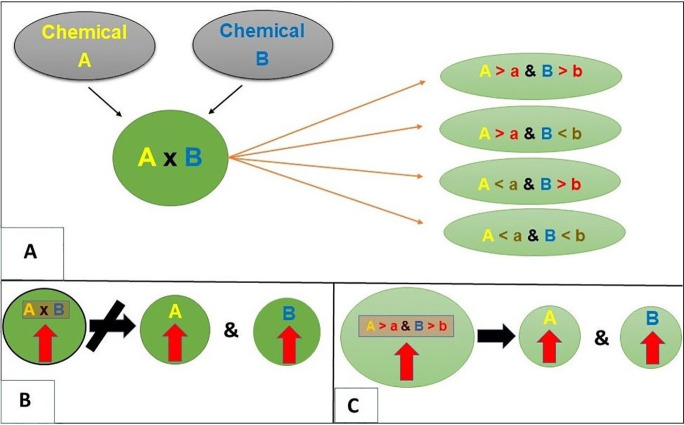
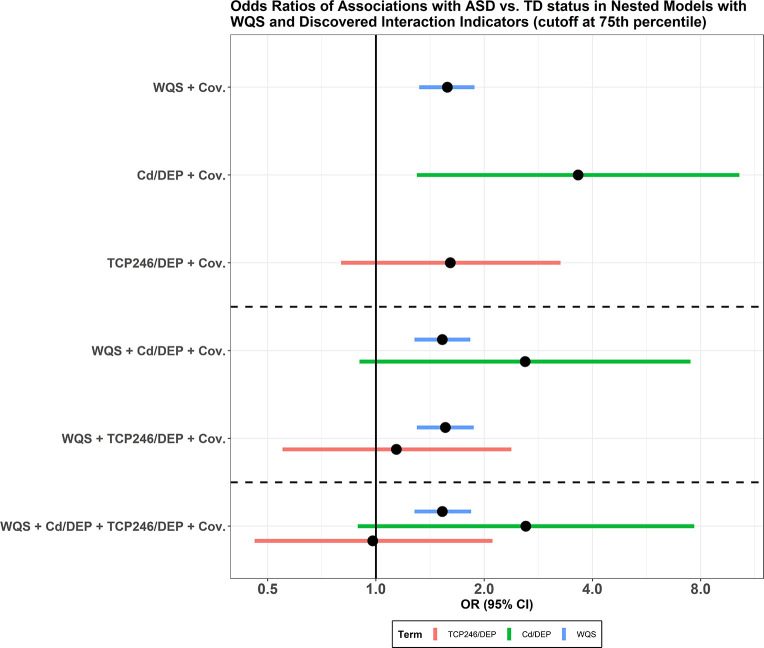
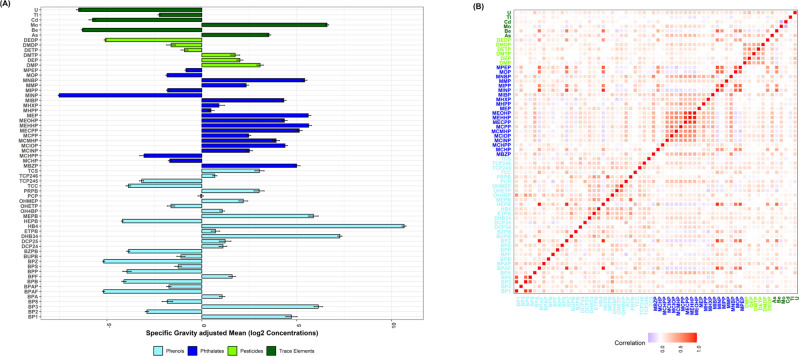
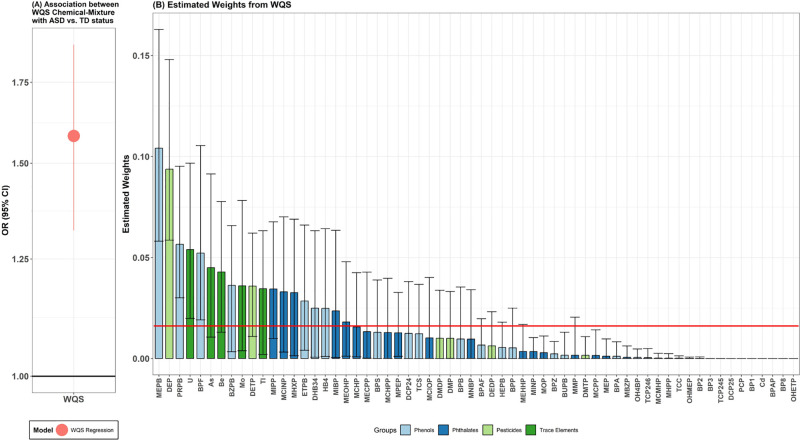
A growing body of literature suggests that developmental exposure to individual or mixtures of environmental chemicals (ECs) is associated with autism spectrum disorder (ASD). However, investigating the effect of interactions among these ECs can be challenging. We introduced a combination of the classical exposure-mixture Weighted Quantile Sum (WQS) regression and a machine-learning method termed Signed iterative Random Forest (SiRF) to discover synergistic interactions between ECs that are (1) associated with higher odds of ASD diagnosis, (2) mimic toxicological interactions, and (3) are present only in a subset of the sample whose chemical concentrations are higher than certain thresholds. In a case-control Childhood Autism Risks from Genetics and Environment (CHARGE) study, we evaluated multiordered synergistic interactions among 62 ECs measured in the urine samples of 479 children in association with increased odds for ASD diagnosis (yes vs no). WQS-SiRF identified two synergistic two-ordered interactions between (1) trace-element cadmium (Cd) and the organophosphate pesticide metabolite diethyl-phosphate (DEP); and (2) 2,4,6-trichlorophenol (TCP-246) and DEP. Both interactions were suggestively associated with increased odds of ASD diagnosis in the subset of children with urinary concentrations of Cd, DEP, and TCP-246 above the 75th percentile. This study demonstrates a novel method that combines the inferential power of WQS and the predictive accuracy of machine-learning algorithms to discover potentially biologically relevant chemical-chemical interactions associated with ASD.
越来越多的文献表明,个体或环境化学物质(ECs)混合物的发育暴露与自闭症谱系障碍(ASD)有关。然而,研究这些 ECs 之间相互作用的影响可能具有挑战性。我们引入了经典暴露混合物加权分位数和(WQS)回归和一种称为Signed iterative Random Forest(SiRF)的机器学习方法的组合,以发现具有以下特征的 ECs 之间的协同相互作用:(1)与 ASD 诊断的更高几率相关,(2)模拟毒理学相互作用,(3)仅存在于化学浓度高于某些阈值的样本子集。在一项病例对照研究《遗传学和环境导致儿童自闭症的风险》(CHARGE)中,我们评估了 62 种 ECs 在 479 名儿童的尿液样本中的多阶协同相互作用,与 ASD 诊断几率增加(是与否)相关。WQS-SiRF 确定了两种协同二阶相互作用:(1)痕量元素镉(Cd)和有机磷农药代谢物二乙基磷酸酯(DEP)之间;(2)2,4,6-三氯苯酚(TCP-246)和 DEP 之间。这两种相互作用都与 Cd、DEP 和 TCP-246 尿液浓度高于第 75 百分位的儿童亚组中 ASD 诊断几率增加呈提示性相关。本研究展示了一种新方法,该方法结合了 WQS 的推断能力和机器学习算法的预测准确性,以发现与 ASD 相关的潜在生物学相关的化学-化学相互作用。