Sriaporn Chanenath, Campbell Kathleen A, Van Kranendonk Martin J, Handley Kim M
School of Biological Sciences, The University of Auckland, Auckland, New Zealand.
School of Environment & Te Ao Mārama - Centre for Fundamental Inquiry, The University of Auckland, Auckland, New Zealand.
ISME Commun. 2023 Aug 18;3(1):80. doi: 10.1038/s43705-023-00291-z.
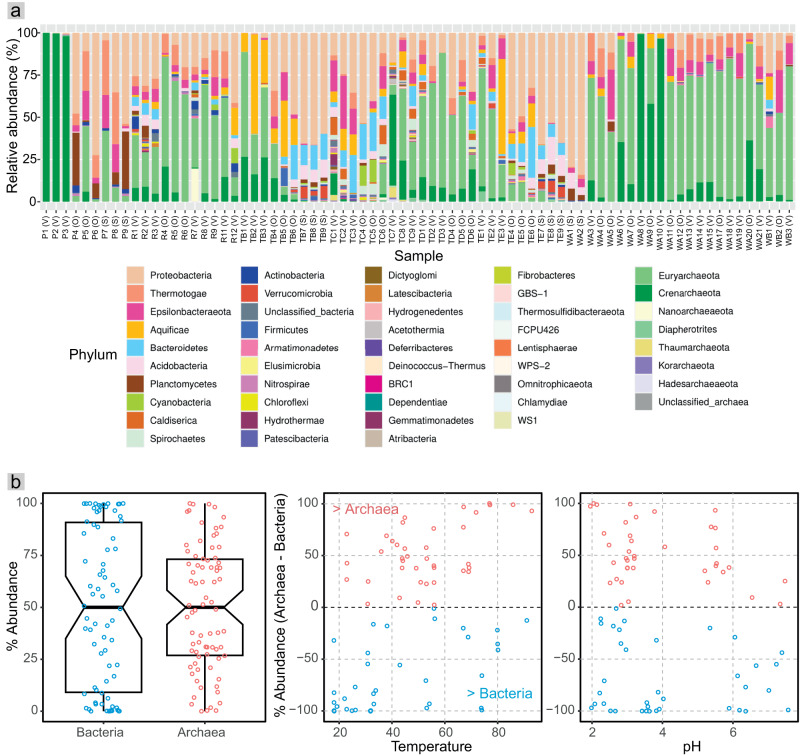
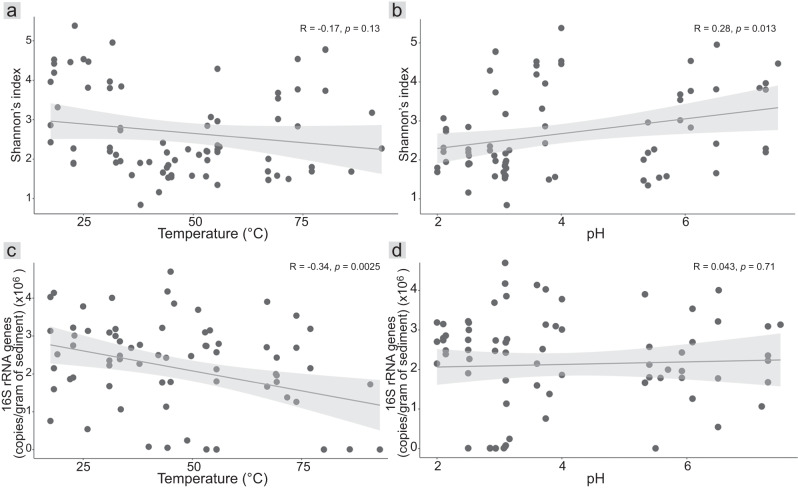
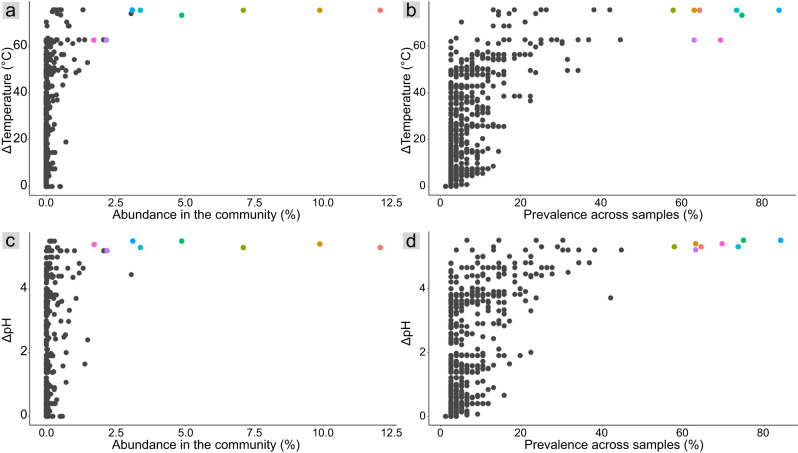
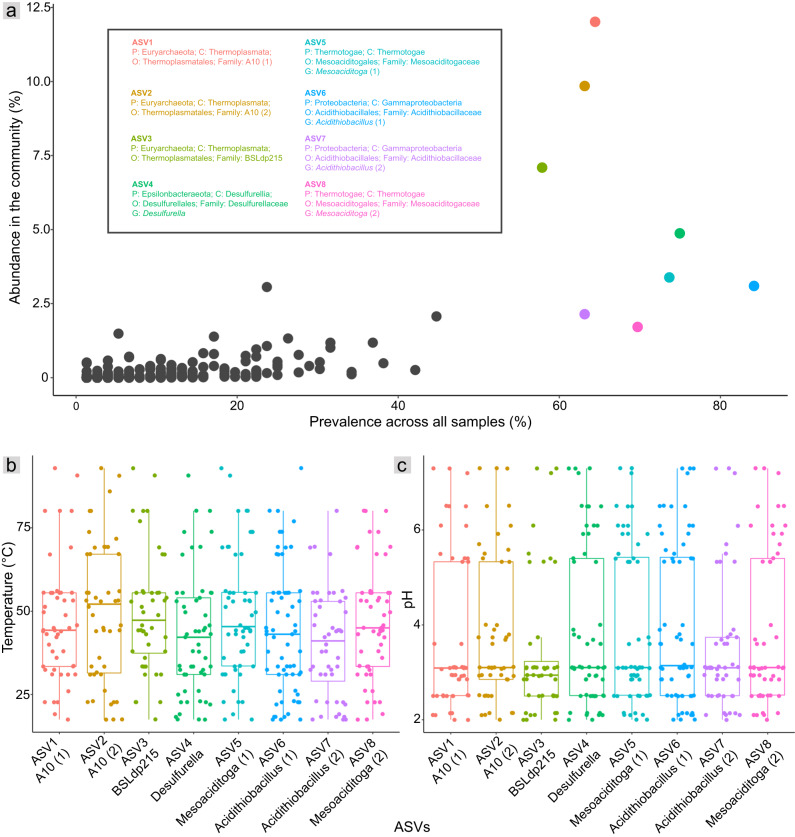
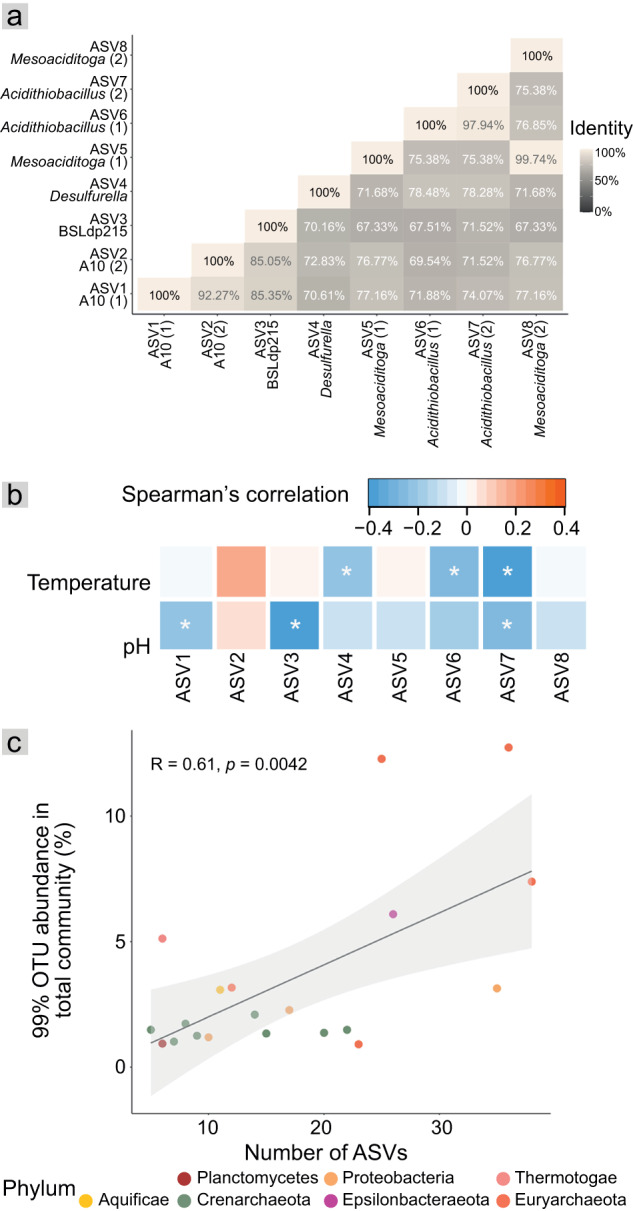
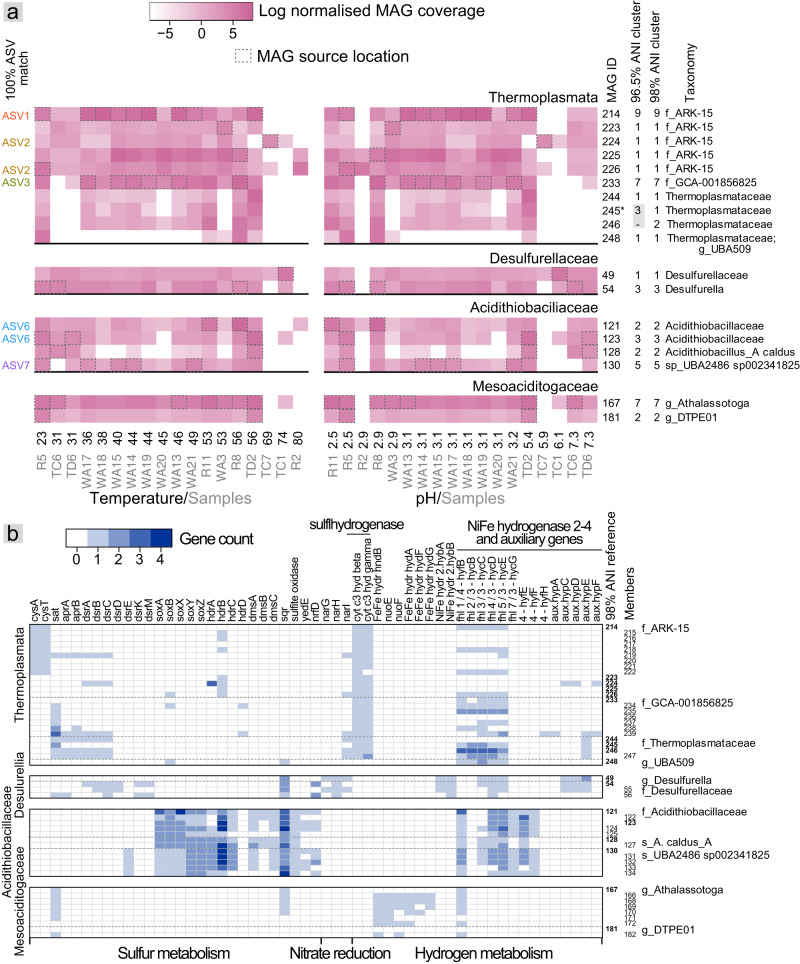
Terrestrial hot springs harbor diverse microbial communities whose compositions are shaped by the wide-ranging physico-chemistries of individual springs. The effect of enormous physico-chemical differences on bacterial and archaeal distributions and population structures is little understood. We therefore analysed the prevalence and relative abundance of bacteria and archaea in the sediments (n = 76) of hot spring features, in the Taupō Volcanic Zone (New Zealand), spanning large differences in major anion water chemistry, pH (2.0-7.5), and temperature (17.5-92.9 °C). Community composition, based on 16S rRNA amplicon sequence variants (ASVs) was strongly influenced by both temperature and pH. However, certain lineages characterized diverse hot springs. At the domain level, bacteria and archaea shared broadly equivalent community abundances across physico-chemically diverse springs, despite slightly lower bacteria-to-archaea ratios and microbial 16S rRNA gene concentrations at higher temperatures. Communities were almost exclusively dominated by Proteobacteria, Euryarchaeota or Crenarchaeota. Eight archaeal and bacterial ASVs from Thermoplasmatales, Desulfurellaceae, Mesoaciditogaceae and Acidithiobacillaceae were unusually prevalent (present in 57.9-84.2% of samples) and abundant (1.7-12.0% sample relative abundance), and together comprised 44% of overall community abundance. Metagenomic analyses generated multiple populations associated with dominant ASVs, and showed characteristic traits of each lineage for sulfur, nitrogen and hydrogen metabolism. Differences in metabolic gene composition and genome-specific metabolism delineated populations from relatives. Genome coverage calculations showed that populations associated with each lineage were distributed across a physicochemically broad range of hot springs. Results imply that certain bacterial and archaeal lineages harbor different population structures and metabolic potentials for colonizing diverse hot spring environments.
陆地温泉中存在着多样的微生物群落,其组成受各个温泉广泛的物理化学性质影响。巨大的物理化学差异对细菌和古菌分布及种群结构的影响尚不清楚。因此,我们分析了新西兰陶波火山带温泉特征沉积物(n = 76)中细菌和古菌的流行情况及相对丰度,这些沉积物在主要阴离子水化学、pH值(2.0 - 7.5)和温度(17.5 - 92.9°C)方面存在很大差异。基于16S rRNA扩增子序列变体(ASV)的群落组成受温度和pH值的强烈影响。然而,某些谱系在不同的温泉中具有多样性。在域水平上,尽管在较高温度下细菌与古菌的比例略低且微生物16S rRNA基因浓度较低,但细菌和古菌在物理化学性质多样的温泉中具有大致相当的群落丰度。群落几乎完全由变形菌门、广古菌门或泉古菌门主导。来自嗜热栖热菌目、脱硫弧菌科、中嗜酸菌科和嗜酸氧化硫杆菌科的8个古菌和细菌ASV异常普遍(存在于57.9 - 84.2%的样本中)且丰富(样本相对丰度为1.7 - 12.0%),它们共同构成了总群落丰度的44%。宏基因组分析产生了与优势ASV相关的多个种群,并显示了每个谱系在硫、氮和氢代谢方面的特征。代谢基因组成和基因组特异性代谢的差异区分了不同种群。基因组覆盖度计算表明,与每个谱系相关的种群分布在物理化学性质广泛的温泉中。结果表明,某些细菌和古菌谱系具有不同的种群结构和代谢潜力,以定殖于多样的温泉环境。