Shanghai University of Traditional Chinese Medicine, School of Nursing, Shanghai, 201203, China.
Department of Urology, Shanghai General Hospital, Shanghai Jiao Tong University School of Medicine, Shanghai, China.
Endocrine. 2023 Nov;82(2):263-281. doi: 10.1007/s12020-023-03469-6. Epub 2023 Aug 21.
The prevalence of type 2 diabetes mellitus (T2DM) is increasing each year and has become one of the most prominent health concerns worldwide. Patients with T2DM are prone to infectious diseases, and urinary tract infections are also widespread. Despite a comprehensive understanding of urinary tract infection (UTI), there is a lack of research regarding primary prevention strategies for asymptomatic bacteriuria (ASB).
To clarify the incidence and risk factors of asymptomatic urinary tract infection in patients with T2DM by meta-analysis to provide evidence for preventing UTI. Help patients, their families, and caregivers to identify the risk factors of patients in time and intervene to reduce the incidence of ASB in patients with T2DM. Fill in the gaps in existing research.
Meta-analyses were conducted in line with PRISMA guidelines.
Eleven databases were systematically searched for articles about ASB in T2DM, and the retrieval time was selected from the establishment of the database to February 5, 2023. Literature screening, quality evaluation, and meta-analysis were independently performed by two researchers according to the inclusion and exclusion criteria, and a meta-analysis was performed using Stata 17.0.
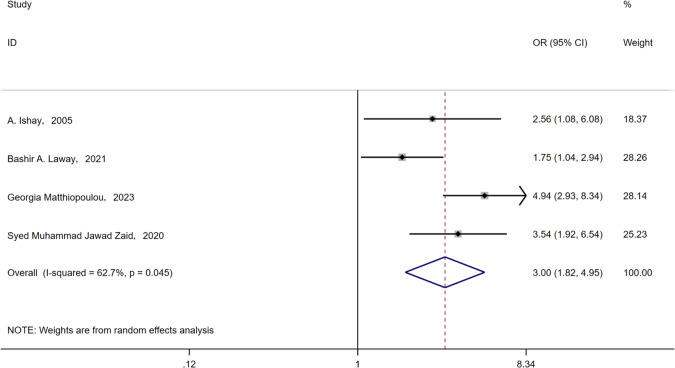
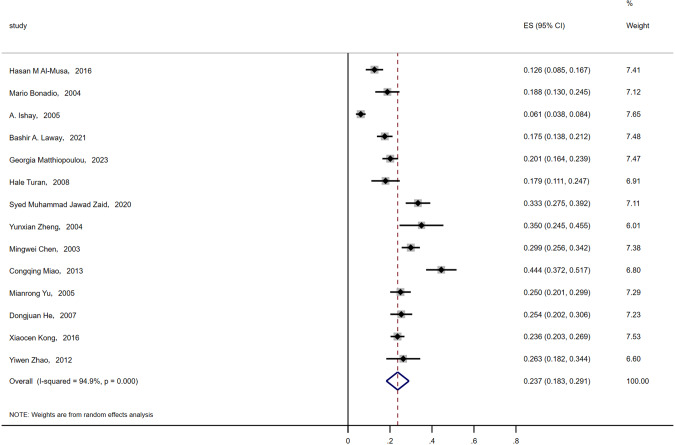
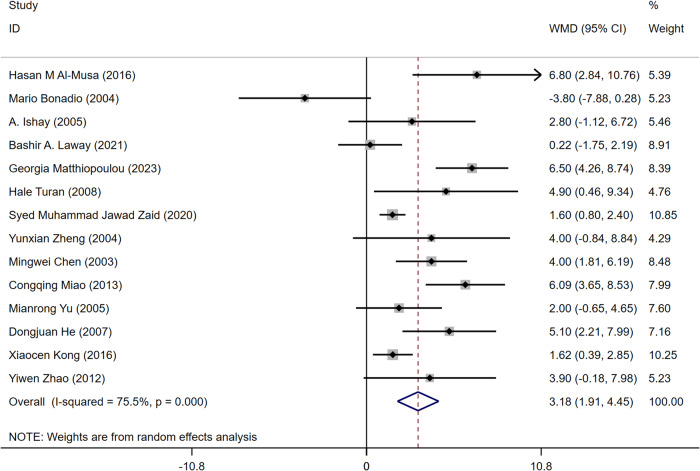
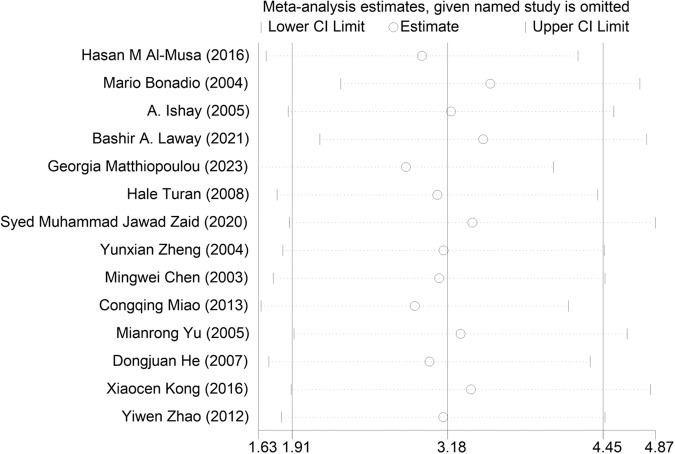
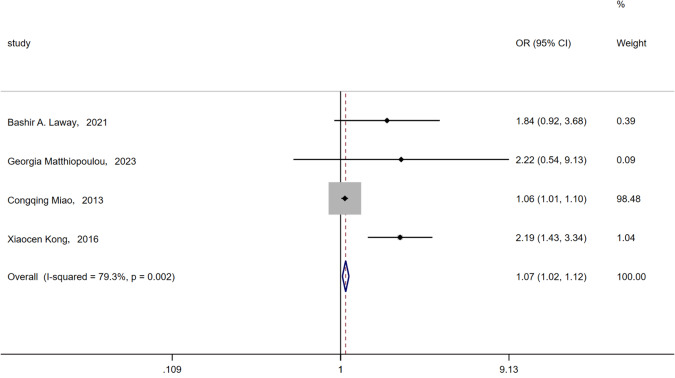
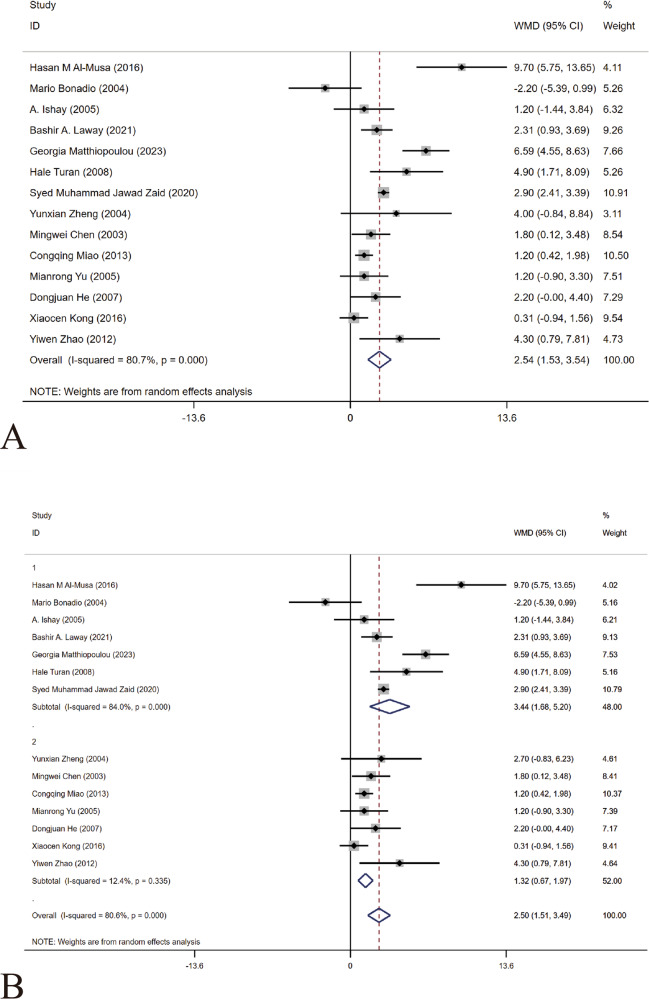
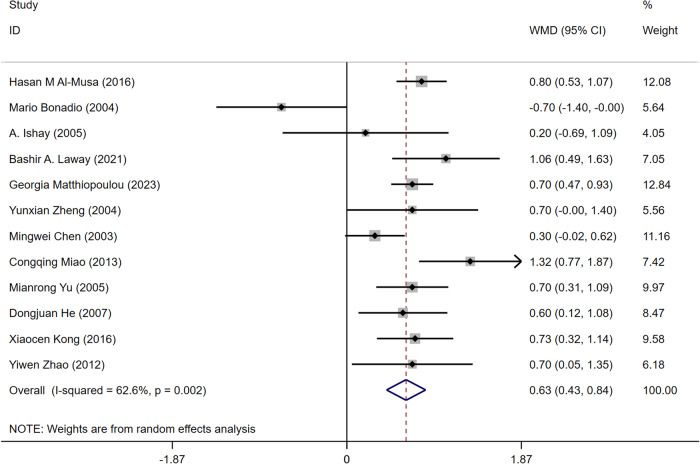
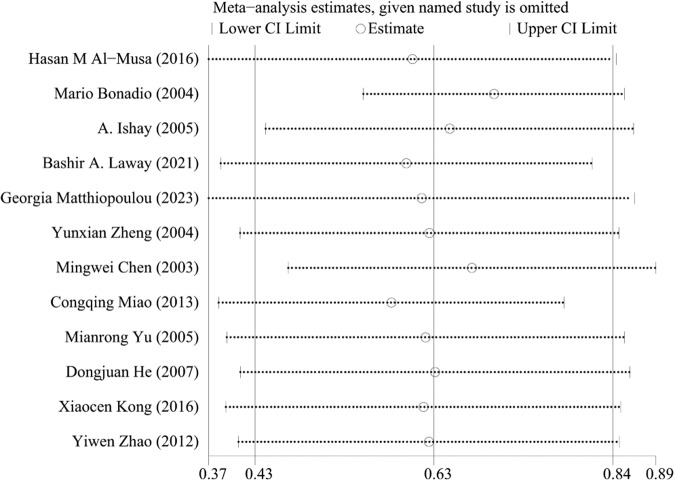
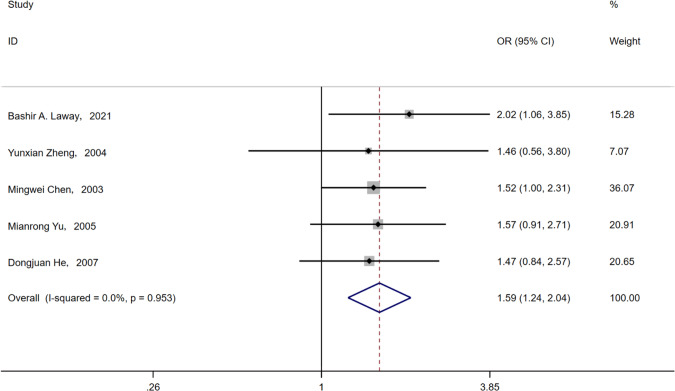
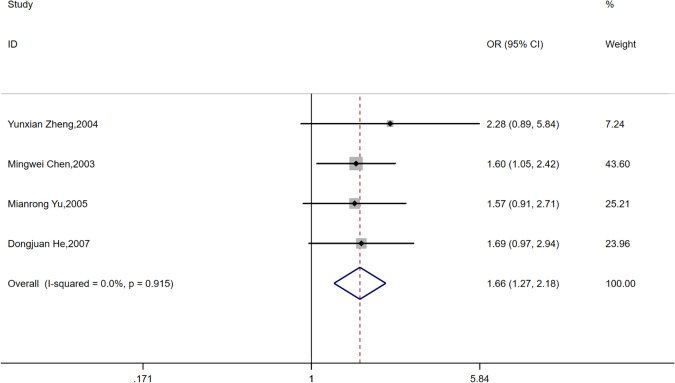
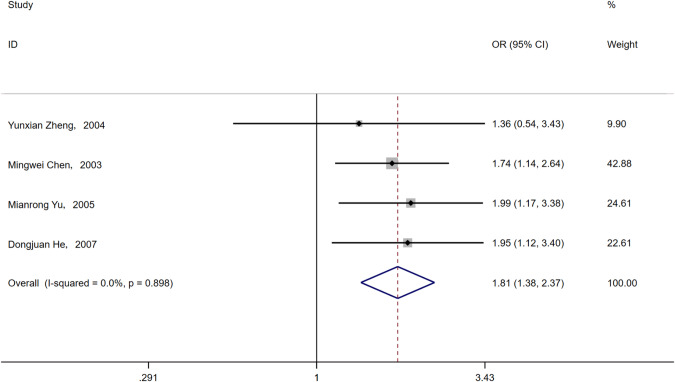
Fourteen articles were included, including cohort and case-control studies. A meta-analysis of 4044 patients with T2DM was included. The incidence of ASB in patients with T2DM was 23.7%(95% CI (0.183, 0.291); P < 0.001). After controlling for confounding variables, the following risk factors were associated with ASB in patients with T2DM: age (WMD = 3.18, 95% CI (1.91, 4.45), I = 75.5%, P < 0.001), female sex (OR = 1.07, 95% CI(1.02, 1.12), I = 79.3%, P = 0.002), duration of type 2 diabetes (WMD = 2.54, 95% CI (1.53, 5.43), I = 80.7%, P < 0.001), HbA1c (WMD = 0.63, 95% CI (0.43, 0.84), I = 62.6,%. P < 0.001), hypertension (OR = 1.59, 95% CI (1.24, 2.04), I = 0%, <0.001), hyperlipidemia (OR = 1.66, 95% CI (1.27, 2.18), I = 0%, P < 0.001), Neuropathy (OR = 1.81, 95% CI (1.38, 2.37), I = 0%, P < 0.001), proteinuria (OR = 3.00, 95% CI (1.82, 4.95), I = 62.7%, P < 0.001).
The overall prevalence of ASB in T2DM is 23.7%. Age, female sex, course of T2DM, HbA1C, hypertension, hyperlipidemia, neuropathy, and proteinuria were identified as related risk factors for ASB in T2DM. These findings can provide a robust theoretical basis for preventing and managing ASB in T2DM.
2 型糖尿病(T2DM)的患病率逐年上升,已成为全球最突出的健康问题之一。T2DM 患者易患传染病,尿路感染也很常见。尽管对尿路感染(UTI)有全面的了解,但对于无症状菌尿(ASB)的初级预防策略的研究还很缺乏。
通过荟萃分析阐明 T2DM 患者无症状性尿路感染的发生率和危险因素,为预防 UTI 提供证据。帮助患者、家属和护理人员及时识别患者的危险因素并进行干预,以降低 T2DM 患者 ASB 的发生率。填补现有研究的空白。
根据 PRISMA 指南进行荟萃分析。
系统检索了关于 T2DM 中 ASB 的 11 个数据库,检索时间从数据库建立到 2023 年 2 月 5 日。两名研究人员根据纳入和排除标准独立进行文献筛选、质量评估和荟萃分析,并使用 Stata 17.0 进行荟萃分析。
共纳入 14 篇文章,包括队列研究和病例对照研究。对 4044 例 T2DM 患者进行了荟萃分析。T2DM 患者中 ASB 的发生率为 23.7%(95%CI(0.183,0.291);P<0.001)。在控制混杂因素后,以下危险因素与 T2DM 患者的 ASB 相关:年龄(WMD=3.18,95%CI(1.91,4.45),I=75.5%,P<0.001)、女性(OR=1.07,95%CI(1.02,1.12),I=79.3%,P=0.002)、T2DM 病程(WMD=2.54,95%CI(1.53,5.43),I=80.7%,P<0.001)、糖化血红蛋白(WMD=0.63,95%CI(0.43,0.84),I=62.6%,P<0.001)、高血压(OR=1.59,95%CI(1.24,2.04),I=0%,P<0.001)、高脂血症(OR=1.66,95%CI(1.27,2.18),I=0%,P<0.001)、神经病变(OR=1.81,95%CI(1.38,2.37),I=0%,P<0.001)、蛋白尿(OR=3.00,95%CI(1.82,4.95),I=62.7%,P<0.001)。
T2DM 患者 ASB 的总体患病率为 23.7%。年龄、女性、T2DM 病程、HbA1C、高血压、高脂血症、神经病变和蛋白尿被确定为 T2DM 中 ASB 的相关危险因素。这些发现可为预防和管理 T2DM 中的 ASB 提供有力的理论依据。