Chen Li-Shiun, Baker Timothy B, Ramsey Alex, Amos Christopher I, Bierut Laura J
Department of Psychiatry, Washington University School of Medicine, St. Louis, MO, United States.
Alvin J. Siteman Cancer Center at Barnes-Jewish Hospital, Washington University School of Medicine, St. Louis, MO, United States.
Addict Neurosci. 2023 Sep;7. doi: 10.1016/j.addicn.2023.100083. Epub 2023 Apr 1.
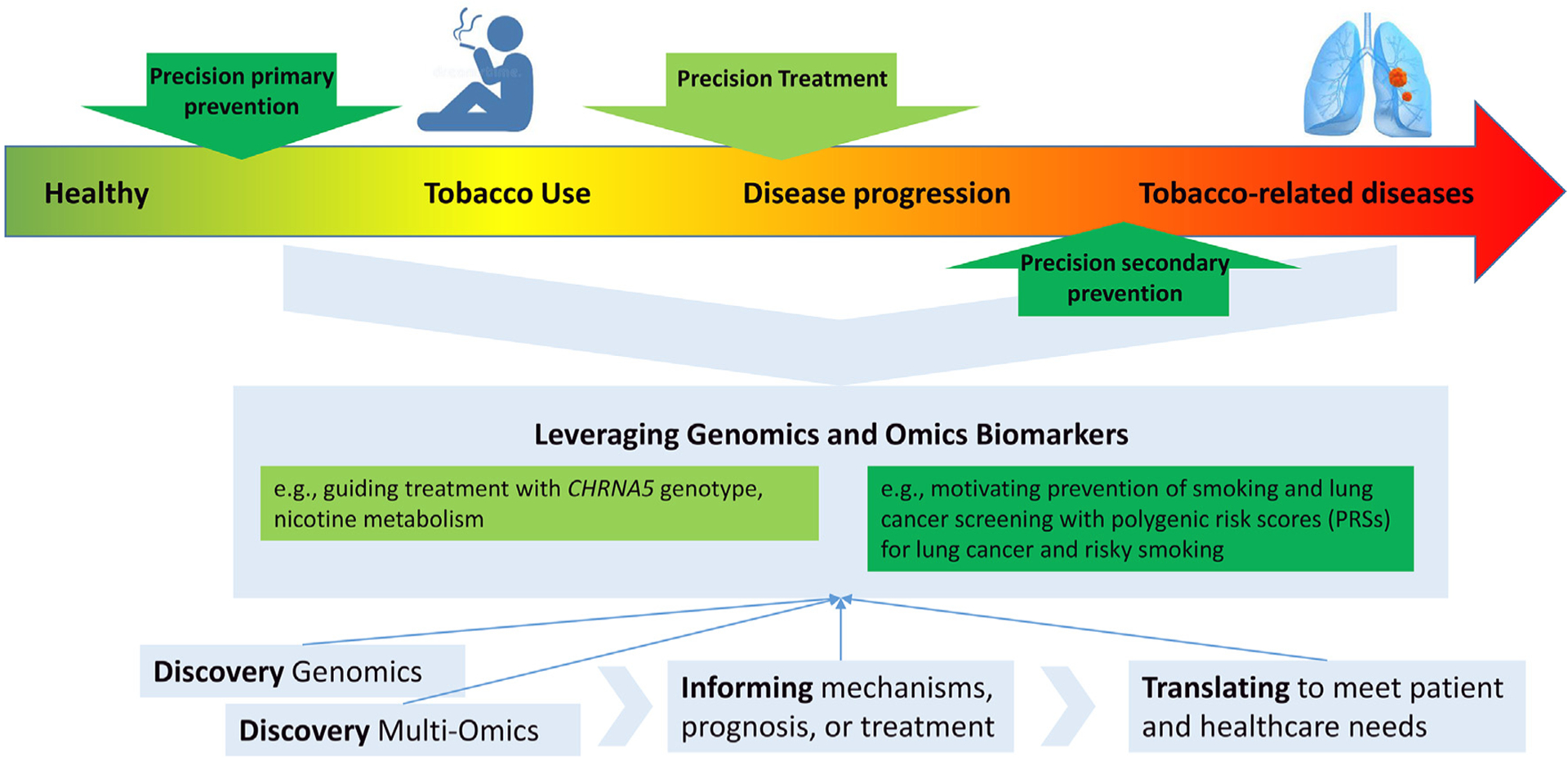
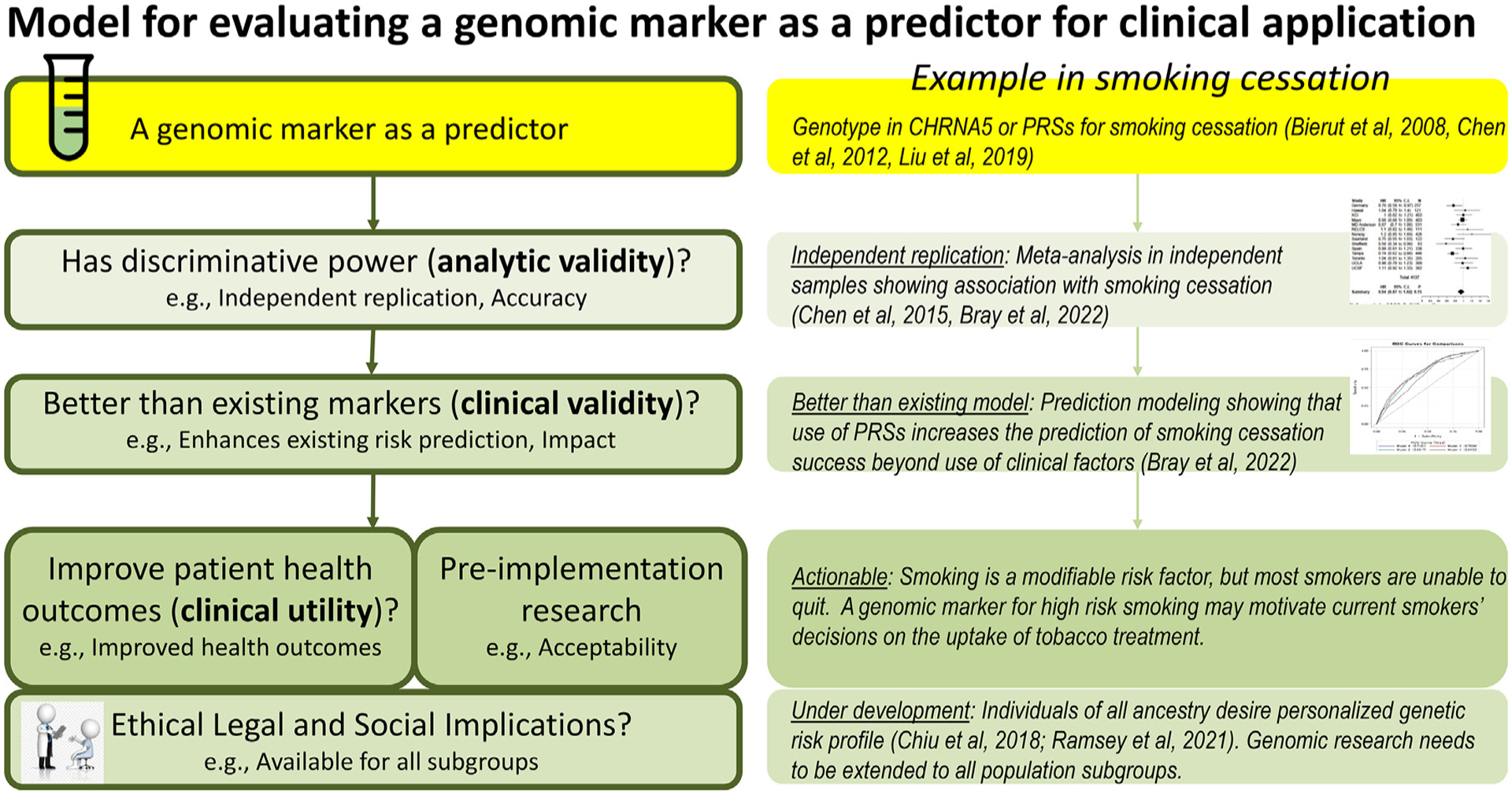
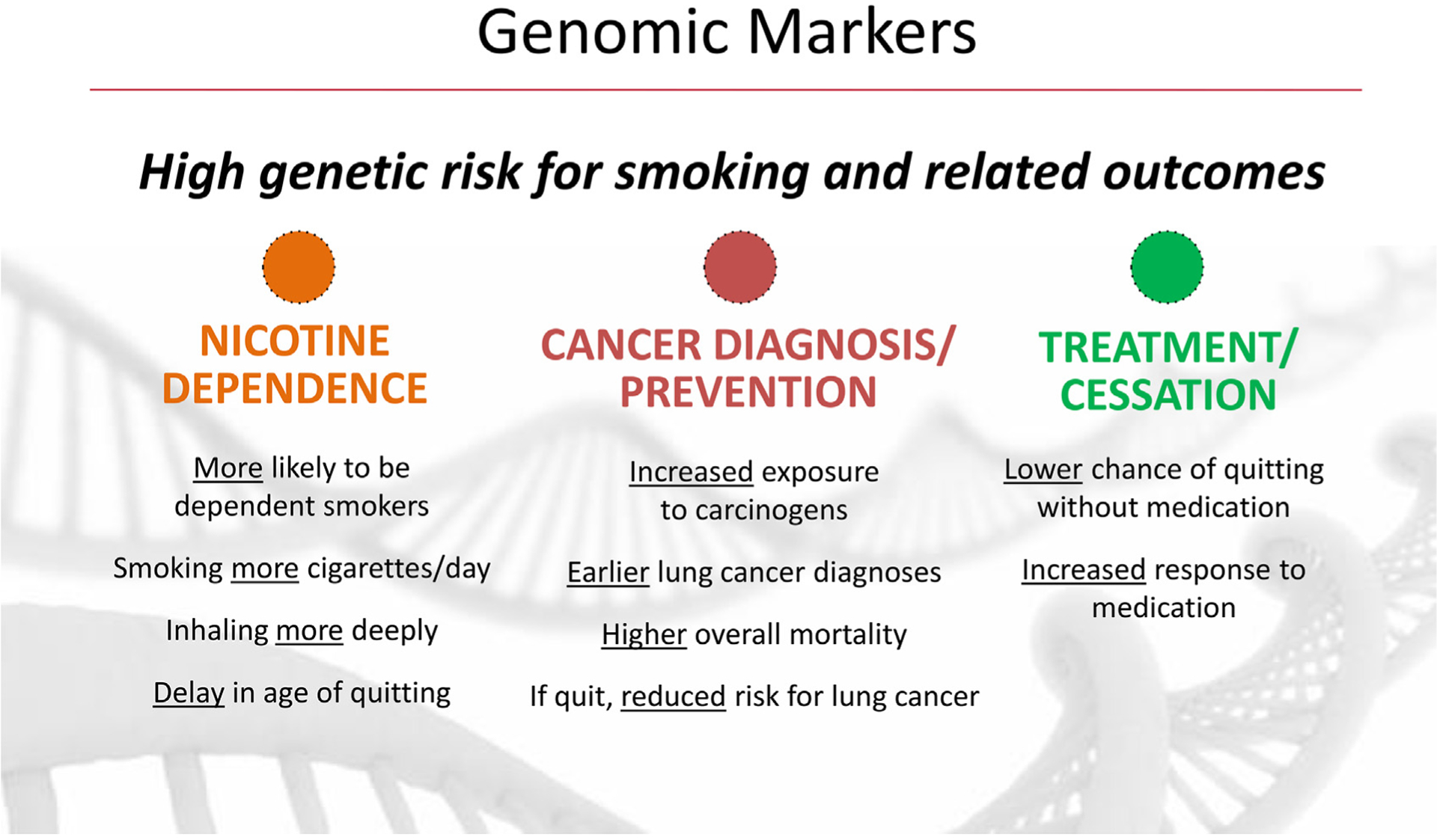
Genomic medicine can enhance prevention and treatment. First, we propose that advances in genomics have the potential to enhance assessment of disease risk, improve prognostic predictions, and guide treatment development and application. Clinical implementation of polygenic risk scores (PRSs) has emerged as an area of active research. The pathway from genomic discovery to implementation is an iterative process. Second, we provide examples on how genomic medicine has the potential to solve problems in prevention and treatment using two examples: Lung cancer screening and evidence-based tobacco treatment are both under-utilized and great opportunities for genomic interventions. Third, we discuss the translational process for developing genomic interventions from evidence to implementation by presenting a model to evaluate genomic evidence for clinical implementation, mechanisms of genomic interventions, and patient desire for genomic interventions. Fourth, we present potential challenges in genomic interventions including a great need for evidence in all diverse populations, little evidence on treatment algorithms, challenges in accommodating a dynamic evidence base, and implementation challenges in real world clinical settings. Finally, we conclude that research to identify genomic markers that are associated with smoking cessation success and the efficacy of smoking cessation treatments is needed to empower people of all diverse ancestry. Importantly, genomic data can be used to help identify patients with elevated risk for nicotine addiction, difficulty quitting smoking, favorable response to specific pharmacotherapy, and tobacco-related health problems.
基因组医学可提升预防和治疗水平。首先,我们提出基因组学的进展有潜力增强疾病风险评估、改善预后预测,并指导治疗的开发与应用。多基因风险评分(PRSs)的临床应用已成为一个活跃的研究领域。从基因组发现到应用的过程是一个迭代过程。其次,我们通过两个例子说明基因组医学如何有潜力解决预防和治疗中的问题:肺癌筛查和循证烟草治疗目前都未得到充分利用,是基因组干预的巨大机遇。第三,我们通过展示一个评估基因组证据用于临床应用的模型、基因组干预的机制以及患者对基因组干预的需求,来讨论从证据到应用开发基因组干预的转化过程。第四,我们阐述基因组干预中的潜在挑战,包括在所有不同人群中都非常需要证据、关于治疗算法的证据很少、适应动态证据库的挑战以及现实世界临床环境中的实施挑战。最后,我们得出结论,需要开展研究以确定与戒烟成功及戒烟治疗效果相关的基因组标记,从而使所有不同血统的人都能从中受益。重要的是,基因组数据可用于帮助识别尼古丁成瘾风险升高、戒烟困难、对特定药物治疗反应良好以及存在烟草相关健康问题的患者。