Shah Rajendra P, Bolaji Olayiwola, Duhan Sanchit, Ariaga Anderson C, Keisham Bijeta, Paul Timir, Aljaroudi Wael, Alraies M Chadi
Department of Internal Medicine, Vassar Brothers Medical Center, Poughkeepsie, USA.
Department of Internal Medicine, University of Maryland Capital Regional Medical Center, Largo, USA.
Cureus. 2023 Jul 20;15(7):e42227. doi: 10.7759/cureus.42227. eCollection 2023 Jul.
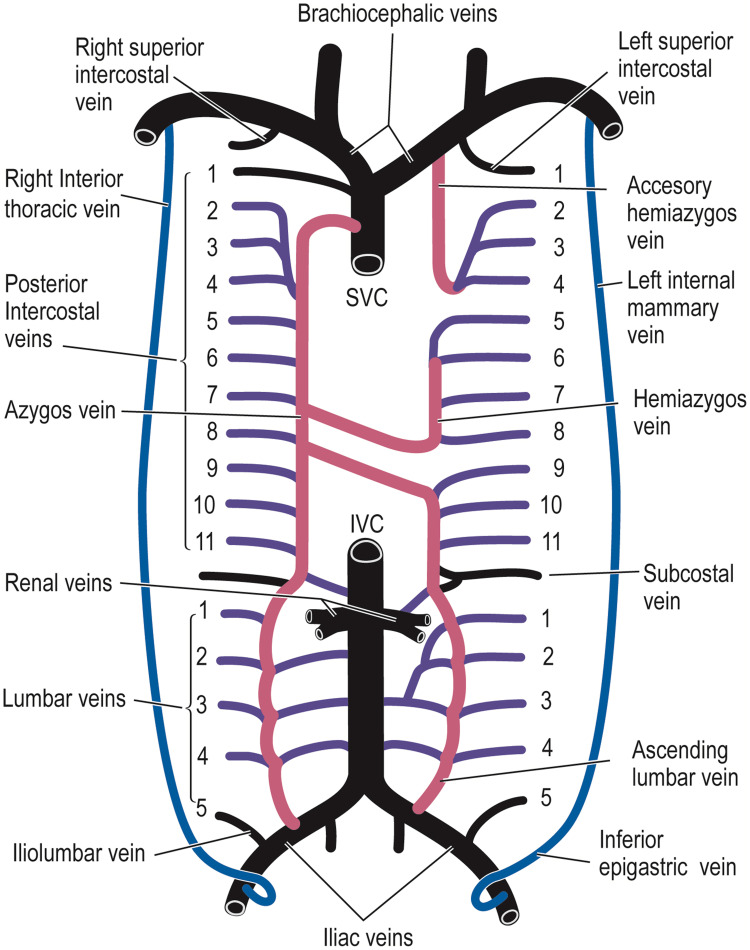
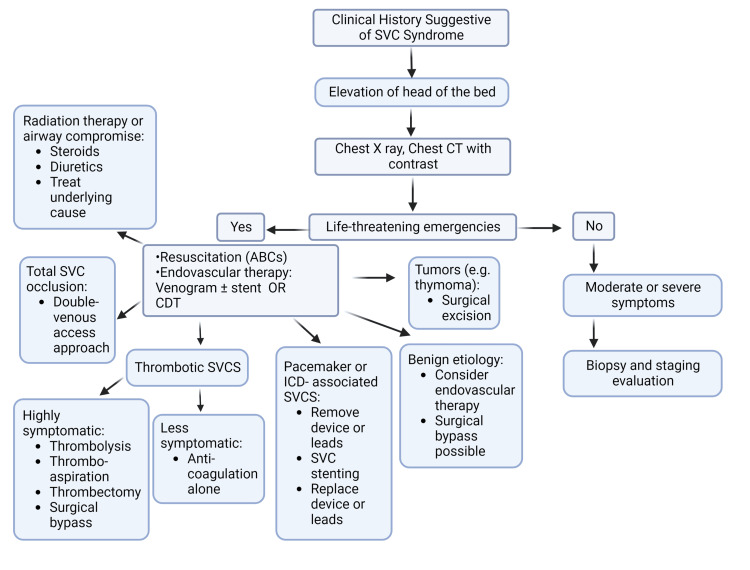
Superior vena cava syndrome (SVCS) is a medical emergency that encompasses an array of signs and symptoms due to obstruction of blood flow through the superior vena cava (SVC). It poses a significant healthcare burden due to its associated morbidity and mortality. Its impact on the healthcare system continues to grow due to the increasing incidence of the condition. This incidence trend has been attributed to the growing use of catheters, pacemakers, and defibrillators, although it is a rare complication of these devices. The most common cause of SVCS remains malignancies accounting for up to 60% of the cases. Understanding the pathophysiology of SVCS requires understanding the anatomy, the SVC drains blood from the right and left brachiocephalic veins, which drain the head and the upper extremities accounting for about one-third of the venous blood to the heart. The most common presenting symptoms of SVCS are swelling of the face and hand, chest pain, respiratory symptoms (dyspnea, stridor, cough, hoarseness, and dysphagia), and neurologic manifestations (headaches, confusion, or visual/auditory disturbances). Symptoms generally worsen in a supine position. Diagnosis typically requires imaging, and SVCS can be graded based on classification schemas depending on the severity of symptoms and the location, understanding, and degree of obstruction. Over the past decades, the management modalities of SVCS have evolved to meet the increasing burden of the condition. Here, we present an umbrella review providing an overall assessment of the available information on SVCS, including the various management options, their indications, and a comparison of the advantages and disadvantages of these modalities.
上腔静脉综合征(SVCS)是一种医疗急症,由于上腔静脉(SVC)血流受阻而出现一系列体征和症状。因其相关的发病率和死亡率,它带来了重大的医疗负担。由于该病症的发病率不断上升,其对医疗系统的影响持续增大。尽管这是导管、起搏器和除颤器等设备的罕见并发症,但这种发病率上升趋势归因于这些设备使用的增加。SVCS最常见的病因仍是恶性肿瘤,占病例的60%。了解SVCS的病理生理学需要了解其解剖结构,SVC收集来自左右头臂静脉的血液,左右头臂静脉引流头部和上肢的血液,约占流向心脏静脉血的三分之一。SVCS最常见的症状表现为面部和手部肿胀、胸痛、呼吸系统症状(呼吸困难、喘鸣、咳嗽、声音嘶哑和吞咽困难)以及神经学表现(头痛、意识模糊或视觉/听觉障碍)。症状通常在仰卧位时加重。诊断通常需要影像学检查,根据症状的严重程度、梗阻的位置、范围和程度,可依据分类方案对SVCS进行分级。在过去几十年中,SVCS的管理方式不断演变,以应对该病症日益增加的负担。在此,我们进行一项综合性综述,全面评估关于SVCS的现有信息,包括各种管理选择、其适应证以及这些方式优缺点的比较。