Gebicke-Haerter Peter J
Institute of Psychopharmacology, Central Institute of Mental Health, Faculty of Medicine, University of Heidelberg, Mannheim, Germany.
Front Cell Neurosci. 2023 Aug 7;17:1220030. doi: 10.3389/fncel.2023.1220030. eCollection 2023.
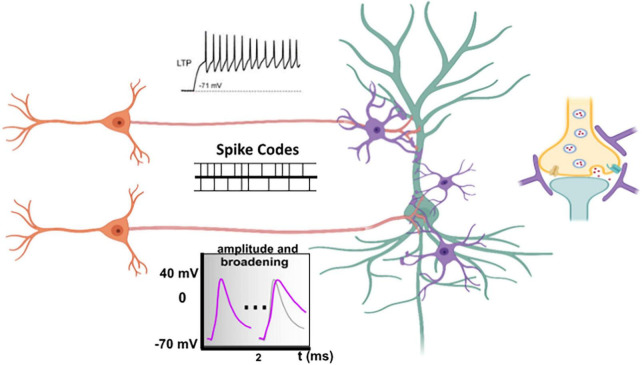
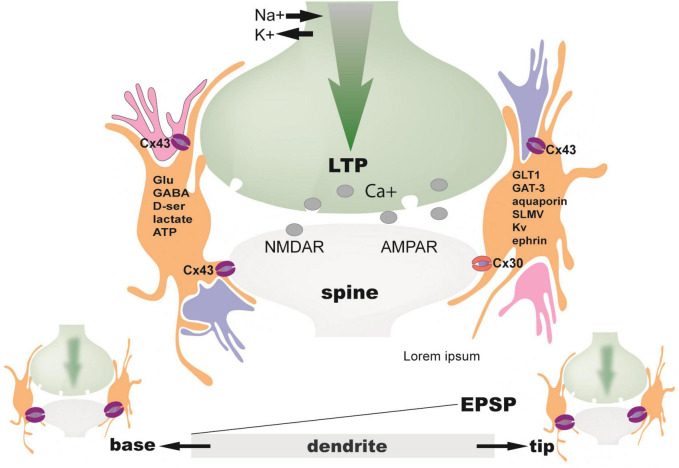
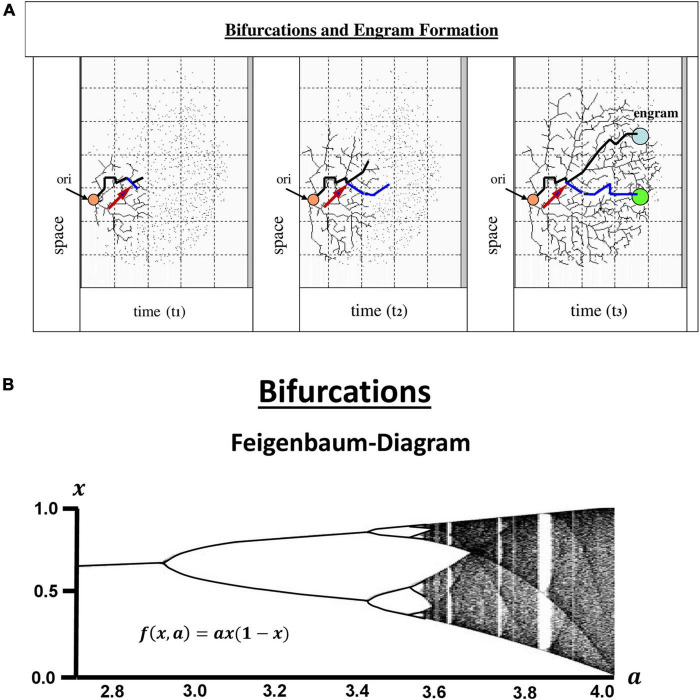
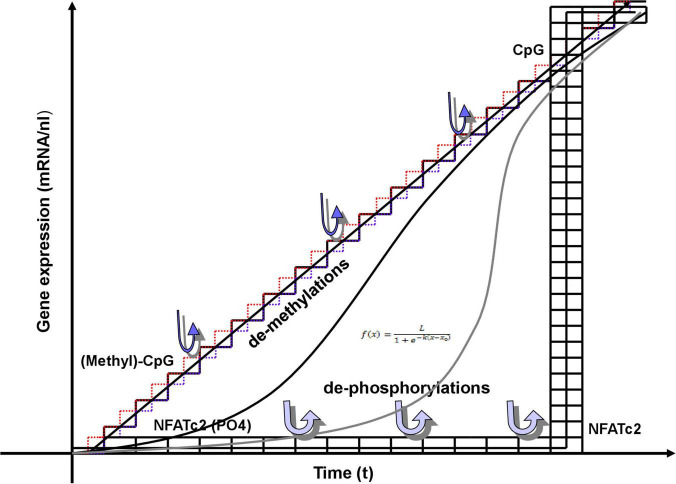
At the end of the 20th century, analog systems in computer science have been widely replaced by digital systems due to their higher computing power. Nevertheless, the question keeps being intriguing until now: is the brain analog or digital? Initially, the latter has been favored, considering it as a Turing machine that works like a digital computer. However, more recently, digital and analog processes have been combined to implant human behavior in robots, endowing them with artificial intelligence (AI). Therefore, we think it is timely to compare mathematical models with the biology of computation in the brain. To this end, digital and analog processes clearly identified in cellular and molecular interactions in the Central Nervous System are highlighted. But above that, we try to pinpoint reasons distinguishing computation from salient features of biological computation. First, genuinely analog information processing has been observed in electrical synapses and through gap junctions, the latter both in neurons and astrocytes. Apparently opposed to that, neuronal action potentials (APs) or spikes represent clearly digital events, like the yes/no or 1/0 of a Turing machine. However, spikes are rarely uniform, but can vary in amplitude and widths, which has significant, differential effects on transmitter release at the presynaptic terminal, where notwithstanding the quantal (vesicular) release itself is digital. Conversely, at the dendritic site of the postsynaptic neuron, there are numerous analog events of computation. Moreover, synaptic transmission of information is not only neuronal, but heavily influenced by astrocytes tightly ensheathing the majority of synapses in brain (tripartite synapse). At least at this point, LTP and LTD modifying synaptic plasticity and believed to induce short and long-term memory processes including consolidation (equivalent to RAM and ROM in electronic devices) have to be discussed. The present knowledge of how the brain stores and retrieves memories includes a variety of options (e.g., neuronal network oscillations, engram cells, astrocytic syncytium). Also epigenetic features play crucial roles in memory formation and its consolidation, which necessarily guides to molecular events like gene transcription and translation. In conclusion, brain computation is not only digital or analog, or a combination of both, but encompasses features in parallel, and of higher orders of complexity.
在20世纪末,计算机科学中的模拟系统因其更高的计算能力已被数字系统广泛取代。然而,这个问题至今仍然引人入胜:大脑是模拟的还是数字的?最初,人们倾向于后者,将其视为一台像数字计算机一样工作的图灵机。然而,最近,数字和模拟过程已经结合起来,将人类行为植入机器人中,赋予它们人工智能(AI)。因此,我们认为现在是将数学模型与大脑中的计算生物学进行比较的时候了。为此,突出了在中枢神经系统的细胞和分子相互作用中明确识别出的数字和模拟过程。但除此之外,我们试图找出将计算与生物计算的显著特征区分开来的原因。首先,在电突触以及通过缝隙连接(后者在神经元和星形胶质细胞中均有)中观察到了真正的模拟信息处理。显然与之相反的是,神经元动作电位(APs)或尖峰代表着明确的数字事件,就像图灵机的是/否或1/0 。然而,尖峰很少是均匀的,其幅度和宽度会有所变化,这对突触前末端的递质释放有显著的差异影响,尽管量子(囊泡)释放本身是数字的。相反,在突触后神经元的树突部位,存在大量的模拟计算事件。此外,信息的突触传递不仅是神经元的,还受到紧密包裹大脑中大多数突触的星形胶质细胞(三联突触)的严重影响。至少在这一点上,必须讨论修改突触可塑性并被认为诱导包括巩固(相当于电子设备中的随机存取存储器和只读存储器)在内的短期和长期记忆过程的长时程增强(LTP)和长时程抑制(LTD)。目前关于大脑如何存储和检索记忆的知识包括多种选择(例如,神经网络振荡、记忆细胞、星形胶质细胞合体)。表观遗传特征在记忆形成及其巩固中也起着关键作用,这必然会导向诸如基因转录和翻译等分子事件。总之,大脑计算不仅是数字的或模拟的,或者是两者的结合,而是包含并行的、更高阶复杂性的特征。