Sattar Lubna, Reyaz Ibrahim, Rawat Anurag, Mannam Raam, Karumanchi Abhimanyu, Depa Venu Gopal Reddy, Batool Saima, Usama Muhammad
Medicine, Shadan Institute of Medical Sciences, Hyderabad, IND.
Internal Medicine, Christian Medical College and Hospital, Ludhiana, IND.
Cureus. 2023 Jul 20;15(7):e42212. doi: 10.7759/cureus.42212. eCollection 2023 Jul.
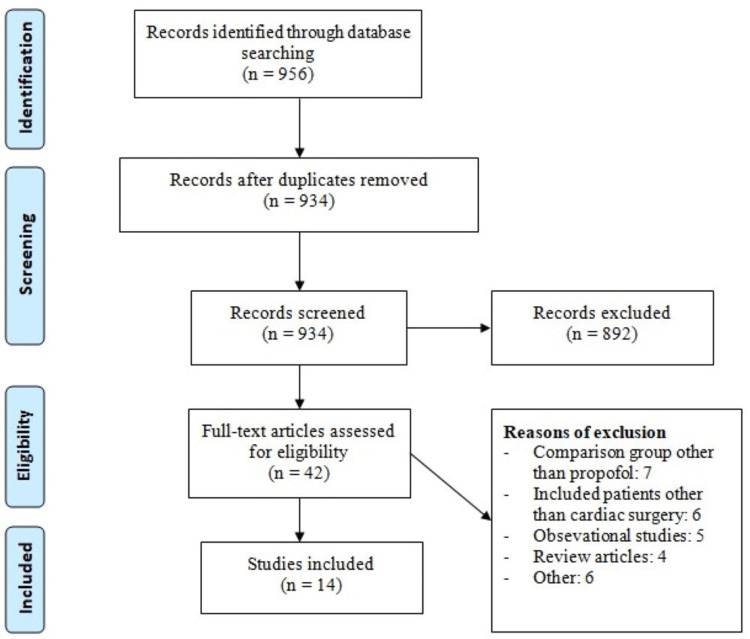
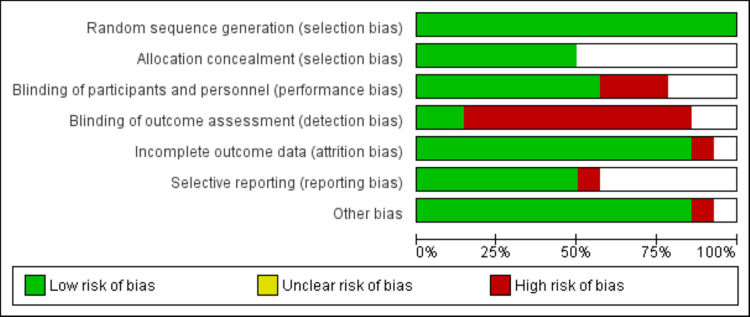
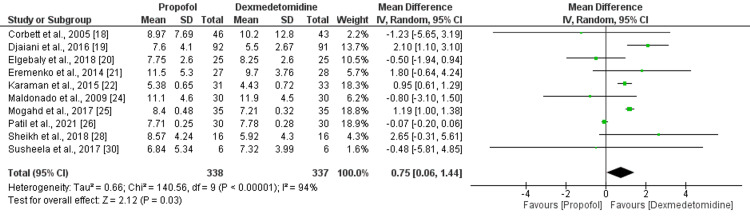
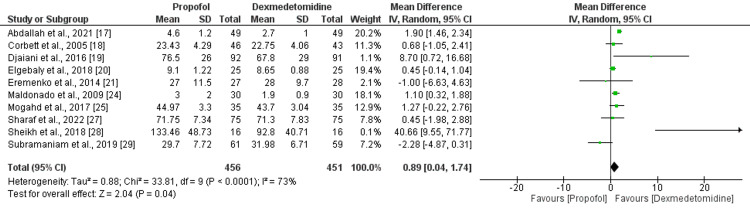
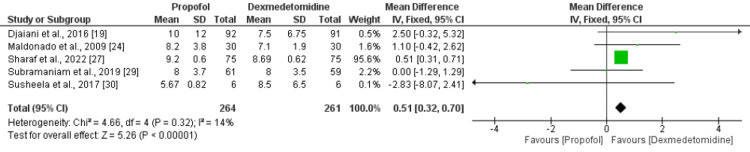
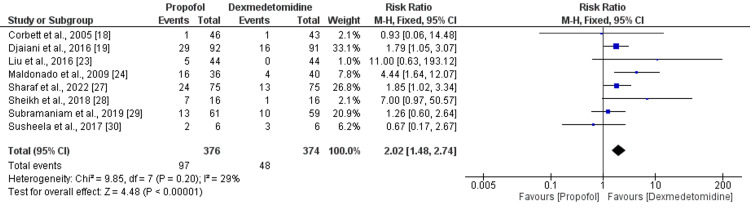
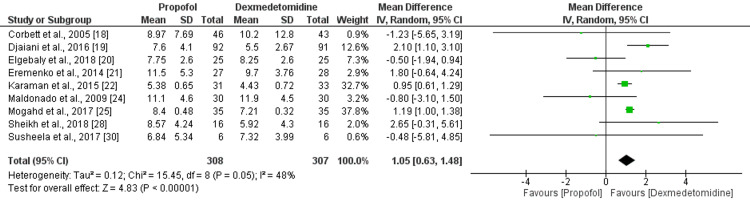
The aim of this study was to compare outcomes between dexmedetomidine and propofol for sedation after cardiac surgery in patients requiring mechanical ventilation. This meta-analysis was performed according to Preferred Reporting Items for Systematic Reviews and Meta-Analyses (PRISMA) guidelines. Online databases, including EMBASE, PubMed, and the Cochrane Library, were comprehensively searched to identify relevant randomized controlled trials (RCTs) comparing the safety and efficacy of dexmedetomidine and propofol in patients undergoing cardiac surgery and requiring mechanical ventilation. The examined outcomes included the mean length of intensive care unit (ICU) stay in hours, duration of mechanical ventilation in hours, length of hospital stay in days, and number of patients diagnosed with delirium. A total of 14 studies were included in the present meta-analysis while 1360 patients undergoing cardiac surgery were involved in these studies. Pooled results showed that the duration of mechanical ventilation was lower in the dexmedetomidine group compared to the propofol group (mean difference (MD): 0.75, 95% confidence interval (CI): 0.06-1.44, p-value: 0.03). We also found a significantly low length of stay in ICU in the dexmedetomidine group compared to the propofol (MD: 0.89, 95% CI: 0.04-1.74, p-value: 0.04). The length of hospital stay was also significantly lower in patients receiving dexmedetomidine as compared to the propofol group (MD: 0.51, 95% CI: 0.32-0.70, p-value<0.001). Risk of delirium was significantly higher in patients receiving propofol compared to patients receiving dexmedetomidine (RR: 2.02, 95% CI: 1.48-2.74, p-value<0.001). In conclusion, our meta-analysis provides evidence of the beneficial impacts of dexmedetomidine on clinical outcomes in patients undergoing cardiac surgery. Dexmedetomidine was associated with a significant reduction in the duration of mechanical ventilation, length of stay in the intensive care unit (ICU) and hospital, and the risk of delirium.
本研究的目的是比较右美托咪定和丙泊酚用于心脏手术后需要机械通气患者镇静的效果。本荟萃分析按照系统评价和荟萃分析的首选报告项目(PRISMA)指南进行。全面检索了包括EMBASE、PubMed和Cochrane图书馆在内的在线数据库,以识别比较右美托咪定和丙泊酚在接受心脏手术并需要机械通气患者中的安全性和有效性的相关随机对照试验(RCT)。所检查的结果包括重症监护病房(ICU)平均住院时长(小时)、机械通气时长(小时)、住院天数以及被诊断为谵妄的患者数量。本荟萃分析共纳入14项研究,这些研究涉及1360例接受心脏手术的患者。汇总结果显示,与丙泊酚组相比,右美托咪定组的机械通气时长更低(平均差(MD):0.75,95%置信区间(CI):0.06 - 1.44,p值:0.03)。我们还发现,与丙泊酚组相比,右美托咪定组在ICU的住院时长显著缩短(MD:0.89,95%CI:0.04 - 1.74,p值:0.04)。与丙泊酚组相比,接受右美托咪定治疗的患者住院天数也显著缩短(MD:0.51,95%CI:0.32 - 0.70,p值<0.001)。与接受右美托咪定的患者相比,接受丙泊酚的患者谵妄风险显著更高(相对风险(RR):2.02,95%CI:1.48 - 2.74,p值<0.001)。总之,我们的荟萃分析提供了右美托咪定对心脏手术患者临床结局有有益影响的证据。右美托咪定与机械通气时长、重症监护病房(ICU)住院时长和住院时长的显著缩短以及谵妄风险降低相关。