Department of Internal Medicine, University of Southern California, Los Angeles, CA, United States.
California University of Science and Medicine SOM, Colton, CA, United States.
Cancer Treat Res Commun. 2023;36:100752. doi: 10.1016/j.ctarc.2023.100752. Epub 2023 Aug 18.
Elevated platelet lymphocyte ratio (PLR) and low body mass index (BMI) are associated with inferior survival in non-small cell lung cancer (NSCLC) patients receiving immunotherapy (IO). We evaluated real-world prognostic utility of PLR, BMI, and albumin level in stage IV NSCLC patients receiving first line (1L) IO.
We identified 75 stage IV patients who received 1L IO therapy at USC Norris Comprehensive Cancer Center and Los Angeles General Medical Center from 2015 to 2022. The primary outcome was overall survival (OS) from time of IO with attention to pre-treatment BMI < 22, albumin < 3.5 g/dL, and PLR > 180.
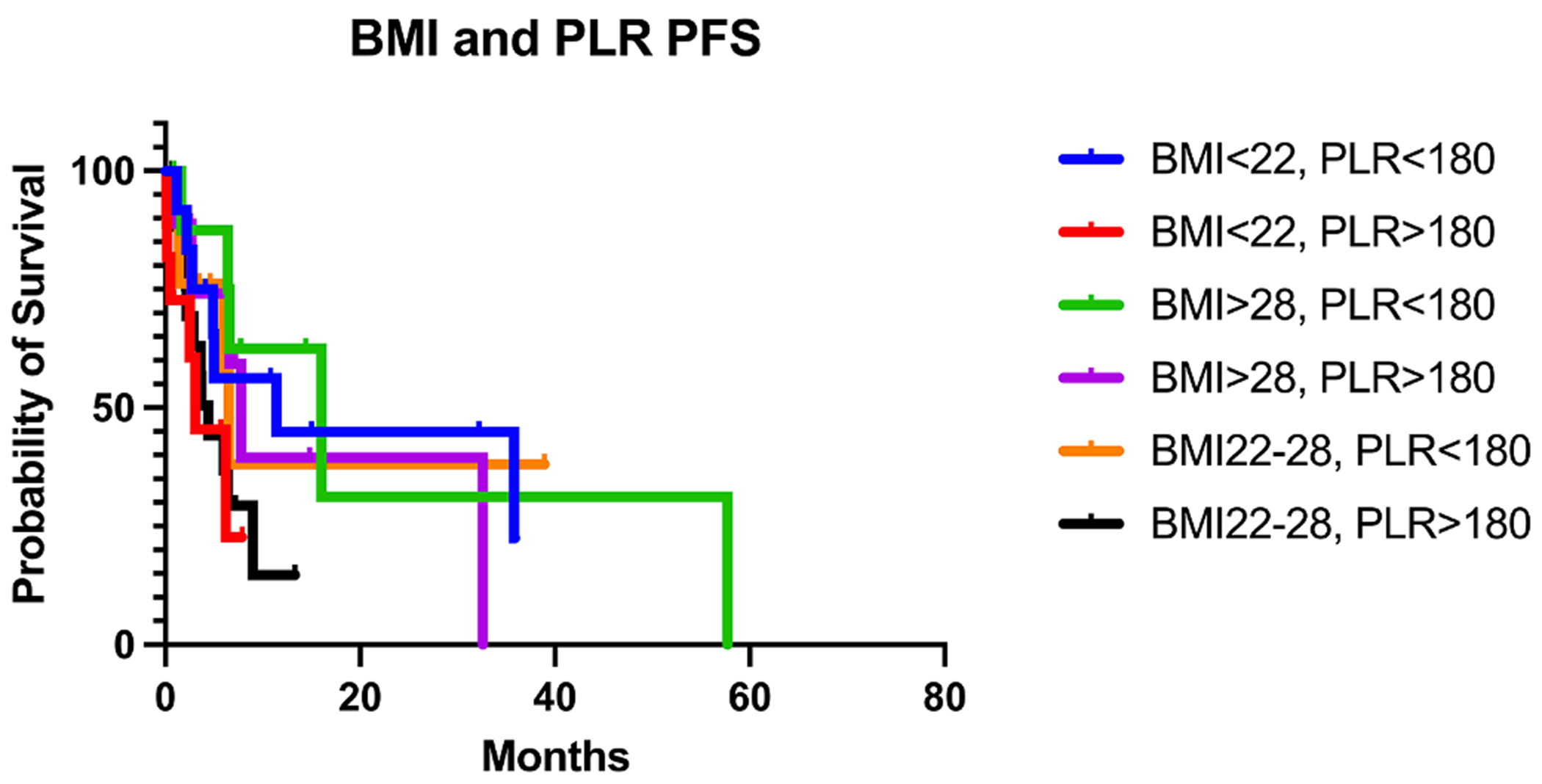
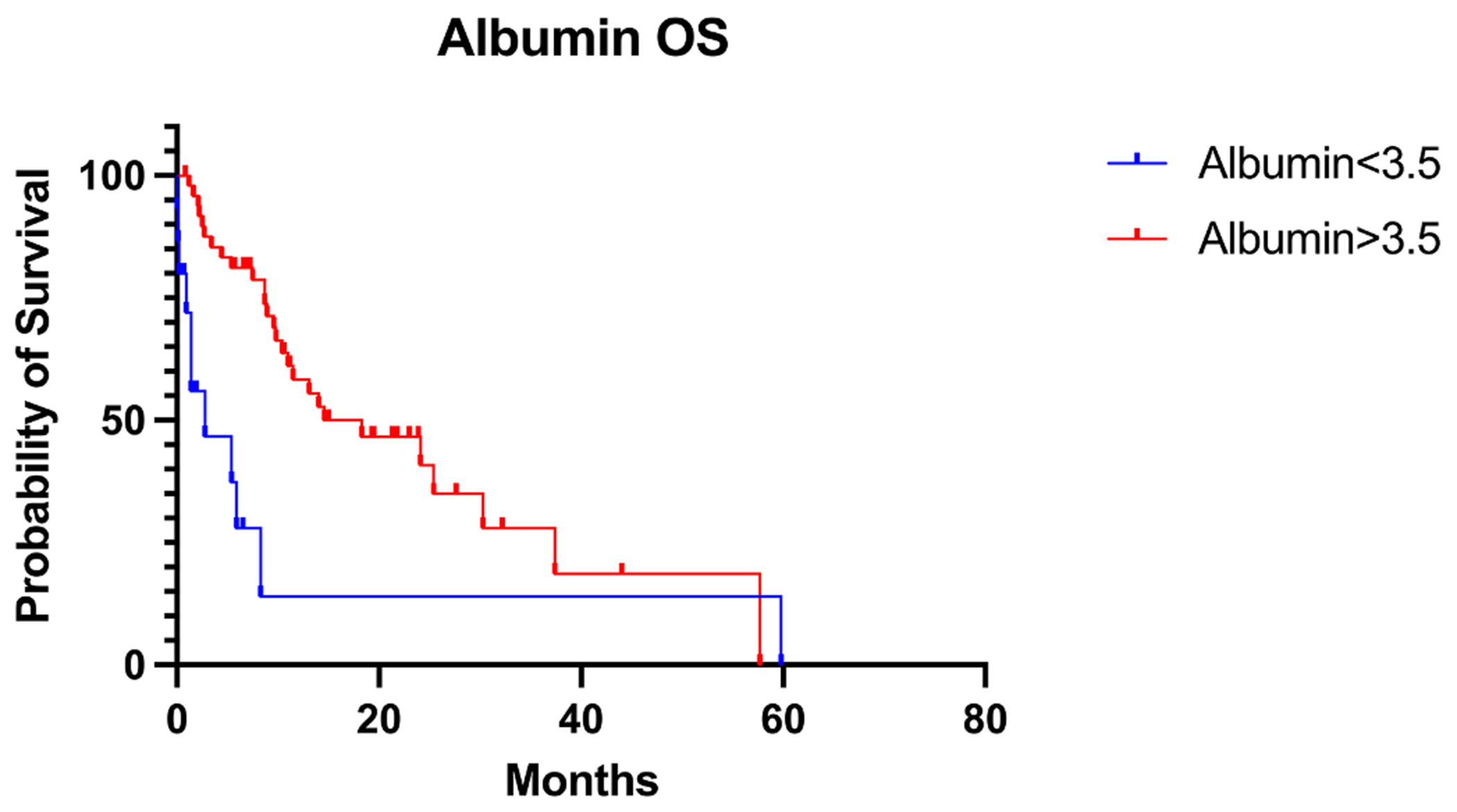
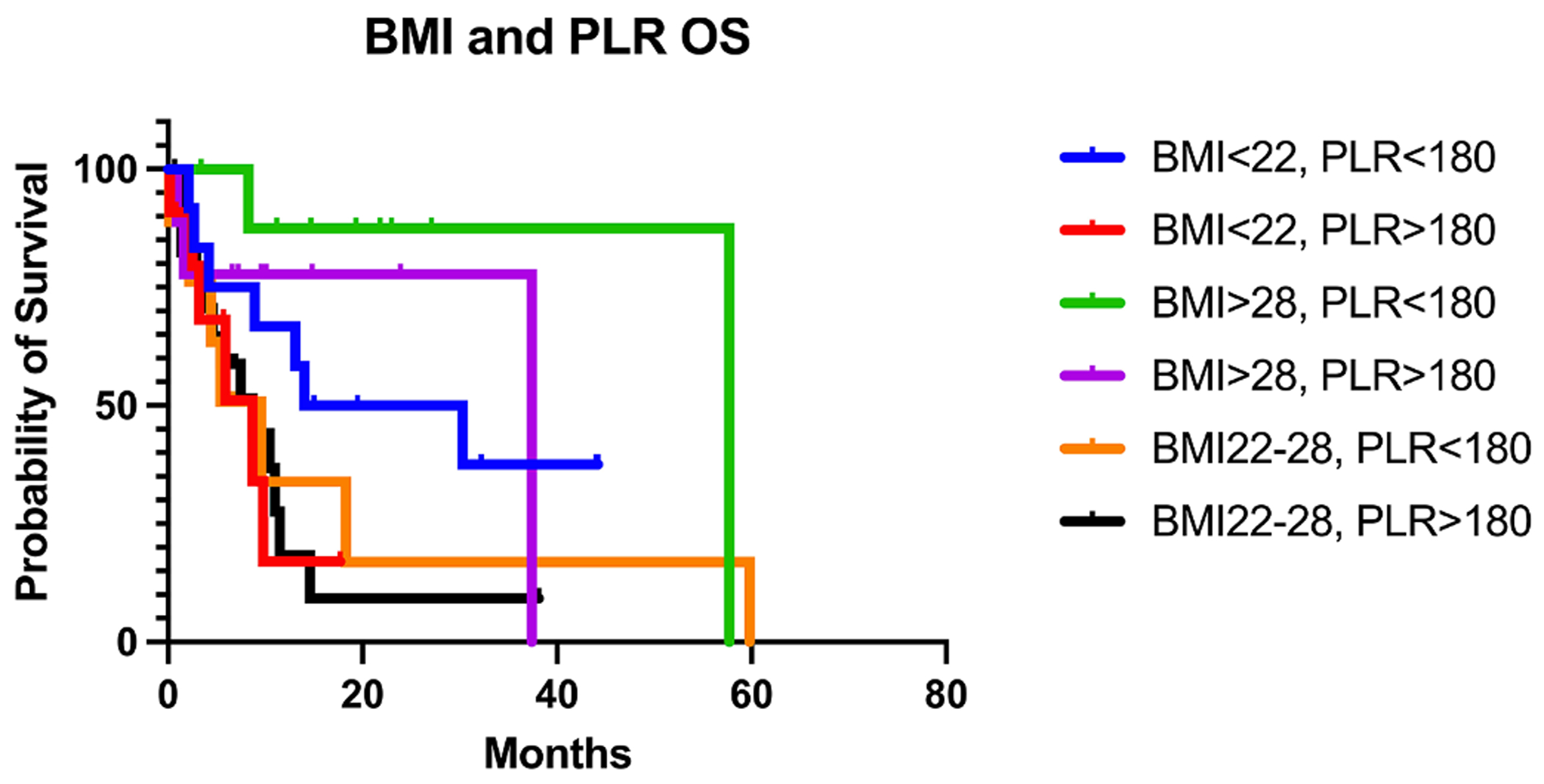
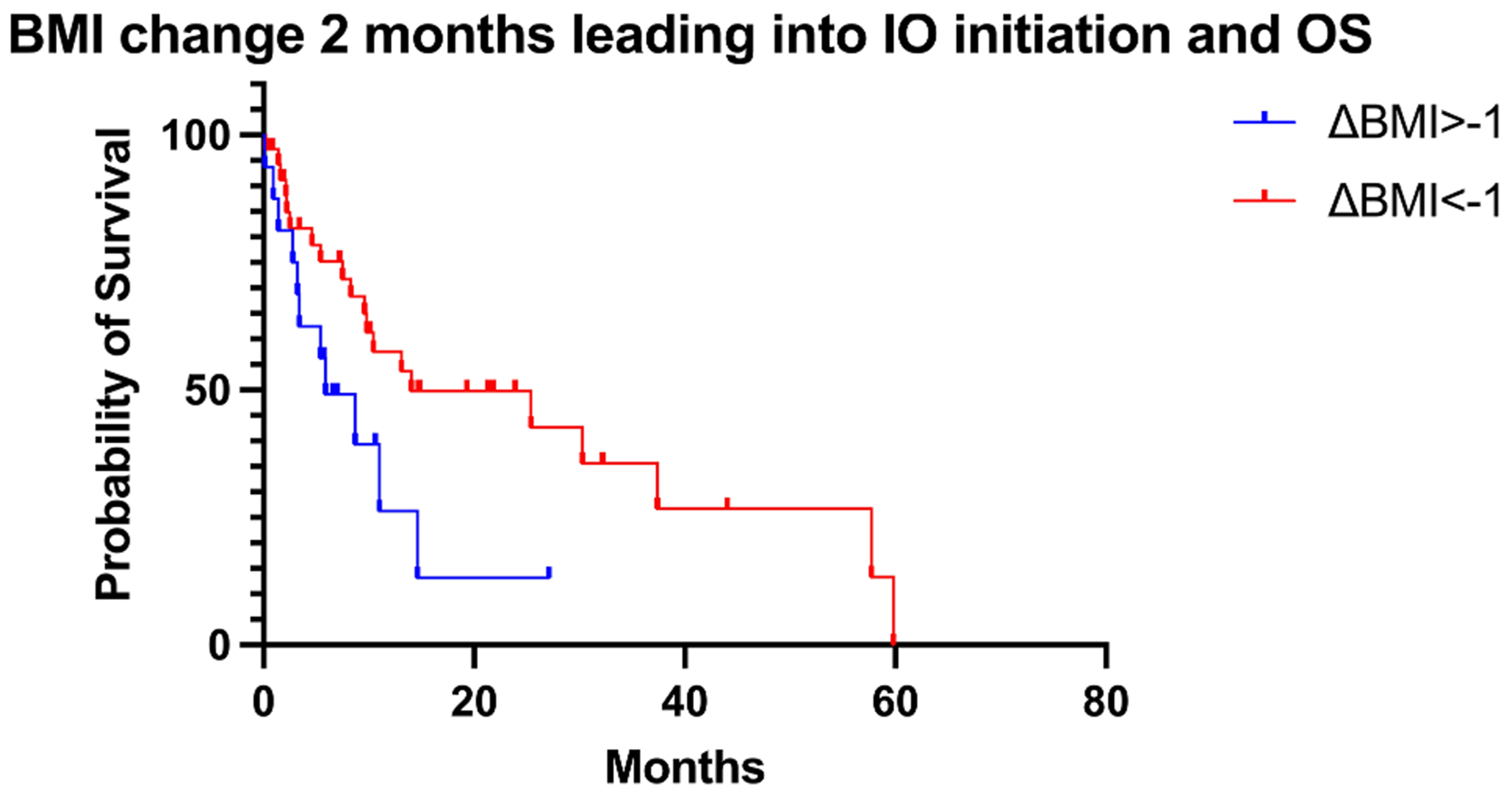
Median age was 66.5 years with 49 (65.3%) males. 25 (33.3%) had BMI < 22. 45/75 (60%) had PLR > 180. Patients with BMI < 22 had inferior OS (13.1 months (m) vs. 37.4 m in BMI > 28, p-value = 0.042) along with patients with albumin<3.5 g/dL (OS: 2.8 m vs. 14.6 m, p-value = 0.0027), and patients with PLR>180 (OS: 8.7 m vs. 23.0 m, p = 0.028). Composite BMI < 22, PLR > 180 had the worst OS, p-value = 0.0331. Multivariate analysis controlling for age, smoking, gender, PD-L1 tumor proportion score (TPS), and histology (adenocarcinoma, squamous, adenosquamous, and large cell) showed that BMI (HR: 0.8726, 95% CI: 0.7892-0.954) and PLR > 180 (HR: 2.48, 95% CI: 1.076-6.055) were significant in OS mortality risk.
Patients with a composite of BMI < 22, albumin < 3.5 g/dL, and PLR > 180 had significantly worse OS. This highlights the importance of screening for poor nutritional status and high PLR to better inform stage IV NSCLC patients receiving IO therapy of their prognosis and supportive care.
We evaluated real-world prognostic utility of platelet lymphocyte ratio (PLR), body mass index (BMI), and albumin level in 75 Stage IV NSCLC patients receiving first line IO. Patients with a composite of BMI < 22, albumin < 3.5 g/dL, and PLR > 180 had significantly worse OS. This highlights the importance of screening for poor nutritional status and high PLR to better inform stage IV NSCLC patients of their prognosis and to emphasize supportive care needs.
血小板与淋巴细胞比值(PLR)升高和低体重指数(BMI)与接受免疫治疗(IO)的非小细胞肺癌(NSCLC)患者的生存预后不良相关。我们评估了 PLR、BMI 和白蛋白水平在接受一线 IO 治疗的 IV 期 NSCLC 患者中的实际预后预测价值。
我们在 2015 年至 2022 年期间,在南加州大学诺里斯综合癌症中心和洛杉矶总医院共确定了 75 名接受一线 IO 治疗的 IV 期 NSCLC 患者。主要结局是从 IO 开始的总生存期(OS),同时关注治疗前 BMI<22、白蛋白<3.5g/dL 和 PLR>180。
中位年龄为 66.5 岁,男性 49 例(65.3%)。25 例(33.3%)BMI<22。75 例中有 45 例(60%)PLR>180。BMI<22 的患者 OS 较差(13.1 个月(m)vs. BMI>28 的 37.4 m,p 值=0.042),白蛋白<3.5g/dL 的患者 OS 也较差(OS:2.8 m vs. 14.6 m,p 值=0.0027),PLR>180 的患者 OS 也较差(OS:8.7 m vs. 23.0 m,p=0.028)。BMI<22、PLR>180 的复合指标患者 OS 最差,p 值=0.0331。多变量分析控制年龄、吸烟、性别、PD-L1 肿瘤比例评分(TPS)和组织学(腺癌、鳞状细胞癌、腺鳞癌和大细胞癌)后,BMI(HR:0.8726,95%CI:0.7892-0.954)和 PLR>180(HR:2.48,95%CI:1.076-6.055)与 OS 死亡率显著相关。
BMI<22、白蛋白<3.5g/dL 和 PLR>180 的复合指标患者 OS 显著更差。这凸显了筛查营养不良和高 PLR 的重要性,以便更好地告知接受 IO 治疗的 IV 期 NSCLC 患者其预后并强调支持性护理需求。