Sarfraz Saba, Shlaghya Gandhala, Narayana Sri Harsha, Mushtaq Ujala, Shaman Ameen Basim, Nie Chuhao, Nechi Daniel, Mazhar Iqra J, Yasir Mohamed, Arcia Franchini Ana P
Research, California Institute of Behavioral Neurosciences & Psychology, Fairfield, USA.
Cureus. 2023 Jul 22;15(7):e42292. doi: 10.7759/cureus.42292. eCollection 2023 Jul.
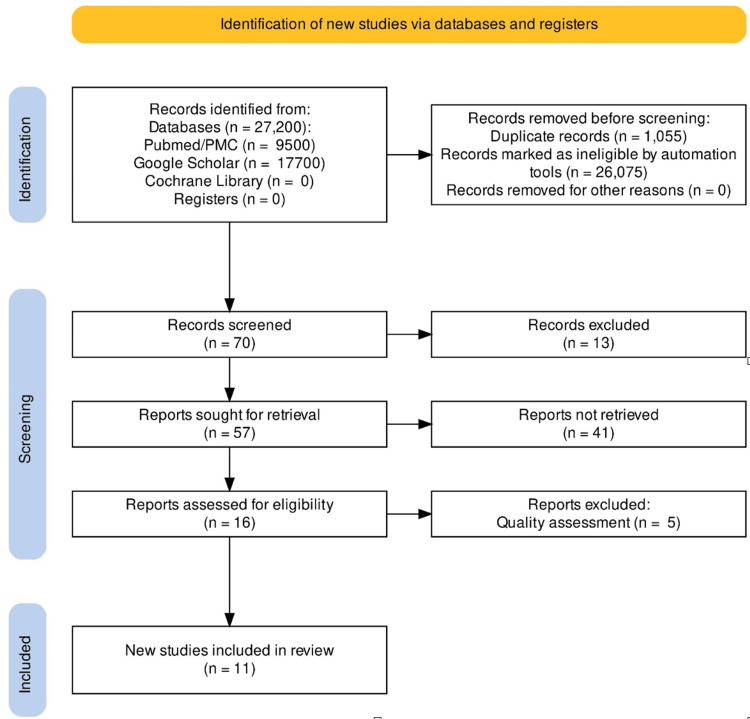
Autism spectrum disorder (ASD) is a neurological deficit in brain functions that prevents a child from having a normal social life like his peers. It results in the inability to interact and communicate with others. Unsurprisingly, the alarming increase in screen-time exposure in children has become even more of a concern. Electronic devices are a double-edged sword. Despite their benefits, they have many potential hazards to children's neurological development. Previous studies have investigated the effects of unsupervised screen time and its impact on white matter development during the early years of life of children. The white matter has an important role in the development of neurological functions. This systematic review aims to qualitatively analyze the literature available on early screen time exposure and its association with the risk of developing ASD. This systematic review implemented the Preferred Reporting Items for Systematic Review and Meta-Analyses (PRISMA) 2020 guidelines. PubMed, PubMed Central (PMC), Google Scholar, and Cochrane Library databases were searched for data in the recent six years. A total of 27,200 articles were identified using the MeSH and keywords through four selected databases. Search results revealed 70 from PubMed, 17,700 from Google Scholar, zero from Cochrane Library, and 9,430 from PubMed Central. After applying filters and screening the results by title and abstract and then by full text, 11 studies fulfilled the criteria to be included in the review. We found that the longer the period of screen exposure, the higher the risk that the child may develop ASD. Further, the earlier the child is exposed to screens, the higher the risk of developing ASD in children compared to children exposed later.
自闭症谱系障碍(ASD)是一种大脑功能的神经缺陷,它使儿童无法像同龄人那样拥有正常的社交生活。这导致儿童无法与他人互动和交流。毫不奇怪,儿童屏幕使用时间的惊人增加已成为一个更令人担忧的问题。电子设备是一把双刃剑。尽管它们有好处,但对儿童的神经发育有许多潜在危害。先前的研究调查了无监督屏幕使用时间的影响及其对儿童早年白质发育的影响。白质在神经功能发育中起着重要作用。本系统评价旨在定性分析关于早期屏幕使用时间暴露及其与患ASD风险之间关联的现有文献。本系统评价遵循了系统评价和Meta分析的首选报告项目(PRISMA)2020指南。在PubMed、PubMed Central(PMC)、谷歌学术和Cochrane图书馆数据库中搜索了最近六年的数据。通过四个选定的数据库,使用医学主题词(MeSH)和关键词共识别出27200篇文章。搜索结果显示,来自PubMed的有70篇,来自谷歌学术的有17700篇,来自Cochrane图书馆的为零,来自PubMed Central的有9430篇。在应用筛选条件并通过标题和摘要然后全文筛选结果后,有11项研究符合纳入本评价的标准。我们发现,屏幕暴露时间越长,儿童患ASD的风险就越高。此外,与较晚接触屏幕的儿童相比,儿童接触屏幕的时间越早,患ASD的风险就越高。