CAS Key Laboratory of Insect Developmental and Evolutionary Biology, CAS Center for Excellence in Molecular Plant Sciences, Shanghai Institute of Plant Physiology and Ecology, Chinese Academy of Sciences, Shanghai, China.
CAS Center for Excellence in Biotic Interactions, University of Chinese Academy of Sciences, Beijing, China.
Nat Commun. 2023 Aug 24;14(1):5157. doi: 10.1038/s41467-023-40887-6.
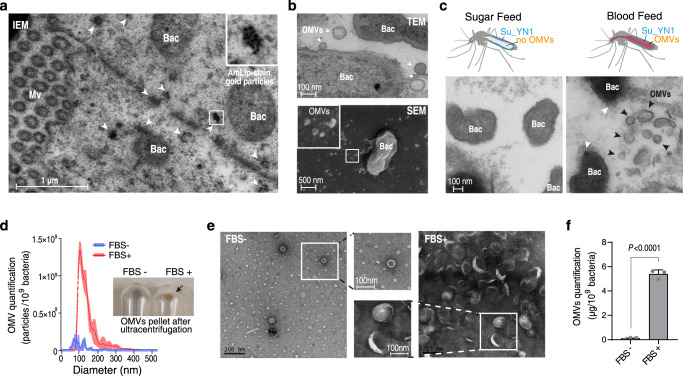
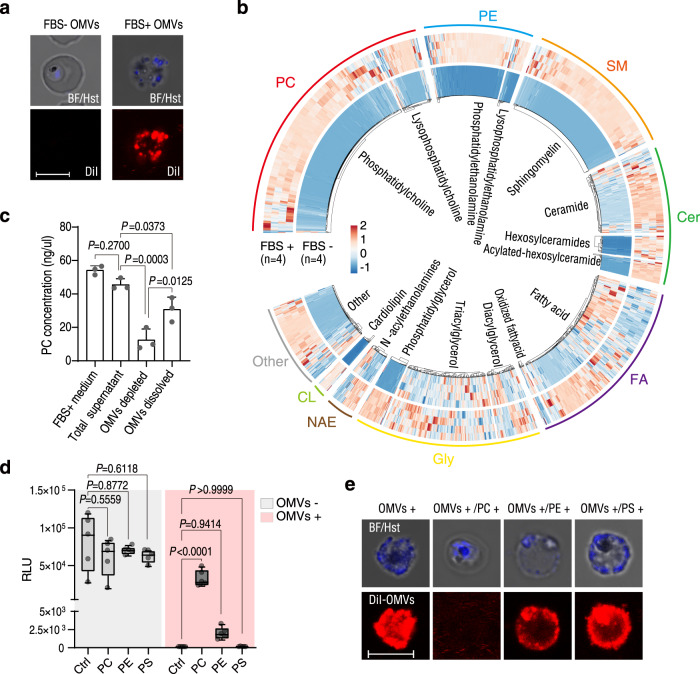
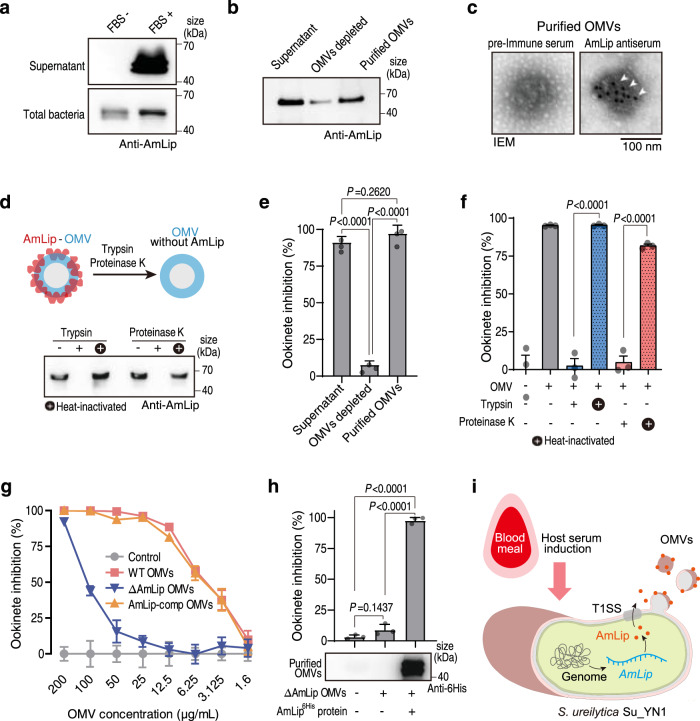
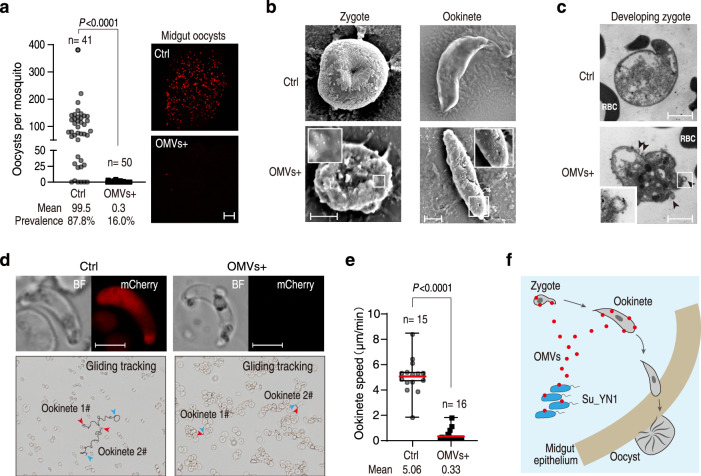
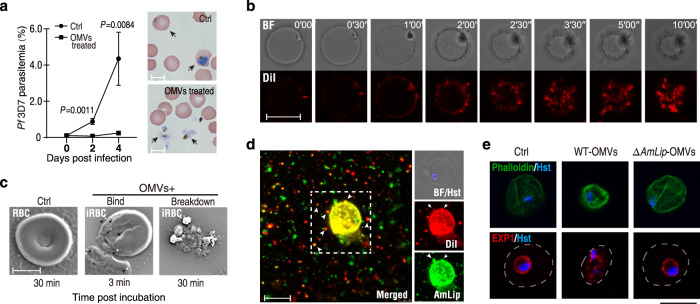
The gut microbiota is a crucial modulator of Plasmodium infection in mosquitoes, including the production of anti-Plasmodium effector proteins. But how the commensal-derived effectors are translocated into Plasmodium parasites remains obscure. Here we show that a natural Plasmodium blocking symbiotic bacterium Serratia ureilytica Su_YN1 delivers the effector lipase AmLip to Plasmodium parasites via outer membrane vesicles (OMVs). After a blood meal, host serum strongly induces Su_YN1 to release OMVs and the antimalarial effector protein AmLip into the mosquito gut. AmLip is first secreted into the extracellular space via the T1SS and then preferentially loaded on the OMVs that selectively target the malaria parasite, leading to targeted killing of the parasites. Notably, these serum-induced OMVs incorporate certain serum-derived lipids, such as phosphatidylcholine, which is critical for OMV uptake by Plasmodium via the phosphatidylcholine scavenging pathway. These findings reveal that this gut symbiotic bacterium evolved to deliver secreted effector molecules in the form of extracellular vesicles to selectively attack parasites and render mosquitoes refractory to Plasmodium infection. The discovery of the role of gut commensal-derived OMVs as carriers in cross-kingdom communication between mosquito microbiota and Plasmodium parasites offers a potential innovative strategy for blocking malaria transmission.
肠道微生物群是蚊子中疟原虫感染的重要调节因子,包括产生抗疟原虫效应蛋白。但是共生菌衍生的效应物如何被转运到疟原虫寄生虫中仍然不清楚。在这里,我们表明,一种天然的疟原虫阻断共生细菌 Serratia ureilytica Su_YN1 通过外膜囊泡 (OMV) 将效应物脂肪酶 AmLip 递送到疟原虫寄生虫中。在饱餐一顿血液后,宿主血清强烈诱导 Su_YN1 释放 OMV 和抗疟效应蛋白 AmLip 进入蚊子肠道。AmLip 首先通过 T1SS 分泌到细胞外空间,然后优先加载到专门针对疟原虫的 OMV 上,导致寄生虫的靶向杀伤。值得注意的是,这些血清诱导的 OMV 包含某些血清衍生的脂质,例如磷脂酰胆碱,这对于疟原虫通过磷脂酰胆碱摄取途径摄取 OMV 至关重要。这些发现表明,这种肠道共生细菌进化为以细胞外囊泡的形式传递分泌的效应分子,以选择性地攻击寄生虫,使蚊子对疟原虫感染产生抗性。肠道共生菌衍生的 OMV 作为载体在蚊子微生物群和疟原虫寄生虫之间的跨界交流中的作用的发现,为阻断疟疾传播提供了一种潜在的创新策略。