Mubarak Yousef, Koeshidayatullah Ardiansyah
Department of Geosciences, College of Petroleum Engineering and Geosciences, King Fahd University of Petroleum and Minerals, Dhahran, Saudi Arabia.
Saudi Aramco, Dhahran, 31311, Saudi Arabia.
Sci Rep. 2023 Aug 24;13(1):13812. doi: 10.1038/s41598-023-40904-0.
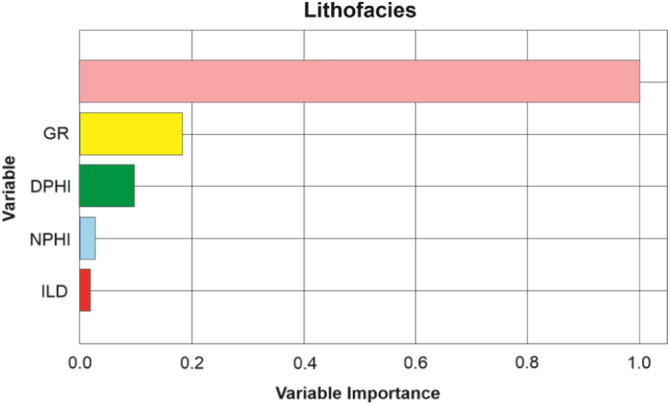
Recent advances in machine learning (ML) have transformed the landscape of energy exploration, including hydrocarbon, CO storage, and hydrogen. However, building competent ML models for reservoir characterization necessitates specific in-depth knowledge in order to fine-tune the models and achieve the best predictions, limiting the accessibility of machine learning in geosciences. To mitigate this issue, we implemented the recently emerged automated machine learning (AutoML) approach to perform an algorithm search for conducting an unconventional reservoir characterization with a more optimized and accessible workflow than traditional ML approaches. In this study, over 1000 wells from Alberta's Athabasca Oil Sands were analyzed to predict various key reservoir properties such as lithofacies, porosity, volume of shale, and bitumen mass percentage. Our proposed workflow consists of two stages of AutoML predictions, including (1) the first stage focuses on predicting the volume of shale and porosity by using conventional well log data, and (2) the second stage combines the predicted outputs with well log data to predict the lithofacies and bitumen percentage. The findings show that out of the ten different models tested for predicting the porosity (78% in accuracy), the volume of shale (80.5%), bitumen percentage (67.3%), and lithofacies classification (98%), distributed random forest, and gradient boosting machine emerged as the best models. When compared to the manually fine-tuned conventional machine learning algorithms, the AutoML-based algorithms provide a notable improvement on reservoir property predictions, with higher weighted average f1-scores of up to 15-20% in the classification problem and 5-10% in the adjusted-R score for the regression problems in the blind test dataset, and it is achieved only after ~ 400 s of training and testing processes. In addition, from the feature ranking extraction technique, there is a good agreement with domain experts regarding the most significant input parameters in each prediction. Therefore, it is evidence that the AutoML workflow has proven powerful in performing advanced petrophysical analysis and reservoir characterization with minimal time and human intervention, allowing more accessibility to domain experts while maintaining the model's explainability. Integration of AutoML and subject matter experts could advance artificial intelligence technology implementation in optimizing data-driven energy geosciences.
机器学习(ML)的最新进展改变了能源勘探领域,包括碳氢化合物、二氧化碳储存和氢能领域。然而,要构建用于储层表征的有效ML模型,需要特定的深入知识,以便对模型进行微调并实现最佳预测,这限制了机器学习在地球科学中的应用。为缓解这一问题,我们采用了最近出现的自动机器学习(AutoML)方法,通过比传统ML方法更优化、更易操作的工作流程,进行算法搜索以开展非常规储层表征。在本研究中,对来自阿尔伯塔省阿萨巴斯卡油砂区的1000多口井进行了分析,以预测各种关键储层特性,如岩相、孔隙度、页岩体积和沥青质量百分比。我们提出的工作流程包括两个阶段的AutoML预测,即(1)第一阶段专注于利用常规测井数据预测页岩体积和孔隙度,以及(2)第二阶段将预测输出与测井数据相结合,以预测岩相和沥青百分比。研究结果表明,在测试的用于预测孔隙度(准确率78%)、页岩体积(80.5%)、沥青百分比(67.3%)和岩相分类(98%)的十种不同模型中,分布式随机森林和梯度提升机成为最佳模型。与手动微调的传统机器学习算法相比,基于AutoML的算法在储层特性预测方面有显著改进,在盲测数据集中,分类问题的加权平均F1分数提高了15 - 20%,回归问题的调整R分数提高了5 - 10%,且仅在约400秒的训练和测试过程后就实现了这一提升。此外,从特征排名提取技术来看,在每个预测中最重要的输入参数方面,与领域专家的意见高度一致。因此,有证据表明AutoML工作流程在以最少的时间和人力干预进行高级岩石物理分析和储层表征方面已证明其强大功能,在保持模型可解释性的同时,让领域专家更容易使用。AutoML与主题专家的整合可以推动人工智能技术在优化数据驱动的能源地球科学中的应用。