Zanier Elisa R, Pischiutta Francesca, Rulli Eliana, Vargiolu Alessia, Elli Francesca, Gritti Paolo, Gaipa Giuseppe, Belotti Daniela, Basso Gianpaolo, Zoerle Tommaso, Stocchetti Nino, Citerio Giuseppe
Department of Acute Brain and Cardiovascular Injury, Istituto di Ricerche Farmacologiche Mario Negri IRCCS, Milan, Italy.
Department of Clinical Oncology, Istituto di Ricerche Farmacologiche Mario Negri IRCCS, Milan, Italy.
Intensive Care Med Exp. 2023 Aug 25;11(1):56. doi: 10.1186/s40635-023-00535-1.
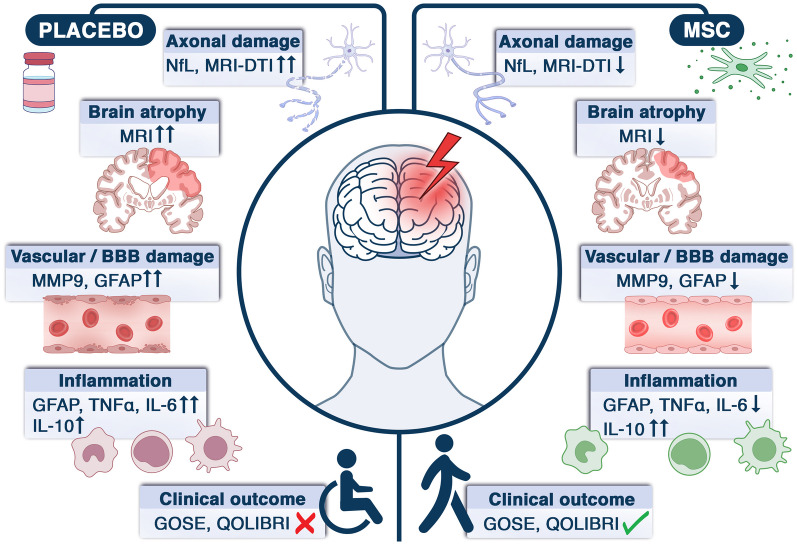
Traumatic brain injury (TBI) is a significant cause of death and disability, with no effective neuroprotective drugs currently available for its treatment. Mesenchymal stromal cell (MSC)-based therapy shows promise as MSCs release various soluble factors that can enhance the injury microenvironment through processes, such as immunomodulation, neuroprotection, and brain repair. Preclinical studies across different TBI models and severities have demonstrated that MSCs can improve functional and structural outcomes. Moreover, clinical evidence supports the safety of third-party donor bank-stored MSCs in adult subjects. Building on this preclinical and clinical data, we present the protocol for an academic, investigator-initiated, multicenter, double-blind, randomised, placebo-controlled, adaptive phase II dose-finding study aiming to evaluate the safety and efficacy of intravenous administration of allogeneic bone marrow-derived MSCs to severe TBI patients within 48 h of injury.
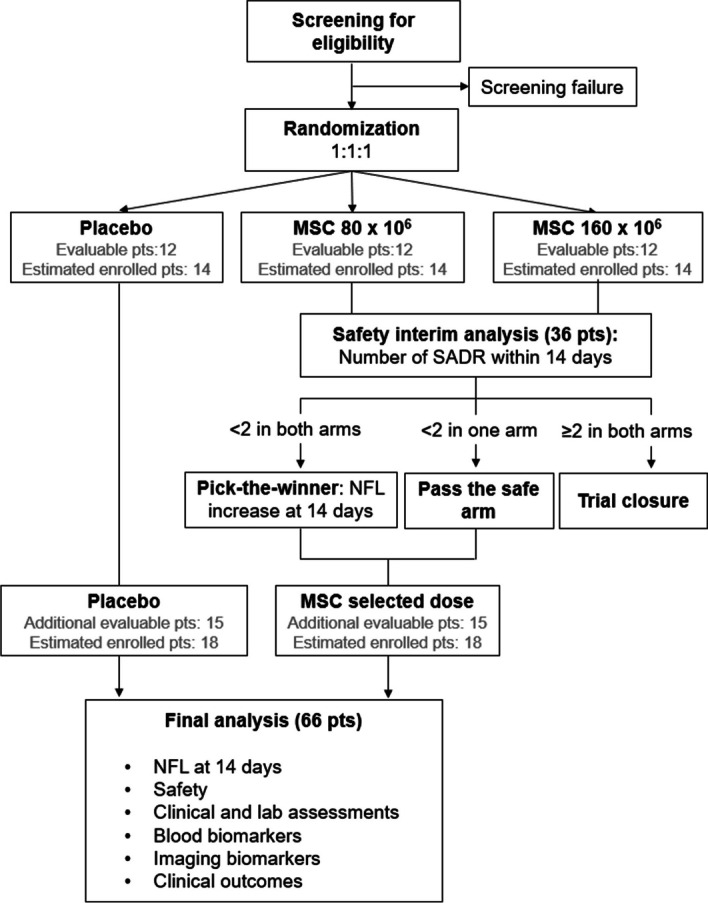
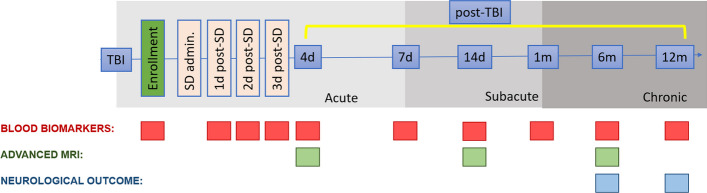
METHODS/DESIGN: The study will be conducted in two steps. Step 1 will enrol 42 patients, randomised in a 1:1:1 ratio to receive 80 million MSCs, 160 million MSCs or a placebo to establish safety and identify the most promising dose. Step 2 will enrol an additional 36 patients, randomised in a 1:1 ratio to receive the selected dose of MSCs or placebo. The activity of MSCs will be assessed by quantifying the plasmatic levels of neurofilament light (NfL) at 14 days as a biomarker of neuronal damage. It could be a significant breakthrough if the study demonstrates the safety and efficacy of MSC-based therapy for severe TBI patients. The results of this trial could inform the design of a phase III clinical trial aimed at establishing the efficacy of the first neurorestorative therapy for TBI.
Overall, the MATRIx trial is a critical step towards developing an effective treatment for TBI, which could significantly improve the lives of millions worldwide affected by this debilitating condition. Trial Registration EudraCT: 2022-000680-49.
创伤性脑损伤(TBI)是导致死亡和残疾的重要原因,目前尚无有效的神经保护药物用于治疗。基于间充质基质细胞(MSC)的疗法显示出前景,因为MSC可释放多种可溶性因子,这些因子可通过免疫调节、神经保护和脑修复等过程改善损伤微环境。针对不同TBI模型和严重程度的临床前研究表明,MSC可改善功能和结构结局。此外,临床证据支持第三方供体库储存的MSC在成年受试者中的安全性。基于这些临床前和临床数据,我们提出了一项由研究者发起的学术性、多中心、双盲、随机、安慰剂对照、适应性II期剂量探索研究方案,旨在评估在损伤后48小时内对重度TBI患者静脉注射异体骨髓来源的MSC的安全性和有效性。
方法/设计:该研究将分两个阶段进行。第1阶段将招募42名患者,按1:1:1的比例随机分组,分别接受8000万个MSC、1.6亿个MSC或安慰剂,以确定安全性并找出最有前景的剂量。第2阶段将再招募36名患者,按1:1的比例随机分组,接受选定剂量的MSC或安慰剂。将在第14天通过量化神经丝轻链(NfL)的血浆水平来评估MSC的活性,作为神经元损伤的生物标志物。如果该研究证明基于MSC的疗法对重度TBI患者具有安全性和有效性,那将是一个重大突破。该试验的结果可为旨在确立首个TBI神经修复疗法疗效的III期临床试验设计提供参考。
总体而言,MATRIx试验是开发TBI有效治疗方法的关键一步,这可能会显著改善全球数百万受这种使人衰弱疾病影响的人的生活。试验注册:EudraCT:2022-000680-49。