National Citrus Engineering Research Center, Citrus Research Institute, Southwest University, Chongqing, 400712, China.
BMC Plant Biol. 2023 Aug 25;23(1):405. doi: 10.1186/s12870-023-04413-6.
Terpenoids play essential roles in plant defense against biotic stresses. In Citrus species, the monoterpene linalool mediates resistance against citrus canker disease caused by the gram-negative bacteria Xanthomonas citri subsp. citri (Xcc). Previous work had associated linalool contents with resistance; here we characterize transcriptional responses of linalool synthase genes.
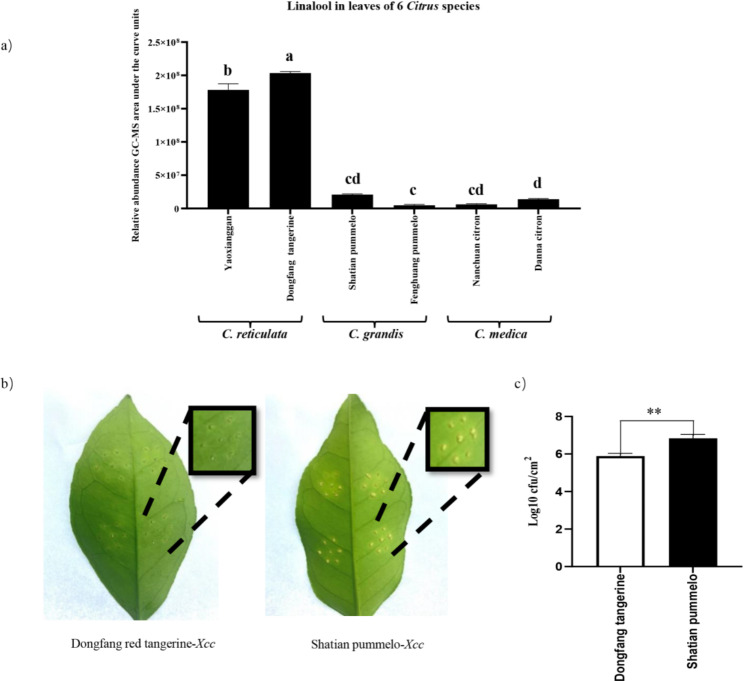
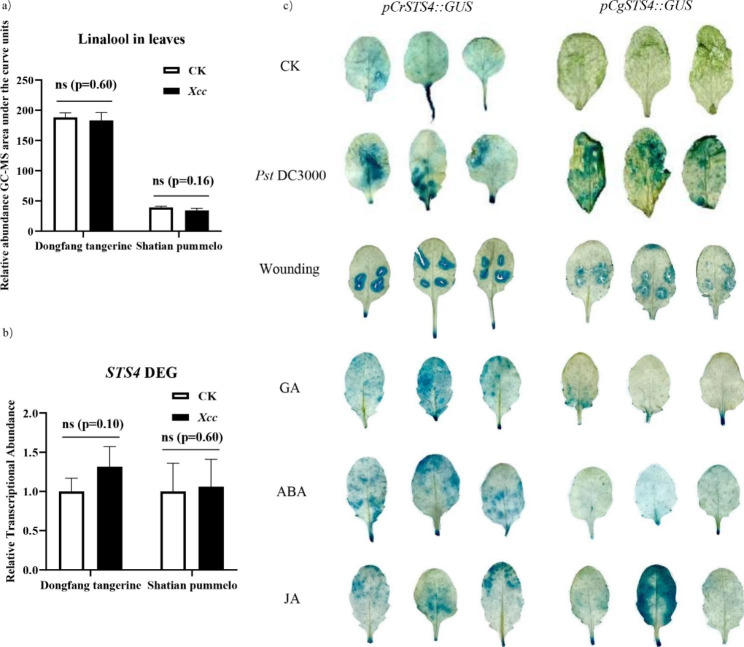
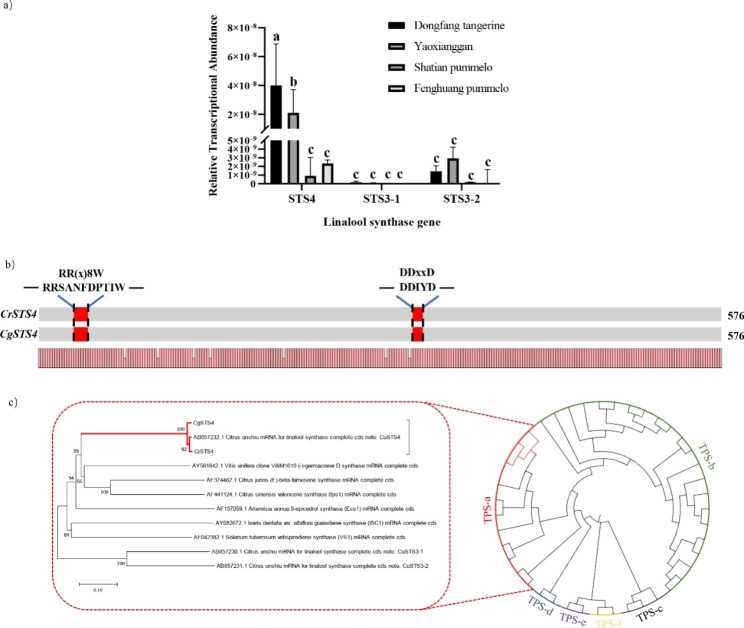
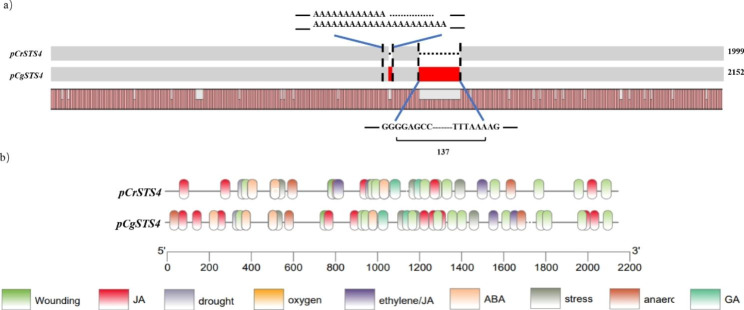
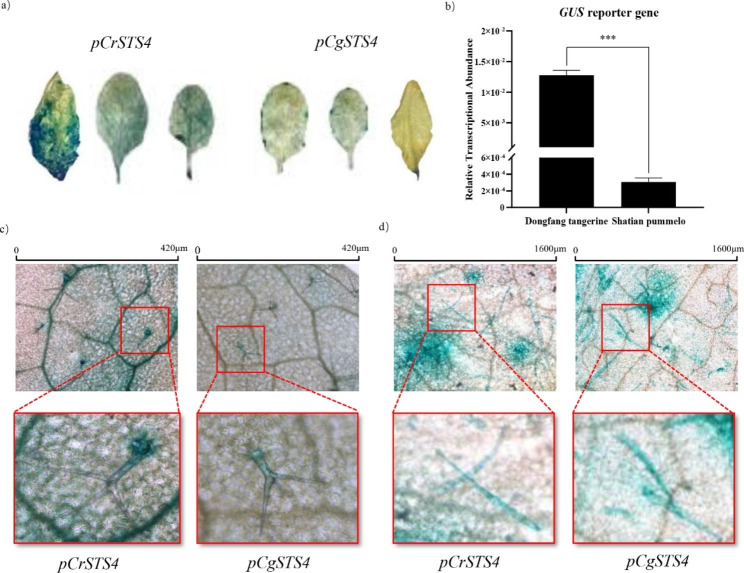
Leaf linalool contents are highly variable among different Citrus species. "Dongfang" tangerine (Citrus reticulata), a species with high linalool levels was more resistant to Xcc than "Shatian" pummelo (C. grandis) which accumulates only small amounts of linalool. The coding sequences of the major leaf-expressed linalool synthase gene (STS4) are highly conserved, while transcript levels differ between the two Citrus species. To understand this apparent differential transcription, we isolated the promoters of STS4 from the two species, fused them to a GUS reporter and expressed them in Arabidopsis. This reporter system revealed that the two promoters have different constitutive activities, mainly in trichomes. Interestingly, both linalool contents and STS4 transcript levels are insensitive to Xcc infestation in citrus plants, but in these transgenic Arabidopsis plants, the promoters are activated by challenge of a bacterial pathogen Pseudomonas syringae, as well as wounding and external jasmonic acid treatment.
Our study reveals variation in linalool and resistance to Xcc in citrus plants, which may be mediated by different promoter activities of a terpene synthase gene in different Citrus species.
萜类化合物在植物抵御生物胁迫方面发挥着重要作用。在柑橘属物种中,单萜醇芳樟醇介导了对由革兰氏阴性细菌柑橘溃疡病菌(Xanthomonas citri subsp. citri,Xcc)引起的柑橘溃疡病的抗性。先前的工作将芳樟醇含量与抗性联系起来;在这里,我们对芳樟醇合酶基因的转录反应进行了表征。
不同柑橘物种叶片芳樟醇含量差异很大。芳樟醇含量较高的“东方红”蜜桔(Citrus reticulata)比仅积累少量芳樟醇的“沙田”柚(C. grandis)对 Xcc 的抗性更强。主要叶片表达的芳樟醇合酶基因(STS4)的编码序列高度保守,而两种柑橘物种的转录水平不同。为了理解这种明显的差异转录,我们从这两个物种中分离了 STS4 的启动子,将它们与 GUS 报告基因融合,并在拟南芥中表达。该报告系统表明,这两个启动子具有不同的组成活性,主要在毛状体中。有趣的是,两种柑橘植物的芳樟醇含量和 STS4 转录水平均不受 Xcc 侵染的影响,但在这些转基因拟南芥植物中,启动子被细菌病原体丁香假单胞菌、创伤和外部茉莉酸处理激活。
我们的研究揭示了柑橘植物中芳樟醇和对 Xcc 抗性的差异,这可能是由不同柑橘物种中萜烯合酶基因的不同启动子活性介导的。