Esteve-Pardo Guillem, Barreiro-Gabeiras Pedro, Esteve-Colomina Lino
Group Aula Dental Avanzada, 03001 Alicante, Spain.
Clin Pract. 2023 Aug 2;13(4):898-913. doi: 10.3390/clinpract13040082.
There needs to be more general agreement on the most effective treatment for the emergency patient with Symptomatic Irreversible Pulpitis (SIP). This equivalence randomised clinical study compared the clinical efficiency, as an urgent treatment, of pulpotomy (POT) and pulpectomy (PEC) in the permanent teeth with SIP. The primary outcome was pain management, and the secondary outcome was the patient's perception of duration, comfort, and satisfaction.
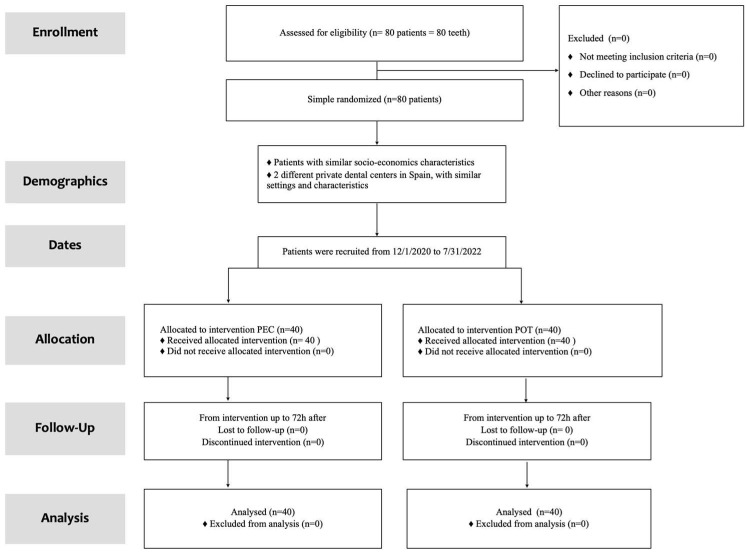
MATERIAL & METHODS: 80 patients were blindly and randomly allocated into two equal parallel groups, the control group treated by PEC and the test group by POT. Data were collected through numerical rating scales (NRS) during the intervention and 6, 24, and 72 h post-op. Non-parametric tests were used to analyse the data. The Brunner-Longer models were adopted for longitudinal data and the analysis of variance (ANOVA)-type statistical was used.
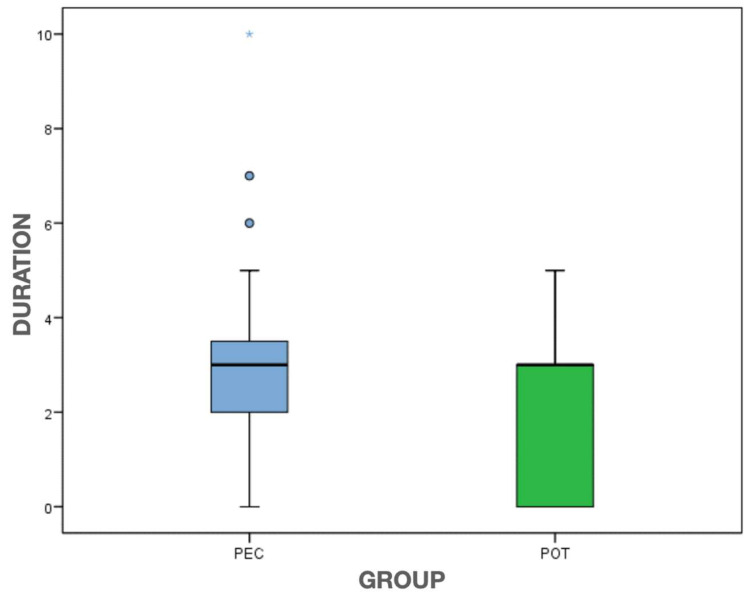
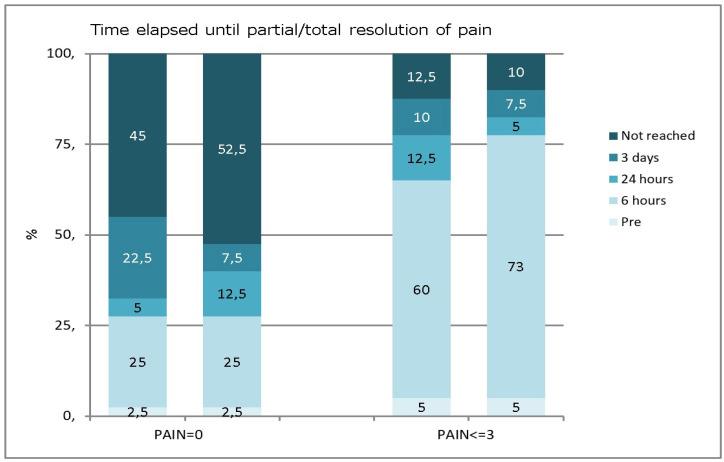
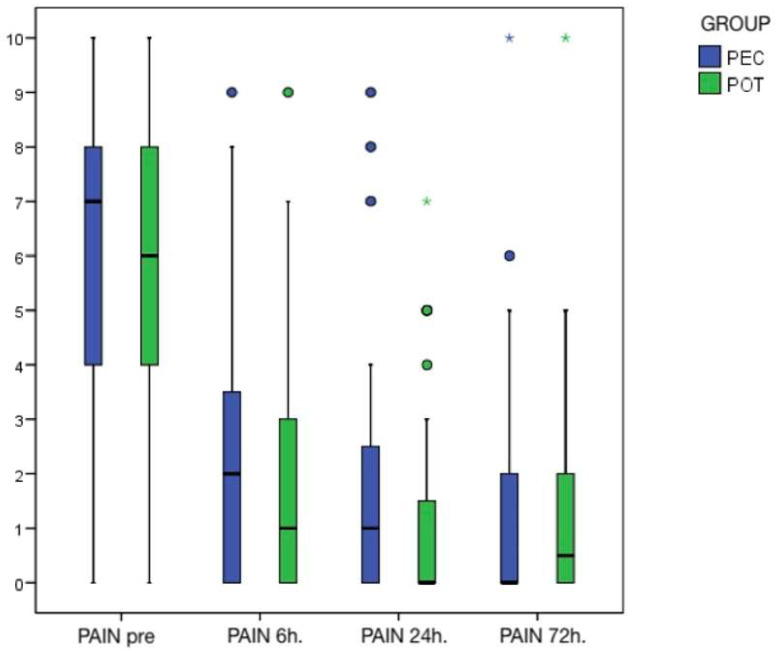
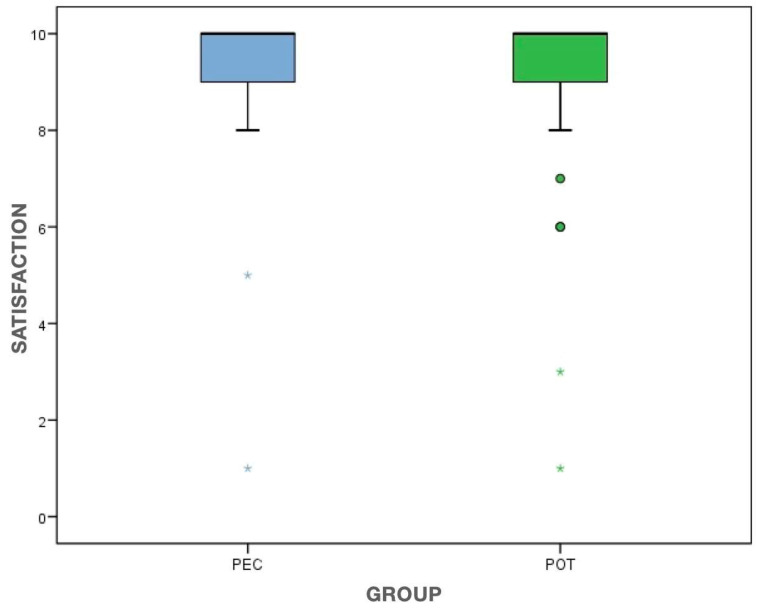
The mean preoperative pain levels for the whole sample scored 5.8 ± 2.8 and significantly decreased to 2.1 ± 2.4 at 6 h, 1.5 ± 2.1 at 24 h, and 1.3 ± 2 at 72 h, without any differences between the groups. No significant differences were found in the patient's perception of treatment discomfort or duration between the groups. Three days after the intervention, patient satisfaction was high, with 9.2 ± 1.7 and 9.1 ± 2 in the PEC and POT groups, respectively. Self-reported pain was the only variable penalising the patient's final satisfaction.
The current randomised control trial (RCT) showed that both pulpectomy and pulpotomy effectively eliminate pain and achieve high levels of patient satisfaction. Furthermore, the patient's perceptions of the duration and discomfort of the two treatments were similar. Given that pulpotomy is a faster and more straightforward technique, it may be recommended as a viable and pragmatic option for treating emergency patients with symptomatic irreversible pulpitis.
对于有症状的不可逆性牙髓炎(SIP)急诊患者的最有效治疗方法,需要达成更多的普遍共识。这项等效性随机临床研究比较了在患有SIP的恒牙中,作为紧急治疗方法的牙髓切断术(POT)和牙髓摘除术(PEC)的临床疗效。主要结果是疼痛管理,次要结果是患者对治疗持续时间、舒适度和满意度的感知。
80例患者被随机分为两个平行且人数相等的组,对照组采用PEC治疗,试验组采用POT治疗。在干预期间以及术后6小时、24小时和72小时,通过数字评分量表(NRS)收集数据。采用非参数检验分析数据。纵向数据采用布伦纳 - 朗格模型,统计分析采用方差分析(ANOVA)类型。
整个样本术前平均疼痛水平评分为5.8±2.8,在6小时时显著降至2.1±2.4,24小时时为1.5±2.1,72小时时为1.3±2,两组之间无差异。两组患者对治疗不适或持续时间的感知无显著差异。干预三天后,患者满意度较高,PEC组和POT组分别为9.2±1.7和9.1±2。自我报告的疼痛是影响患者最终满意度的唯一变量。
当前的随机对照试验(RCT)表明,牙髓摘除术和牙髓切断术均能有效消除疼痛并实现较高的患者满意度。此外,患者对两种治疗持续时间和不适的感知相似。鉴于牙髓切断术是一种更快、更直接的技术,对于有症状的不可逆性牙髓炎急诊患者,可将其作为一种可行且实用的治疗选择推荐。