Hayashibara Carolina Alessandra de Almeida, Lopes Mariana da Silva, Tobias Peri A, Santos Isaneli Batista Dos, Figueredo Everthon Fernandes, Ferrarezi Jessica Aparecida, Marques João Paulo Rodrigues, Marcon Joelma, Park Robert F, Teixeira Paulo José Pereira Lima, Quecine Maria Carolina
Department of Genetics, "Luiz de Queiroz" College of Agriculture, University of São Paulo, Piracicaba 13418-900, SP, Brazil.
School of Life and Environmental Sciences, The University of Sydney, Camperdown, NSW 2006, Australia.
J Fungi (Basel). 2023 Aug 14;9(8):848. doi: 10.3390/jof9080848.
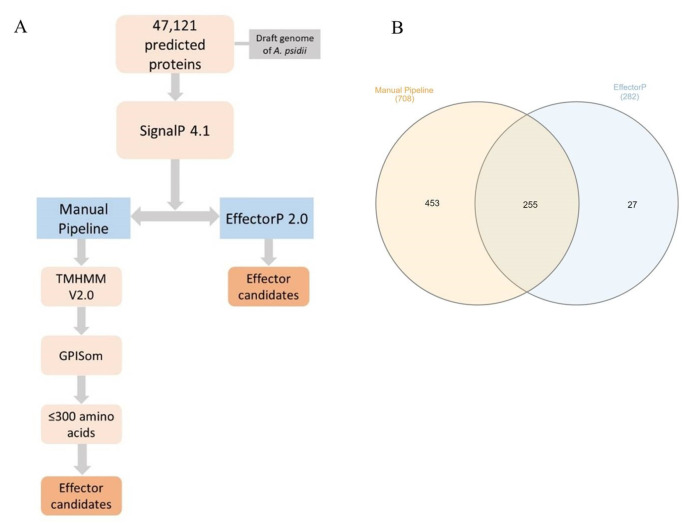
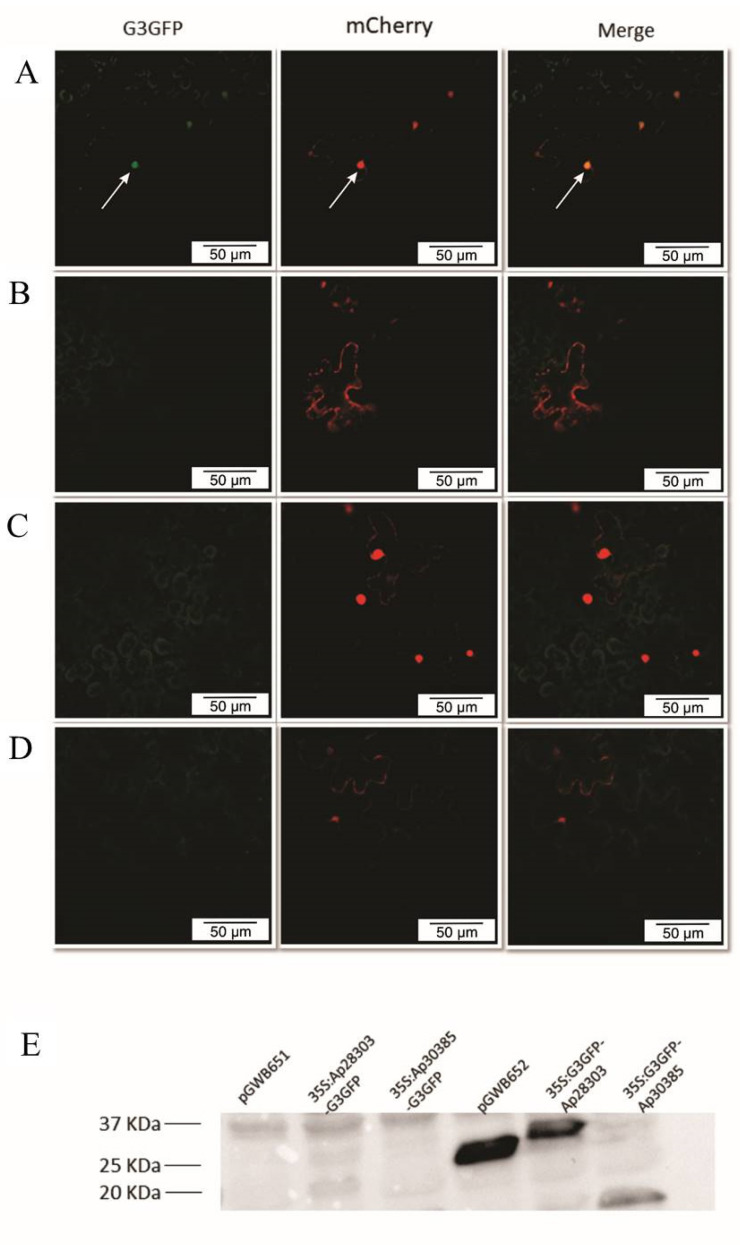
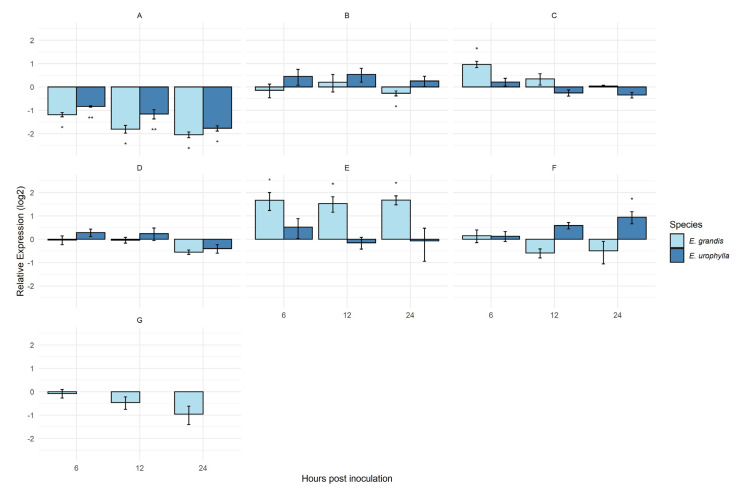
is a biotrophic fungus that causes myrtle rust. First described in Brazil, it has since spread to become a globally important pathogen that infects more than 480 myrtaceous species. One of the most important commercial crops affected by is eucalypt, a widely grown forestry tree. The spp. interaction is poorly understood, but pathogenesis is likely driven by pathogen-secreted effector molecules. Here, we identified and characterized a total of 255 virulence effector candidates using a genome assembly of strain MF-1, which was recovered from in Brazil. We show that the expression of seven effector candidate genes is modulated by cell wax from leaves sourced from resistant and susceptible hosts. Two effector candidates with different subcellular localization predictions, and with specific gene expression profiles, were transiently expressed with GFP-fusions in leaves. Interestingly, we observed the accumulation of an effector candidate, Ap28303, which was upregulated under cell wax from rust susceptible and described as a peptidase inhibitor I9 domain-containing protein in the nucleus. This was in accordance with in silico analyses. Few studies have characterized nuclear effectors. Our findings open new perspectives on the study of interactions by providing a potential entry point to understand how the pathogen manipulates its hosts in modulating physiology, structure, or function with effector proteins.
是一种引起桃金娘锈病的活体营养型真菌。最初在巴西被描述,此后已传播成为一种全球重要的病原体,感染超过480种桃金娘科物种。受其影响的最重要商业作物之一是桉树,一种广泛种植的林木。对该病原体与桉树物种之间的相互作用了解甚少,但发病机制可能由病原体分泌的效应分子驱动。在这里,我们使用从巴西的桉树上分离得到的菌株MF-1的基因组组装,鉴定并表征了总共255个毒力效应候选物。我们表明,七个效应候选基因的表达受到来自抗性和易感宿主叶片的细胞蜡的调节。两个具有不同亚细胞定位预测且具有特定基因表达谱的效应候选物,与绿色荧光蛋白融合后在桉树叶中瞬时表达。有趣的是,我们观察到一个效应候选物Ap28303的积累,它在来自锈病易感桉树的细胞蜡作用下上调,并且在细胞核中被描述为一种含有肽酶抑制剂I9结构域的蛋白质。这与计算机分析结果一致。很少有研究对核效应子进行表征。我们的发现为研究该病原体与桉树的相互作用开辟了新的视角,通过提供一个潜在的切入点来理解病原体如何利用效应蛋白操纵其宿主来调节生理、结构或功能。