Sekiya Alline, Marques Felipe Garbelini, Leite Thiago Falda, Cataldi Thais Regiani, de Moraes Fabricio Edgar, Pinheiro Ana Lúcia Mendes, Labate Mônica Teresa Veneziano, Labate Carlos Alberto
Laboratório Max Feffer de Genética de Plantas, Departamento de Genética - Escola Superior de Agricultura Luiz de Queiroz, Universidade de São Paulo, Piracicaba, Brazil.
Front Plant Sci. 2021 Jan 7;11:604849. doi: 10.3389/fpls.2020.604849. eCollection 2020.
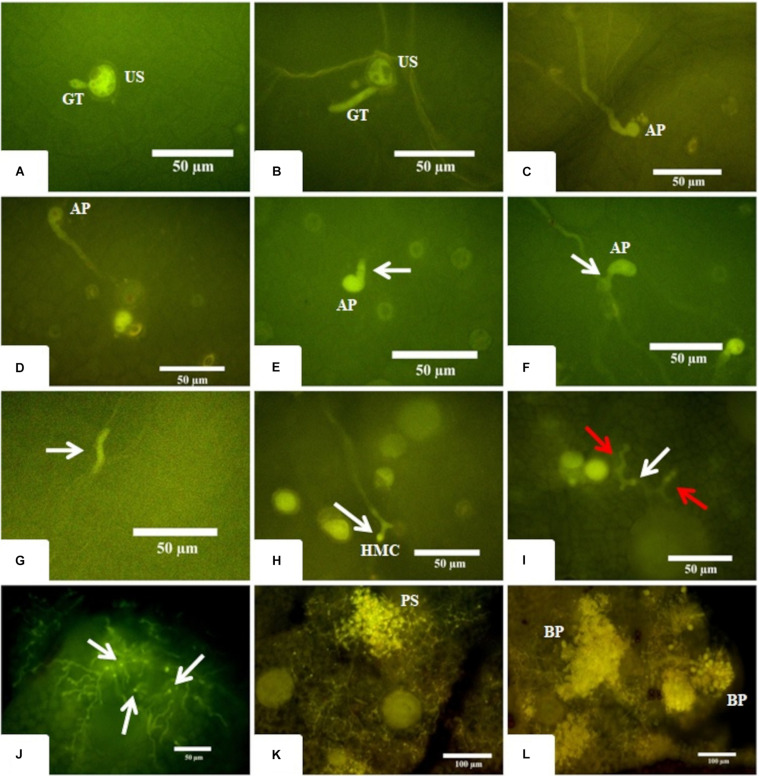
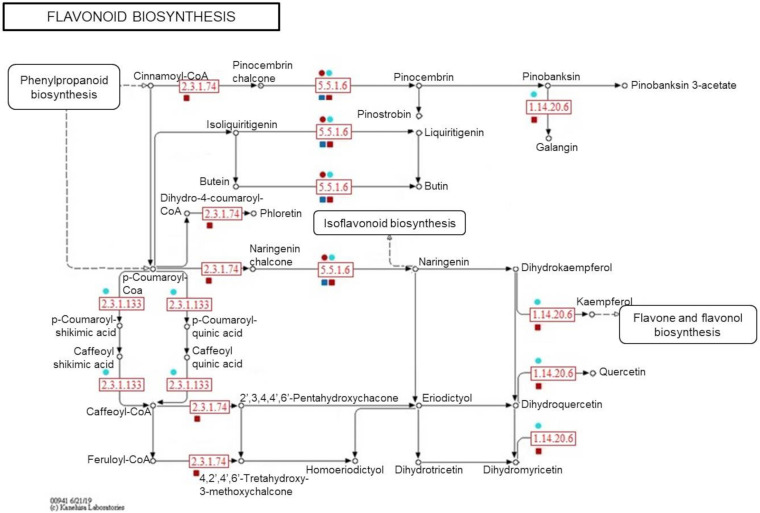
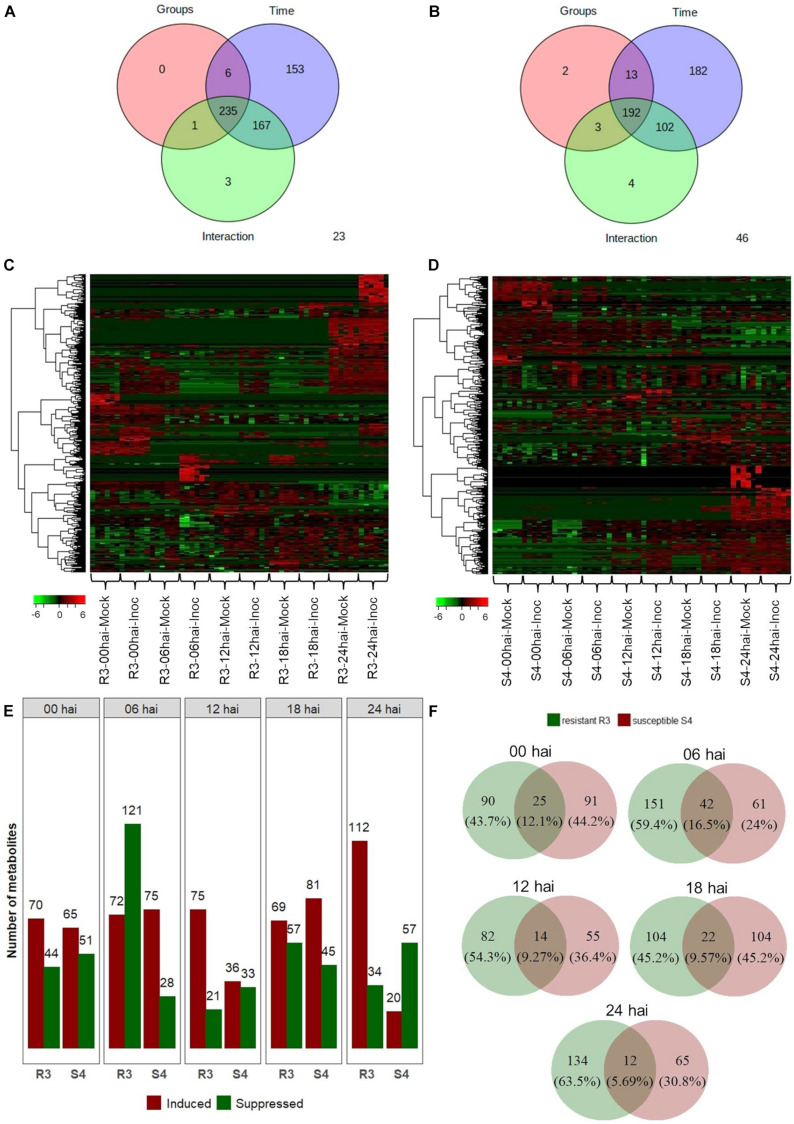
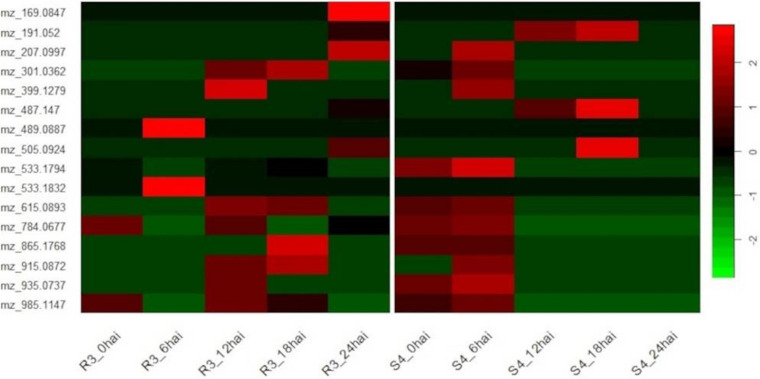
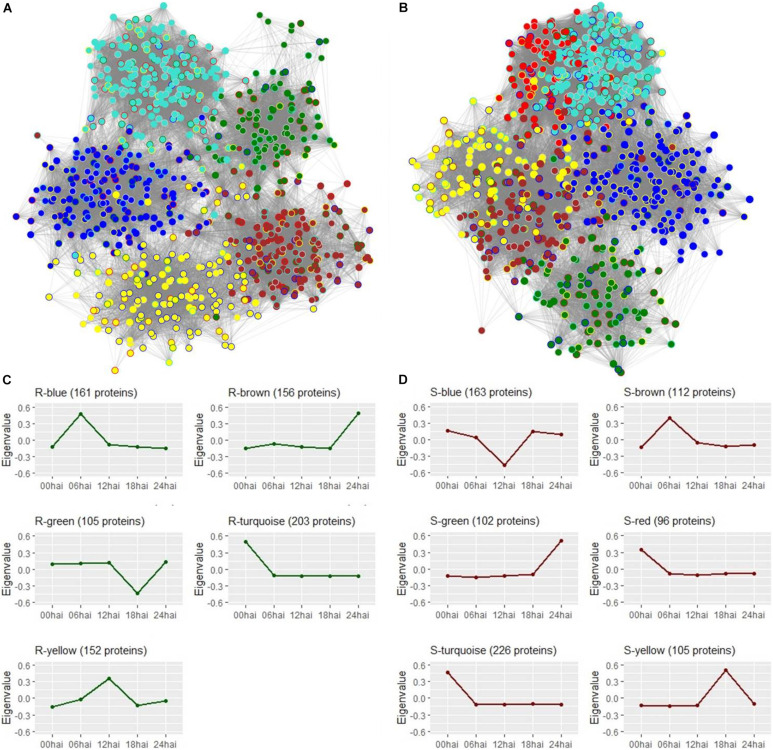
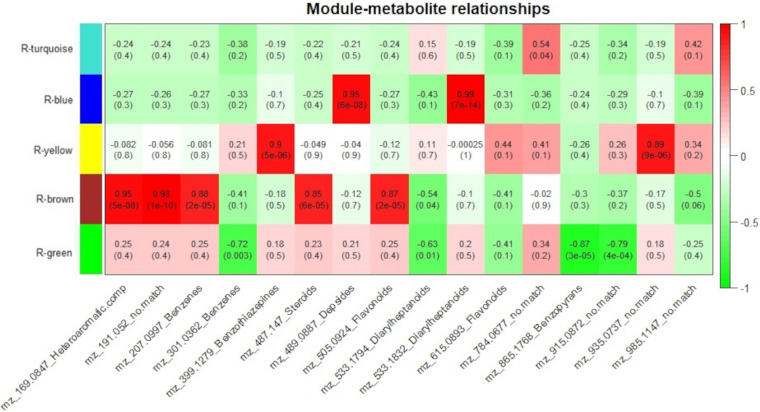
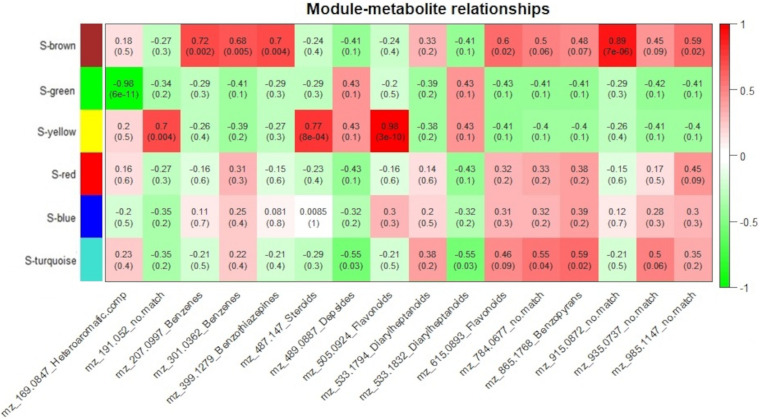
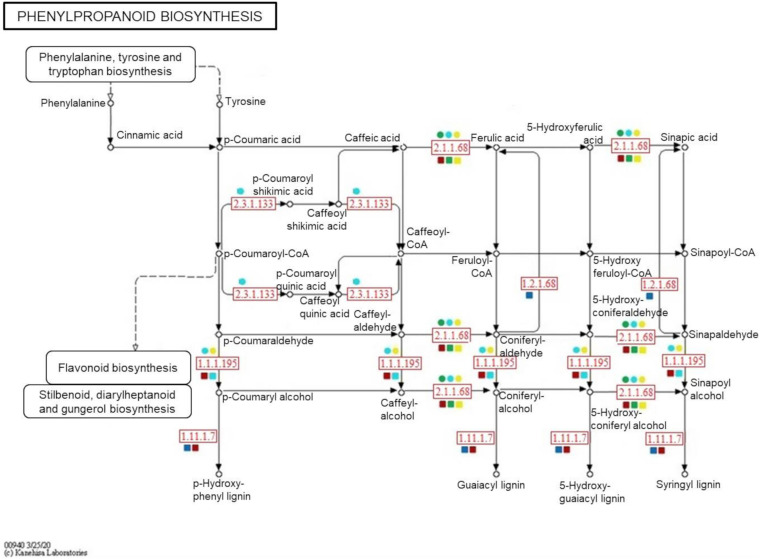
Eucalyptus rust is caused by the biotrophic fungus, , which affects commercial plantations of Eucalyptus, a major raw material for the pulp and paper industry in Brazil. In this manuscript we aimed to uncover the molecular mechanisms involved in rust resistance and susceptibility in . Epifluorescence microscopy was used to follow the fungus development inside the leaves of two contrasting half-sibling genotypes (rust-resistance and rust-susceptible), and also determine the comparative time-course of changes in metabolites and proteins in plants inoculated with rust. Within 24 h of complete fungal invasion, the analysis of 709 metabolomic features showed the suppression of many metabolites 6 h after inoculation (hai) in the rust-resistant genotype, with responses being induced after 12 hai. In contrast, the rust-susceptible genotype displayed more induced metabolites from 0 to 18 hai time-points, but a strong suppression occurred at 24 hai. Multivariate analyses of genotypes and time points were used to select 16 differential metabolites mostly classified as phenylpropanoid-related compounds. Applying the Weighted Gene Co-Expression Network Analysis (WGCNA), rust-resistant and rust-susceptible genotypes had, respectively, 871 and 852 proteins grouped into 5 and 6 modules, of which 5 and 4 of them were significantly correlated to the selected metabolites. Functional analyses revealed roles for photosynthesis and oxidative-dependent responses leading to temporal activity of metabolites and related enzymes after 12 hai in rust-resistance; while the initial over-accumulation of those molecules and suppression of supporting mechanisms at 12 hai caused a lack of progressive metabolite-enzyme responses after 12 hai in rust-susceptible genotype. This study provides some insights on how plants are functionally modulated to integrate secondary metabolites and related enzymes from phenylpropanoid pathway and lead to temporal divergences of resistance and susceptibility responses to rust.
桉叶锈病由活体营养型真菌引起,该真菌影响桉树的商业种植园,桉树是巴西纸浆和造纸工业的主要原材料。在本论文中,我们旨在揭示桉树中抗锈病和感锈病所涉及的分子机制。利用落射荧光显微镜观察两种对比鲜明的半同胞基因型(抗锈病和感锈病)叶片内的真菌发育情况,并确定接种锈病的植物中代谢物和蛋白质变化的比较时间进程。在真菌完全侵入后的24小时内,对709个代谢组学特征的分析表明,抗锈病基因型在接种后6小时(hai)许多代谢物受到抑制,而在12 hai后诱导反应出现。相比之下,感锈病基因型在0至18 hai时间点有更多诱导代谢物,但在24 hai时出现强烈抑制。对基因型和时间点进行多变量分析,以选择16种差异代谢物,这些代谢物大多归类为苯丙烷类相关化合物。应用加权基因共表达网络分析(WGCNA),抗锈病和感锈病基因型分别有871和852种蛋白质被分为5个和6个模块,其中5个和4个模块与所选代谢物显著相关。功能分析揭示了光合作用和氧化依赖性反应在抗锈病中12 hai后导致代谢物和相关酶的时间活性方面的作用;而在感锈病基因型中,这些分子在12 hai时的初始过度积累和支持机制的抑制导致12 hai后缺乏渐进性的代谢物 - 酶反应。本研究为桉树如何在功能上进行调节以整合苯丙烷途径中的次生代谢物和相关酶,并导致对锈病抗性和感病性反应的时间差异提供了一些见解。