Glaß Hannes, Jonitz-Heincke Anika, Petters Janine, Lukas Jan, Bader Rainer, Hermann Andreas
Translational Neurodegeneration Section "Albrecht Kossel", Department of Neurology, University Medical Center Rostock, University of Rostock, 18147 Rostock, Germany.
Biomechanics and Implant Technology Research Laboratory, Department of Orthopedics, University Medical Center Rostock, University of Rostock, 18057 Rostock, Germany.
J Funct Biomater. 2023 Jul 25;14(8):392. doi: 10.3390/jfb14080392.
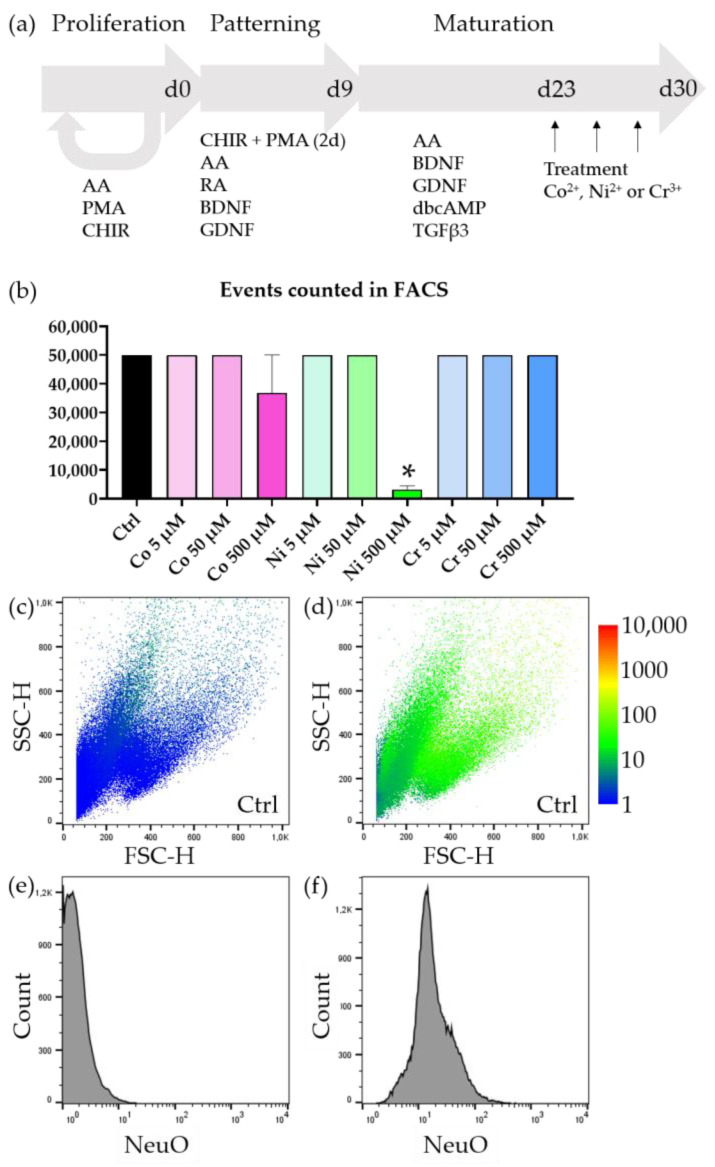
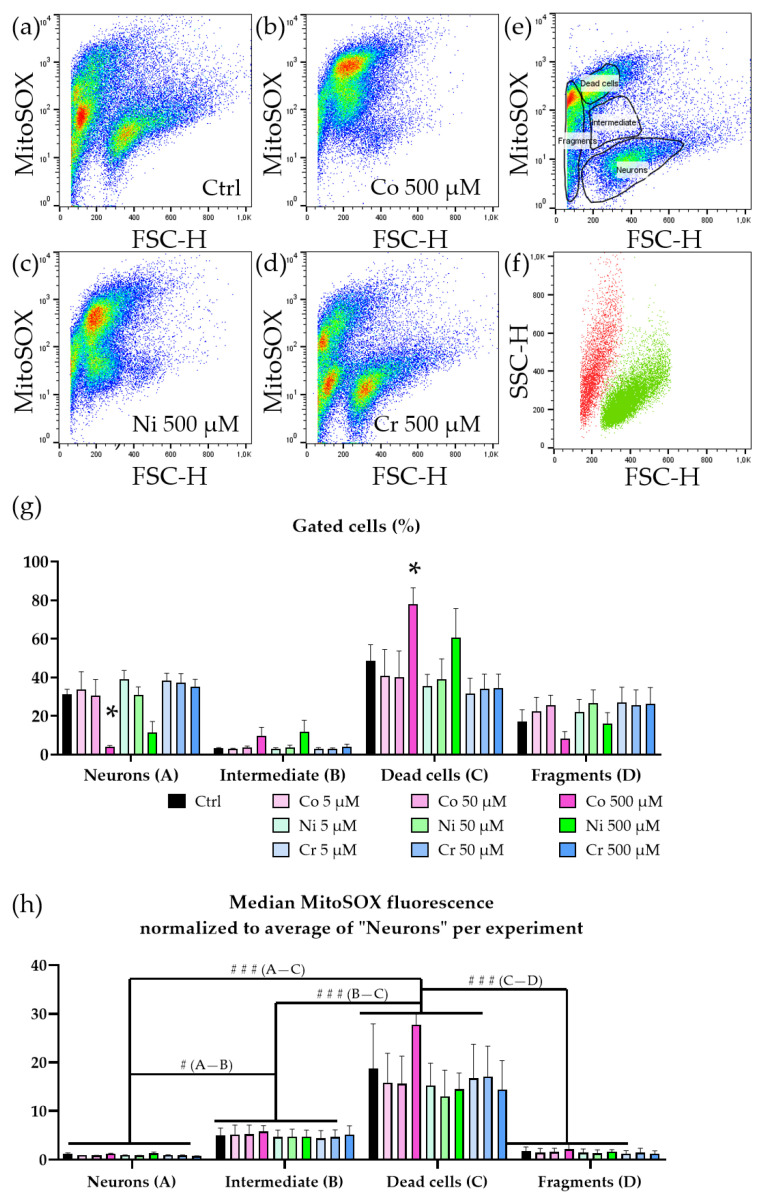
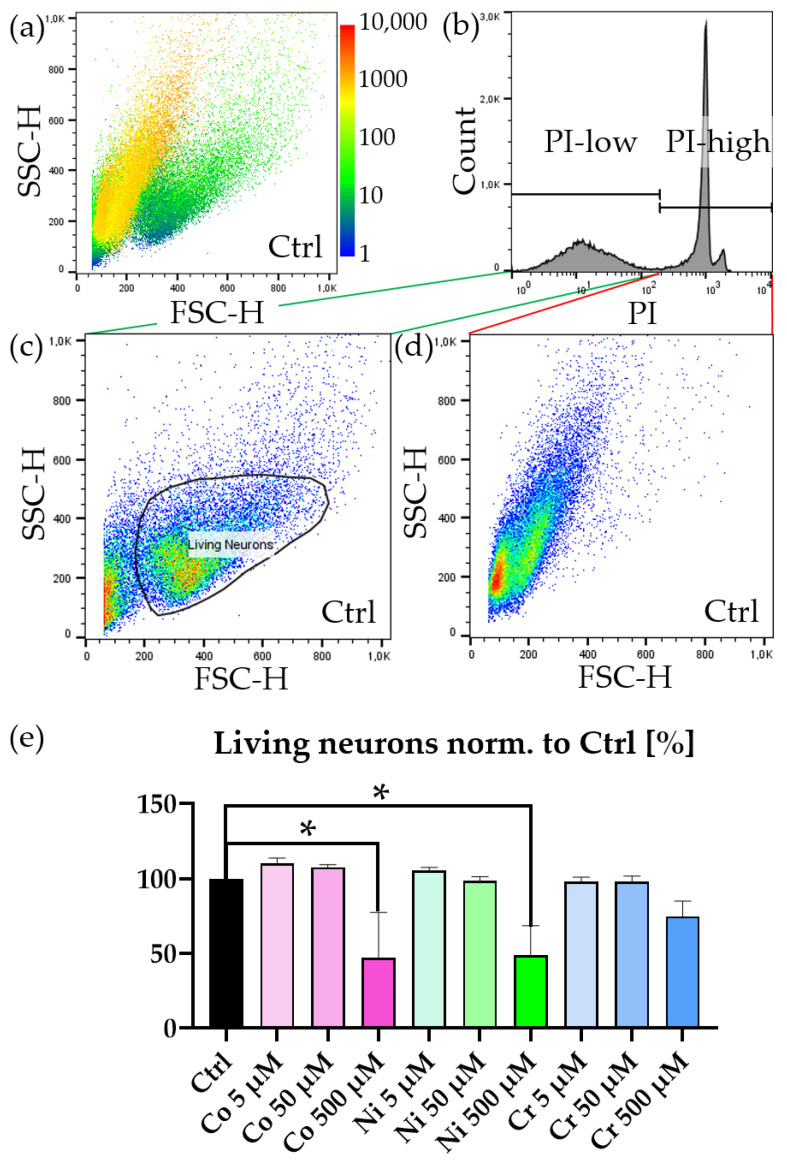
Due to advances in surgical procedures and the biocompatibility of materials used in total joint replacement, more and younger patients are undergoing these procedures. Although state-of-the-art joint replacements can last 20 years or longer, wear and corrosion is still a major risk for implant failure, and patients with these implants are exposed for longer to these corrosive products. It is therefore important to investigate the potential effects on the whole organism. Released nanoparticles and ions derived from commonly used metal implants consist, among others, of cobalt, nickel, and chromium. The effect of these metallic products in the process of osteolysis and aseptic implant loosening has already been studied; however, the systemic effect on other cell types, including neurons, remains elusive. To this end, we used human iPSC-derived motoneurons to investigate the effects of metal ions on human neurons. We treated human motoneurons with ion concentrations regularly found in patients, stained them with MitoSOX and propidium iodide, and analyzed them with fluorescence-assisted cell sorting (FACS). We found that upon treatment human motoneurons suffered from the formation of ROS and subsequently died. These effects were most prominent in motoneurons treated with 500 μM of cobalt or nickel, in which we observed significant cell death, whereas chromium showed fewer ROS and no apparent impairment of motoneurons. Our results show that the wear and corrosive products of metal implants at concentrations readily available in peri-implant tissues induced ROS and subsequently cell death in an iPSC-derived motoneuron cell model. We therefore conclude that monitoring of neuronal impairment is important in patients undergoing total joint replacement.
由于外科手术的进步以及全关节置换中所用材料的生物相容性,越来越多的年轻患者正在接受这些手术。尽管最先进的关节置换可以使用20年或更长时间,但磨损和腐蚀仍然是植入物失效的主要风险,并且植入这些植入物的患者会更长时间地接触这些腐蚀性产物。因此,研究其对整个机体的潜在影响很重要。常用金属植入物释放的纳米颗粒和离子包括钴、镍和铬等。这些金属产物在骨溶解和无菌性植入物松动过程中的作用已经得到研究;然而,其对包括神经元在内的其他细胞类型的全身影响仍然不清楚。为此,我们使用人诱导多能干细胞衍生的运动神经元来研究金属离子对人神经元的影响。我们用患者体内常见的离子浓度处理人运动神经元,用MitoSOX和碘化丙啶对其进行染色,并用荧光辅助细胞分选(FACS)进行分析。我们发现,处理后人运动神经元会产生活性氧并随后死亡。在用500μM钴或镍处理的运动神经元中,这些影响最为明显,我们观察到明显的细胞死亡,而铬产生的活性氧较少,对运动神经元没有明显损害。我们的结果表明,在诱导多能干细胞衍生的运动神经元细胞模型中,植入物周围组织中容易获得的浓度的金属植入物磨损和腐蚀性产物会诱导活性氧产生并随后导致细胞死亡。因此,我们得出结论,在接受全关节置换的患者中监测神经元损伤很重要。