IRSD, INSERM, ENVT, INRAE, Université de Toulouse, UPS, 105 Av. de Casselardit, 31300 Toulouse, France.
CHU Toulouse, Hôpital Purpan, Service de Bactériologie-Hygiène, Place du Docteur Baylac, 31059 Toulouse, France.
Toxins (Basel). 2023 Aug 14;15(8):502. doi: 10.3390/toxins15080502.
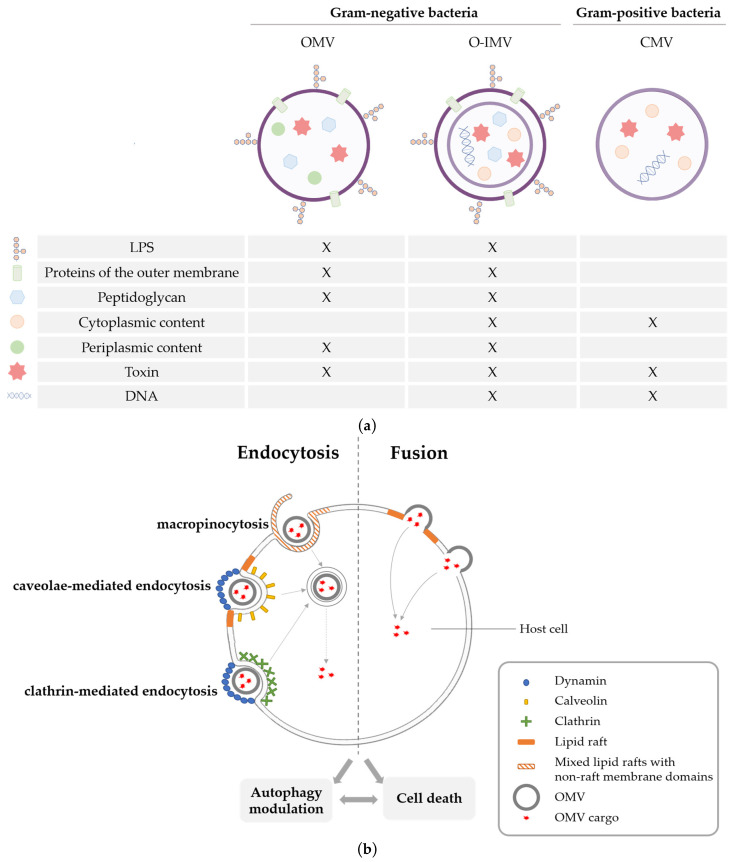
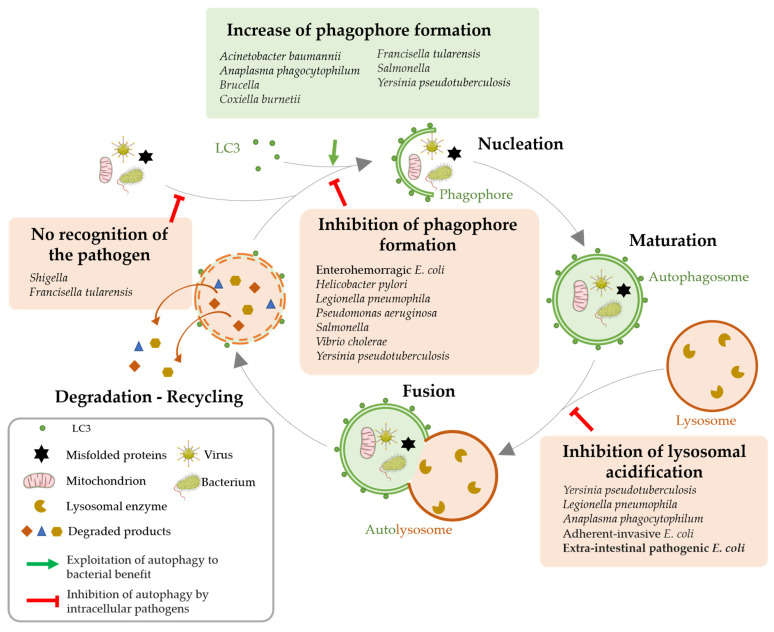
Bacteria, akin to eukaryotic cells, possess the ability to release extracellular vesicles, lipidic nanostructures that serve diverse functions in host-pathogen interactions during infections. In particular, Gram-negative bacteria produce specific vesicles with a single lipidic layer called OMVs (Outer Membrane Vesicles). These vesicles exhibit remarkable capabilities, such as disseminating throughout the entire organism, transporting toxins, and being internalized by eukaryotic cells. Notably, the cytosolic detection of lipopolysaccharides (LPSs) present at their surface initiates an immune response characterized by non-canonical inflammasome activation, resulting in pyroptotic cell death and the release of pro-inflammatory cytokines. However, the influence of these vesicles extends beyond their well-established roles, as they also profoundly impact host cell viability by directly interfering with essential cellular machinery. This comprehensive review highlights the disruptive effects of these vesicles, particularly on autophagy and associated cell death, and explores their implications for pathogen virulence during infections, as well as their potential in shaping novel therapeutic approaches.
细菌类似于真核细胞,具有释放细胞外囊泡的能力,这些脂质纳米结构在感染过程中宿主-病原体相互作用中具有多种功能。特别是革兰氏阴性细菌产生具有单层脂质的特定囊泡,称为 OMVs(外膜囊泡)。这些囊泡具有显著的能力,例如在整个生物体中传播、运输毒素,并被真核细胞内化。值得注意的是,其表面存在的脂多糖(LPS)在细胞质中的检测会引发免疫反应,其特征是非经典的炎性小体激活,导致细胞发生焦亡性死亡和促炎细胞因子的释放。然而,这些囊泡的影响超出了其既定作用,因为它们还通过直接干扰基本细胞机制,对宿主细胞的存活产生深远影响。本综述强调了这些囊泡的破坏性影响,特别是对自噬和相关细胞死亡的影响,并探讨了它们在感染期间对病原体毒力的影响,以及它们在塑造新型治疗方法方面的潜力。