Department of Pathobiology, University of Pennsylvania, School of Veterinary Medicine, Philadelphia, Pennsylvania, USA.
Department of Surgery, Hospital of the University of Pennsylvania, Philadelphia, Pennsylvania, USA.
mBio. 2021 Jun 29;12(3):e0086921. doi: 10.1128/mBio.00869-21. Epub 2021 Jun 1.
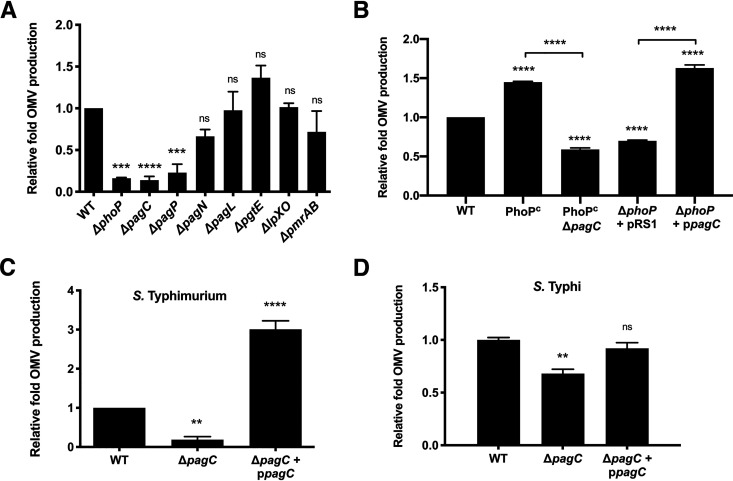
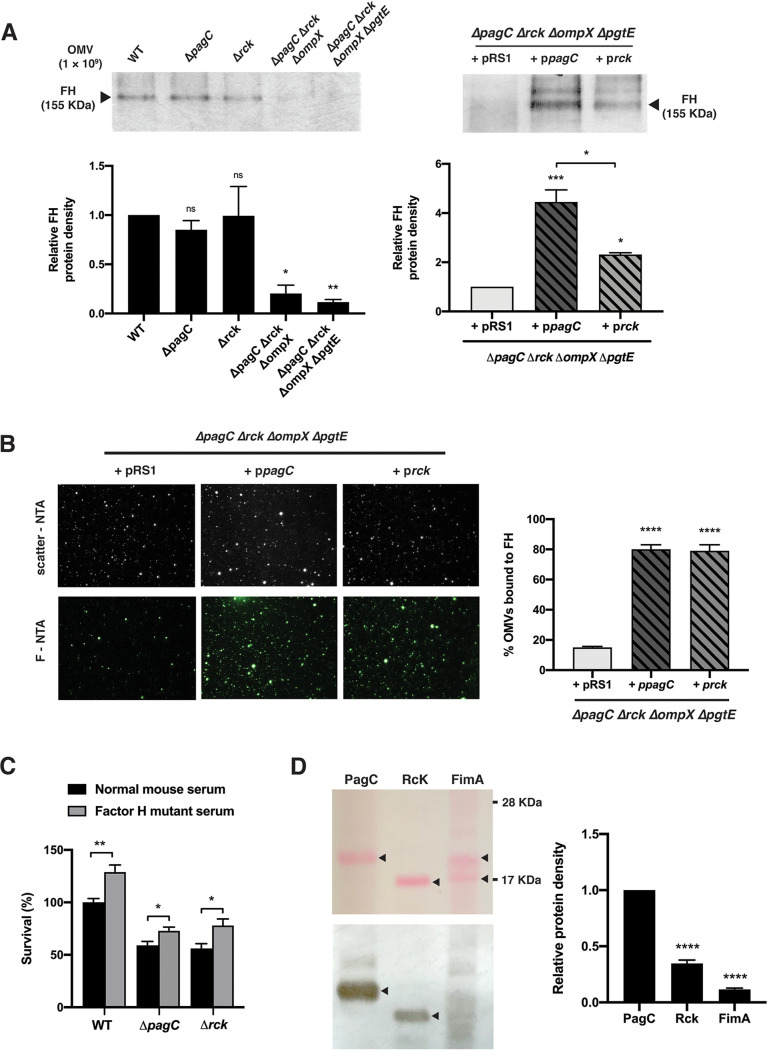
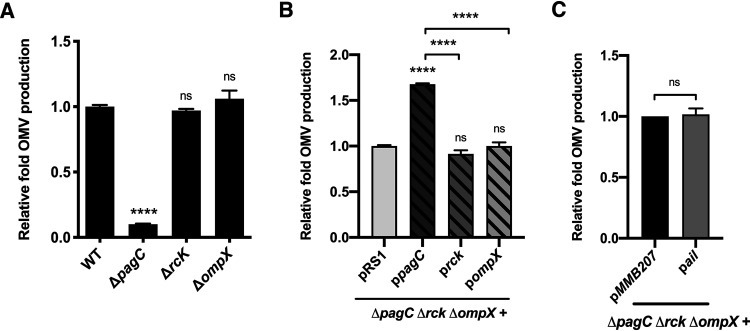
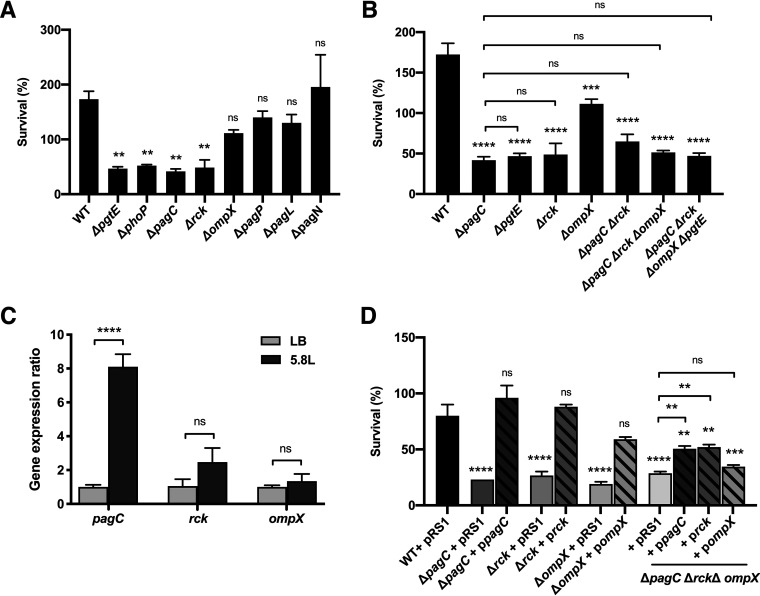
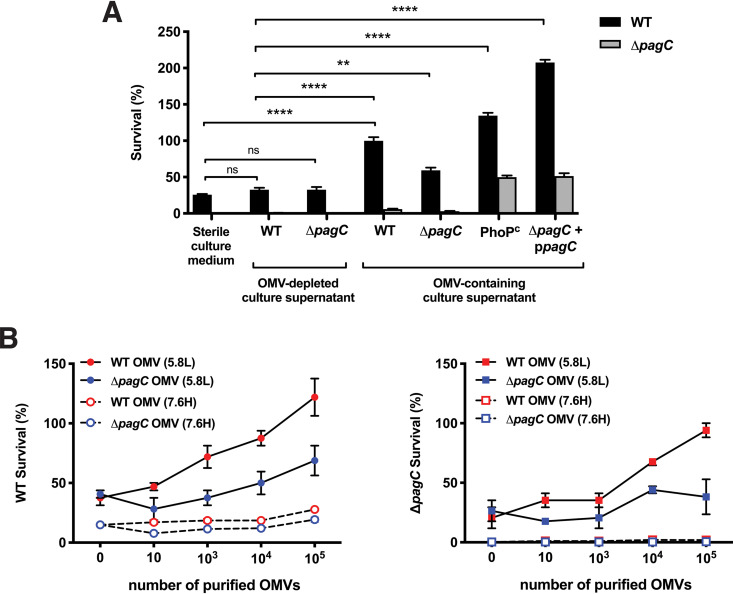
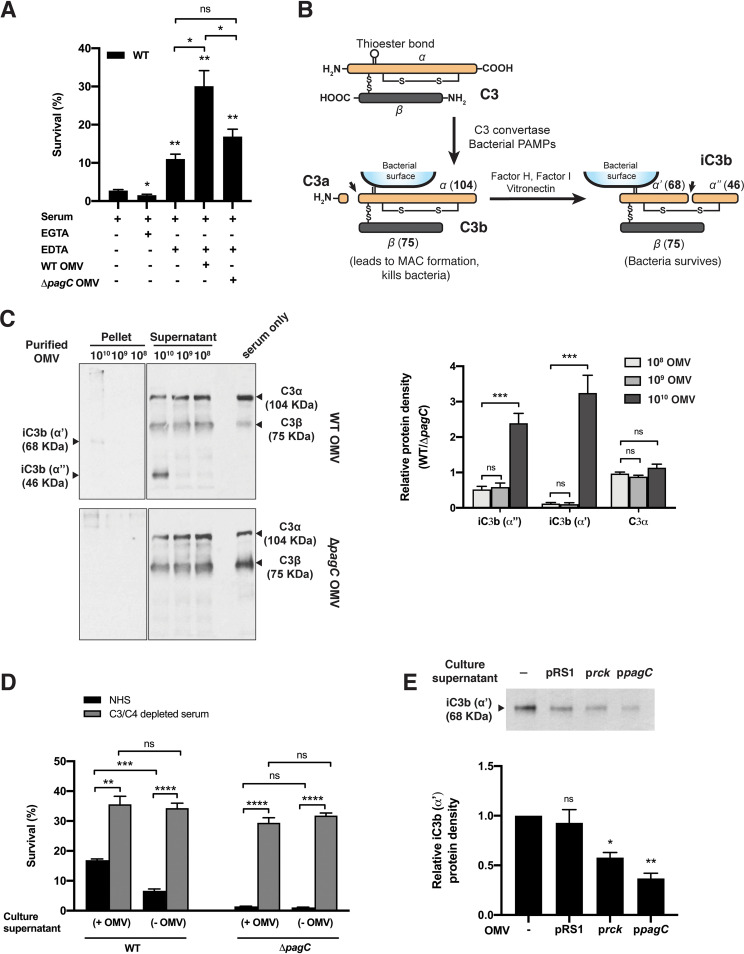
Bacterial outer membrane vesicles (OMVs) enriched with bioactive proteins, toxins, and virulence factors play a critical role in host-pathogen and microbial interactions. The two-component system PhoP-PhoQ (PhoPQ) of Salmonella enterica orchestrates the remodeling of outer membrane lipopolysaccharide (LPS) molecules and concomitantly upregulates OMV production. In this study, we document a novel use of nanoparticle tracking analysis to determine bacterial OMV size and number. Among the PhoPQ-activated genes tested, expression had the most significant effect on the upregulation of OMV production. We provide the first evidence that PhoPQ-mediated upregulation of OMV production contributes to bacterial survival by interfering with complement activation. OMVs protected bacteria in a dose-dependent manner, and bacteria were highly susceptible to complement-mediated killing in their absence. OMVs from bacteria expressing PagC bound to complement component C3b in a dose-dependent manner and inactivated it by recruiting complement inhibitor Factor H. As we also found that Factor H binds to PagC, we propose that PagC interferes with complement-mediated killing of Salmonella in the following two steps: first by engaging Factor H, and second, through the production of PagC-enriched OMVs that divert and inactivate the complement away from the bacteria. Since PhoPQ activation occurs intracellularly, the resultant increase in PagC expression and OMV production is suggested to contribute to the local and systemic spread of Salmonella released from dying host cells that supports the infection of new cells. Bacterial outer membrane vesicles (OMVs) mediate critical bacterium-bacterium and host-microbial interactions that influence pathogenesis through multiple mechanisms, including the elicitation of inflammatory responses, delivery of virulence factors, and enhancement of biofilm formation. As such, there is a growing interest in understanding the underlying mechanisms of OMV production. Recent studies have revealed that OMV biogenesis is a finely tuned physiological process that requires structural organization and selective sorting of outer membrane components into the vesicles. In Salmonella, outer membrane remodeling and OMV production are tightly regulated by its PhoPQ system. In this study, we demonstrate that PhoPQ-regulated OMV production plays a significant role in defense against host innate immune attack. PhoPQ-activated PagC expression recruits the complement inhibitor Factor H and degrades the active C3 component of complement. Our results provide valuable insight into the combination of tools and environmental signals that Salmonella employs to evade complement-mediated lysis, thereby suggesting a strong evolutionary adaptation of this facultative intracellular pathogen to protect itself during its extracellular stage in the host.
细菌外膜囊泡(OMVs)富含生物活性蛋白、毒素和毒力因子,在宿主-病原体和微生物相互作用中发挥着关键作用。沙门氏菌的双组分系统 PhoP-PhoQ(PhoPQ)协调外膜脂多糖(LPS)分子的重塑,并同时上调 OMV 的产生。在这项研究中,我们记录了一种使用纳米颗粒跟踪分析来确定细菌 OMV 大小和数量的新方法。在测试的 PhoPQ 激活基因中, 表达对 OMV 产生的上调有最显著的影响。我们提供了第一个证据,证明 PhoPQ 介导的 OMV 产生的上调通过干扰补体激活有助于细菌的存活。OMVs 以剂量依赖性方式保护细菌,并且在没有 OMVs 的情况下,细菌对补体介导的杀伤非常敏感。表达 PagC 的细菌产生的 OMVs 以剂量依赖性方式结合补体成分 C3b,并通过招募补体抑制剂因子 H 使其失活。由于我们还发现因子 H 结合 PagC,我们提出 PagC 通过以下两个步骤干扰沙门氏菌的补体介导杀伤:首先与因子 H 结合,其次通过产生富含 PagC 的 OMVs 来改变和失活补体远离细菌。由于 PhoPQ 的激活发生在细胞内,因此 PagC 表达和 OMV 产生的增加被认为有助于从死亡宿主细胞中释放的沙门氏菌的局部和全身传播,从而支持对新细胞的感染。 细菌外膜囊泡(OMVs)通过多种机制介导关键的细菌-细菌和宿主-微生物相互作用,从而影响发病机制,包括引发炎症反应、传递毒力因子和增强生物膜形成。因此,人们越来越感兴趣于理解 OMV 产生的潜在机制。最近的研究表明,OMV 的生物发生是一个精细调节的生理过程,需要结构组织和外膜成分的选择性分拣到囊泡中。在沙门氏菌中,其 PhoPQ 系统严格调控外膜重塑和 OMV 的产生。在这项研究中,我们证明了 PhoPQ 调控的 OMV 产生在防御宿主固有免疫攻击中起着重要作用。PhoPQ 激活的 PagC 表达招募补体抑制剂因子 H,并降解补体的活性 C3 成分。我们的结果提供了有价值的见解,即沙门氏菌利用组合工具和环境信号来逃避补体介导的裂解,从而表明这种兼性胞内病原体在其宿主细胞外阶段为了自身保护而进行了强烈的进化适应。