Center for Neuroinflammation and Experimental Therapeutics, Department of Neurology, Perelman School of Medicine, University of Pennsylvania, Philadelphia, PA, USA.
Department of Neurology, Center for Neuroimmunology and Neuroinfectious Diseases, Washington University School of Medicine, St. Louis, MO, USA.
Mult Scler. 2023 Oct;29(11-12):1471-1481. doi: 10.1177/13524585231192460. Epub 2023 Aug 25.
Evobrutinib is an oral, central nervous system (CNS)-penetrant and highly selective covalent Bruton's tyrosine kinase inhibitor under clinical development for patients with relapsing multiple sclerosis (RMS).
To investigate the effect of evobrutinib on immune responses in severe acute respiratory syndrome coronavirus 2 (SARS-CoV-2) vaccinated patients with RMS from a Phase II trial (NCT02975349).
A analysis of patients with RMS who received evobrutinib 75 mg twice daily and SARS-CoV-2 vaccines during the open-label extension ( = 45) was conducted. Immunoglobulin (Ig)G anti-S1/S2-specific SARS-CoV-2 antibodies were measured using an indirect chemiluminescence immunoassay.
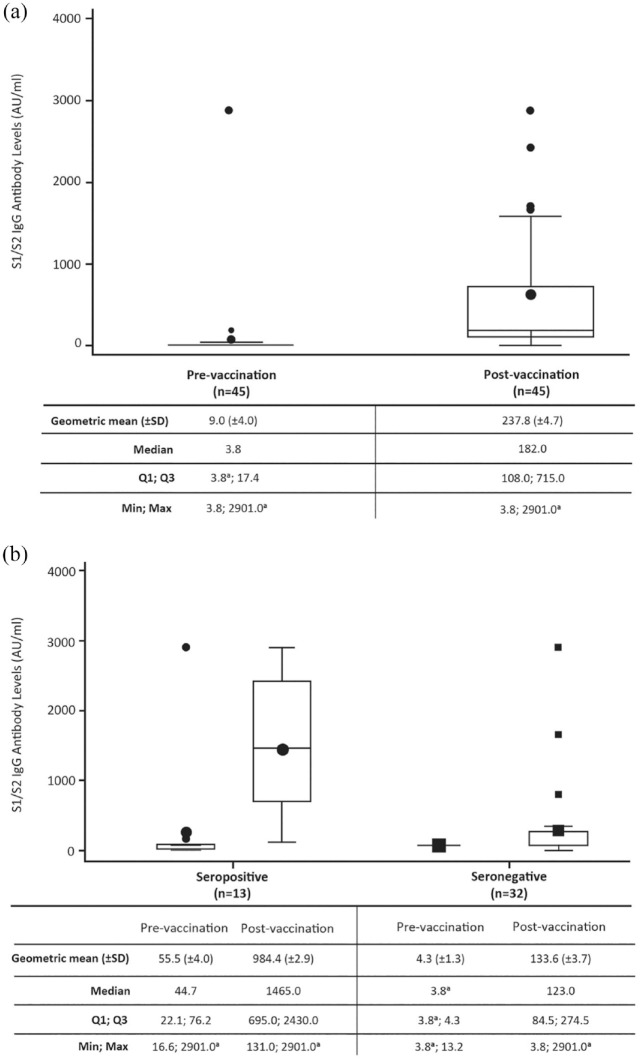
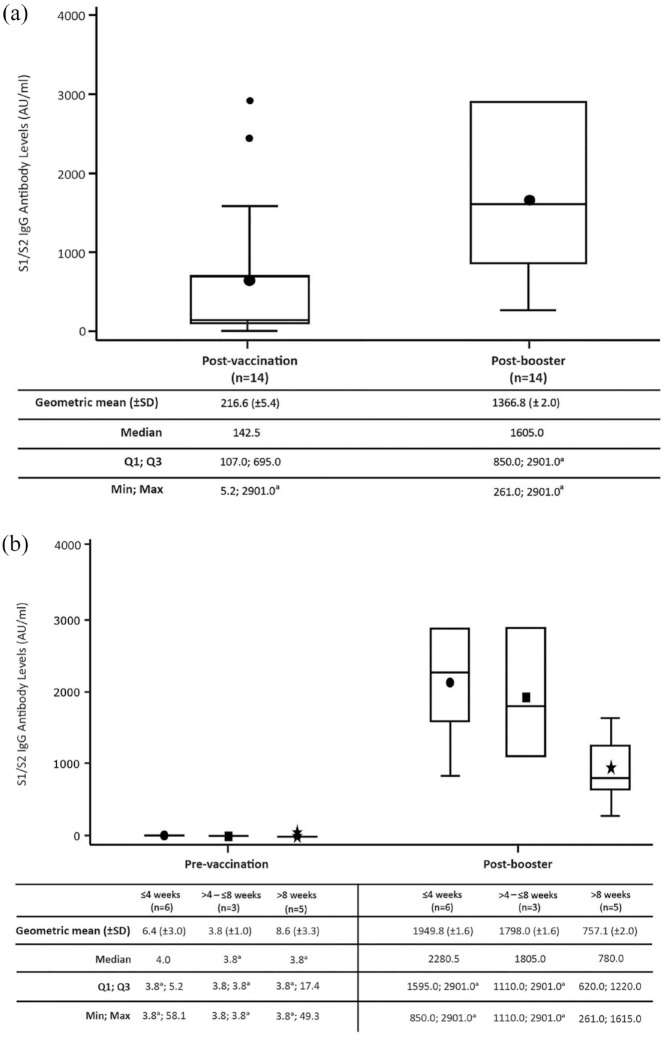
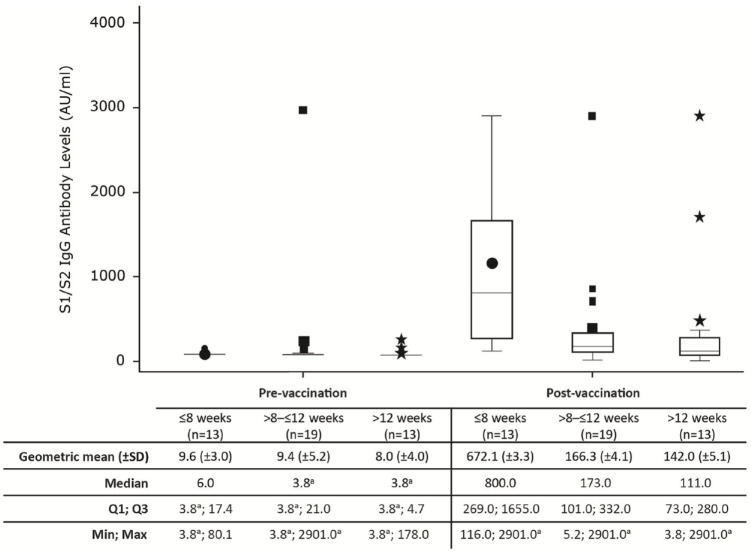
In the vaccinated subgroup, mean/minimum evobrutinib exposure pre-vaccination was 105.2/88.7 weeks. In total, 43 of 45 patients developed/increased S1/S2 IgG antibody levels post-vaccination; one patient's antibody response remained negative post-vaccination and the other had antibody levels above the upper limit of detection, both pre- and post-vaccination. Most patients ( = 36/45), regardless of pre-vaccination serostatus, had a 10-100-fold increase of antibody levels pre- to post-vaccination. Antibody levels post-booster were higher versus post-vaccination.
These results suggest evobrutinib, an investigational drug with therapeutic potential for patients with RMS, acts as an immunomodulator, that is, it inhibits aberrant immune cell responses in patients with RMS, while responsiveness to foreign and recall antigens is maintained.
依鲁替尼是一种正在临床开发用于治疗复发型多发性硬化症(RMS)患者的口服、可穿透中枢神经系统(CNS)和高选择性的共价 Bruton 酪氨酸激酶抑制剂。
在一项 II 期试验(NCT02975349)中,研究依鲁替尼对接受 RMS 治疗的严重急性呼吸综合征冠状病毒 2(SARS-CoV-2)疫苗接种患者免疫反应的影响。
对接受依鲁替尼 75mg 每日两次和 SARS-CoV-2 疫苗治疗的开放标签扩展期(=45)RMS 患者进行分析。使用间接化学发光免疫分析测定 IgG 抗 S1/S2 特异性 SARS-CoV-2 抗体。
在接种疫苗亚组中,接种疫苗前的平均/最小依鲁替尼暴露量分别为 105.2/88.7 周。共有 43 例患者(45 例中的 43 例)在接种疫苗后产生/增加了 S1/S2 IgG 抗体水平;1 例患者的抗体反应在接种疫苗后仍为阴性,另 1 例患者的抗体水平在接种疫苗前后均高于检测上限。大多数患者(=36/45),无论接种疫苗前的血清学状态如何,接种疫苗前的抗体水平较接种疫苗后均有 10-100 倍的增加。接种加强针后的抗体水平高于接种疫苗后。
这些结果表明,依鲁替尼是一种具有治疗 RMS 患者潜力的研究药物,作为一种免疫调节剂,它抑制了 RMS 患者异常的免疫细胞反应,同时保持了对异源抗原和记忆抗原的反应性。