Cantó-Santos Judith, Valls-Roca Laura, Tobías Ester, Oliva Clara, García-García Francesc Josep, Guitart-Mampel Mariona, Andújar-Sánchez Félix, Esteve-Codina Anna, Martín-Mur Beatriz, Padrosa Joan, Aránega Raquel, Moreno-Lozano Pedro J, Milisenda José César, Artuch Rafael, Grau-Junyent Josep M, Garrabou Glòria
Inherited Metabolic Disorders and Muscular Diseases Research Group, Institut d'Investigacions Biomèdiques August Pi i Sunyer (IDIBAPS) and Faculty of Medicine and Health Sciences, University of Barcelona, 08036 Barcelona, Spain.
Department of Internal Medicine, Hospital Clinic of Barcelona, 08036 Barcelona, Spain.
Antioxidants (Basel). 2023 Aug 19;12(8):1639. doi: 10.3390/antiox12081639.
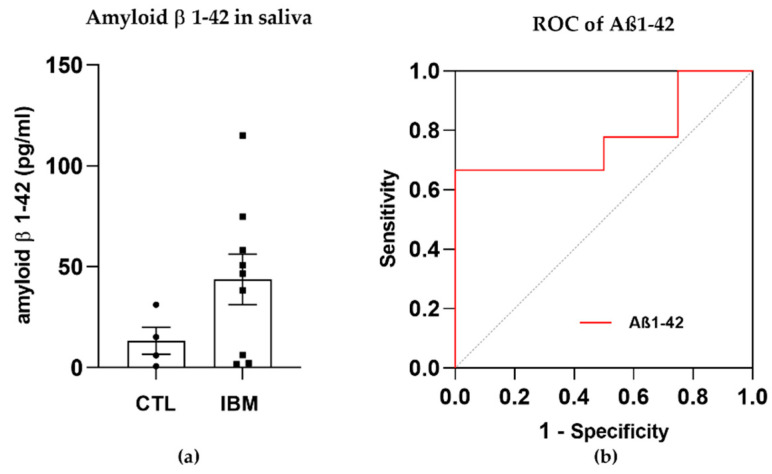
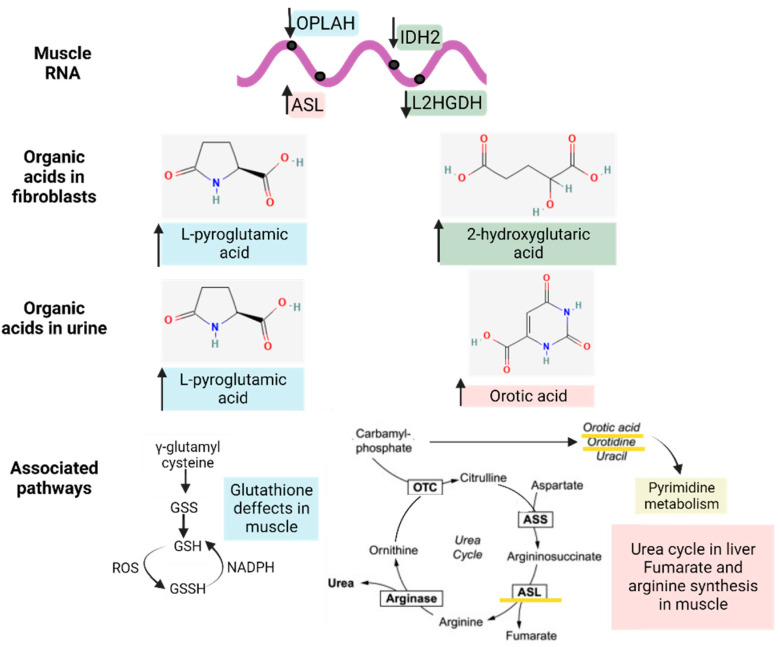
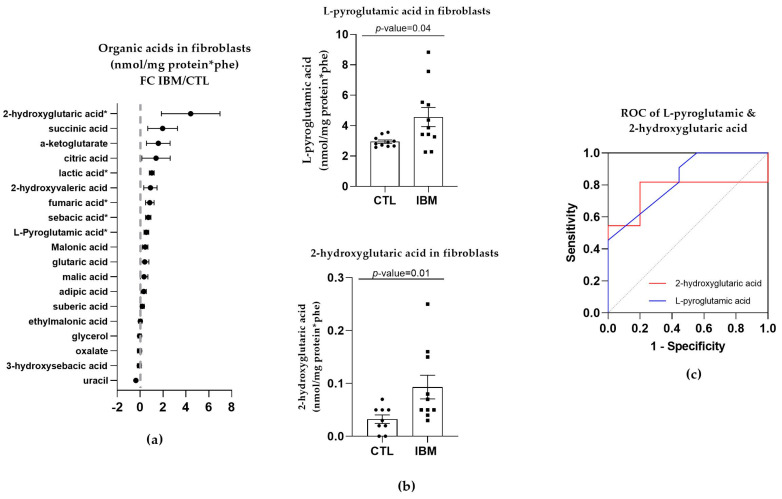
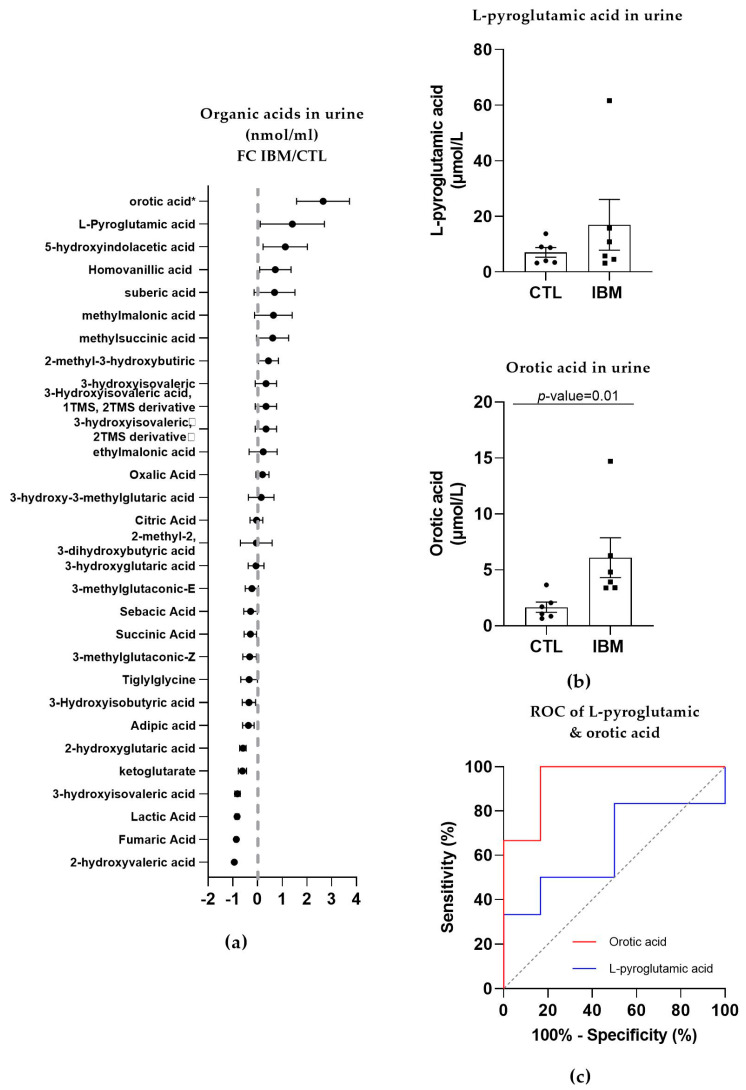
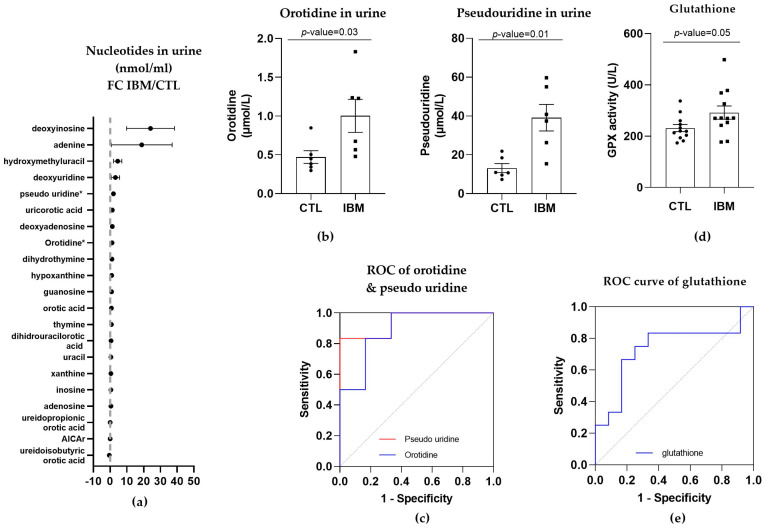
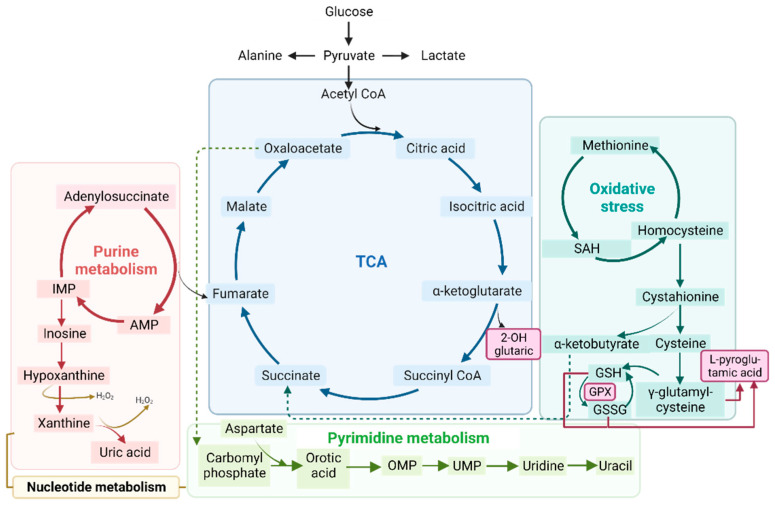
Inclusion body myositis (IBM) is an acquired inflammatory myopathy affecting proximal and distal muscles that leads to weakness in patients over 50. It is diagnosed based on clinical and histological findings in muscle related to inflammation, degeneration, and mitochondria. In relation to IBM, a shortage of validated disease models and a lack of biomarkers and effective treatments constitute an unmet medical need. To overcome these hurdles, we performed an omics analysis of multiple samples from IBM patients (saliva, fibroblasts, urine, plasma, and muscle) to gain insight into the pathophysiology of IBM. Degeneration was evident due to the presence of amyloid β peptide 1-42 (Aβ1-42) in the saliva of the analyzed IBM patients. The presence of metabolic disarrangements in IBM was indicated by an imbalanced organic acid profile in fibroblasts and urine. Specifically, abnormal levels of L-pyroglutamic and orotic acid were supported by the abnormal expression of related metabolites in plasma and urine (glutathione and pyrimidines) and the aberrant expression of upstream gene regulators (L2HGDH, IDH2, OPLAH, and ASL) in muscle. Combined levels of L-pyroglutamic and orotic acid displayed an outstanding biomarker signature in urine with 100% sensitivity and specificity. The confirmation of systemic metabolic disarrangements in IBM and the identification of novel biomarkers reported herein unveil novel insights that require validation in larger cohorts.
包涵体肌炎(IBM)是一种获得性炎性肌病,影响近端和远端肌肉,导致50岁以上患者出现肌无力。它是根据肌肉中与炎症、变性和线粒体相关的临床和组织学发现来诊断的。关于IBM,缺乏经过验证的疾病模型、生物标志物和有效治疗方法构成了未满足的医疗需求。为了克服这些障碍,我们对IBM患者的多个样本(唾液、成纤维细胞、尿液、血浆和肌肉)进行了组学分析,以深入了解IBM的病理生理学。在所分析的IBM患者的唾液中存在淀粉样β肽1-42(Aβ1-42),表明存在变性。成纤维细胞和尿液中有机酸谱失衡表明IBM存在代谢紊乱。具体而言,血浆和尿液中相关代谢物(谷胱甘肽和嘧啶)的异常表达以及肌肉中上游基因调节因子(L2HGDH、IDH2、OPLAH和ASL)的异常表达支持了L-焦谷氨酸和乳清酸水平的异常。L-焦谷氨酸和乳清酸的联合水平在尿液中显示出出色的生物标志物特征,敏感性和特异性均为100%。本文报道的IBM全身代谢紊乱的证实和新型生物标志物的鉴定揭示了需要在更大队列中进行验证的新见解。