Huard Charles A, Gao Xueqin, Dey Hazra Maria E, Dey Hazra Rony-Orijit, Lebsock Kimberly, Easley Jeremiah T, Millett Peter J, Huard Johnny
Linda and Mitch Hart Center for Regenerative and Personalized Medicine, Steadman Philippon Research Institute, Vail, CO 81657, USA.
The Steadman Clinic, Vail, CO 81657, USA.
Antioxidants (Basel). 2023 Aug 21;12(8):1646. doi: 10.3390/antiox12081646.
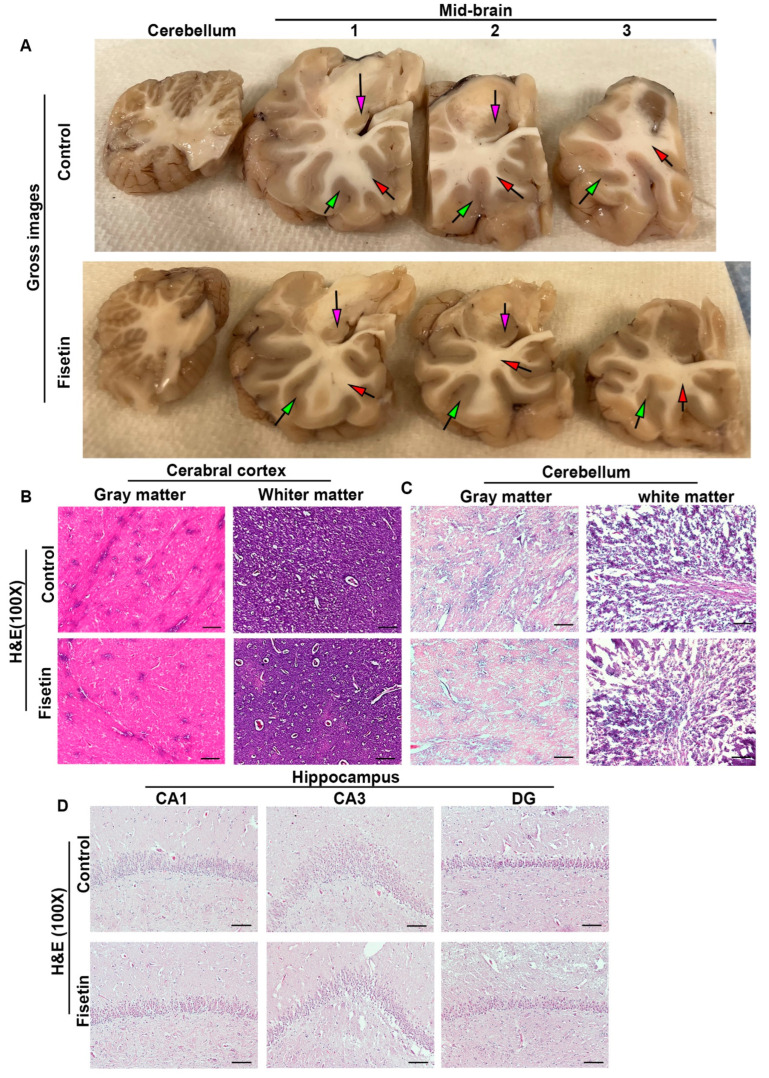
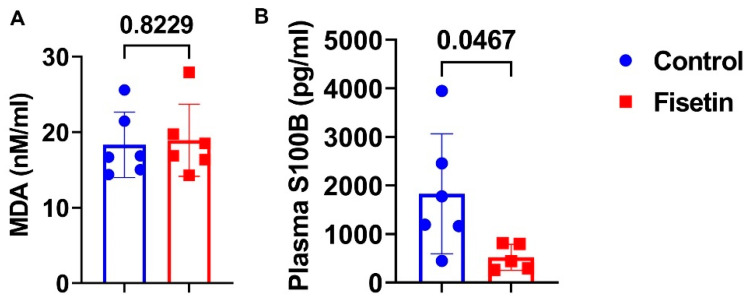
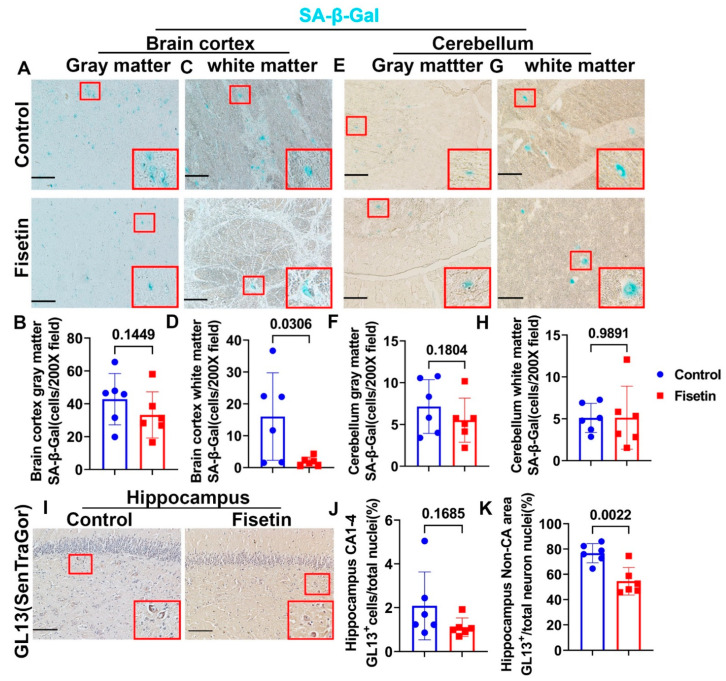
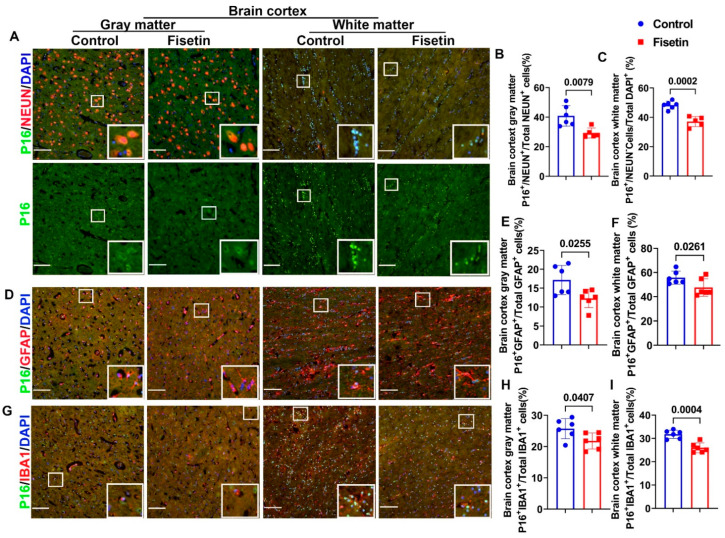
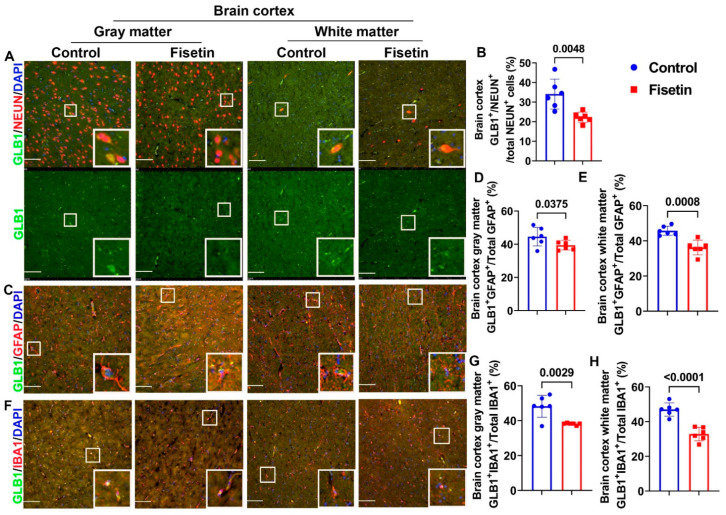
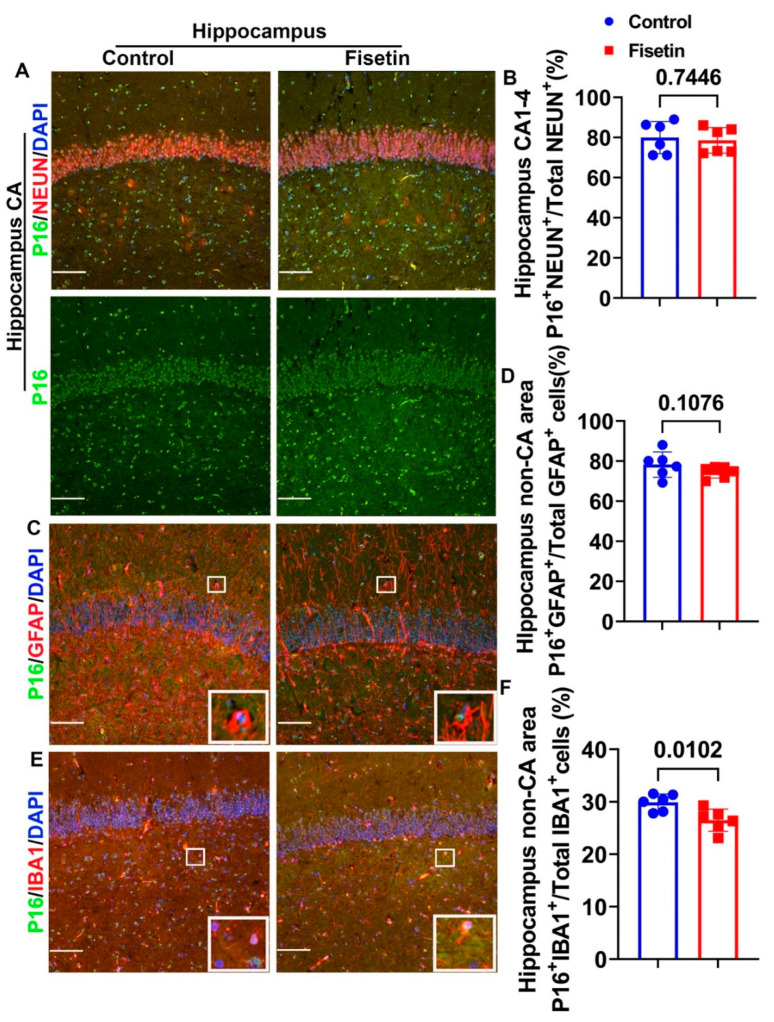
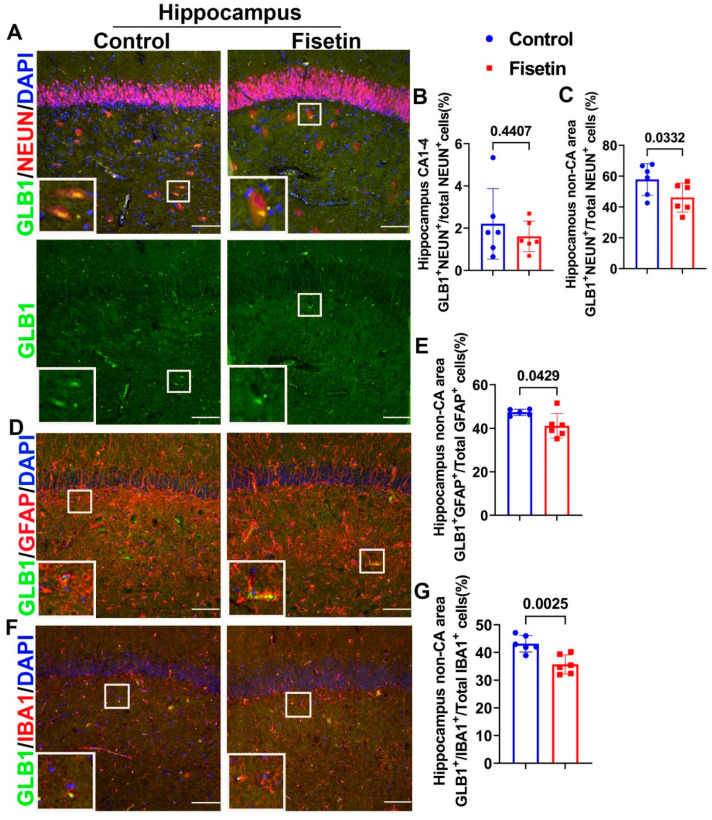
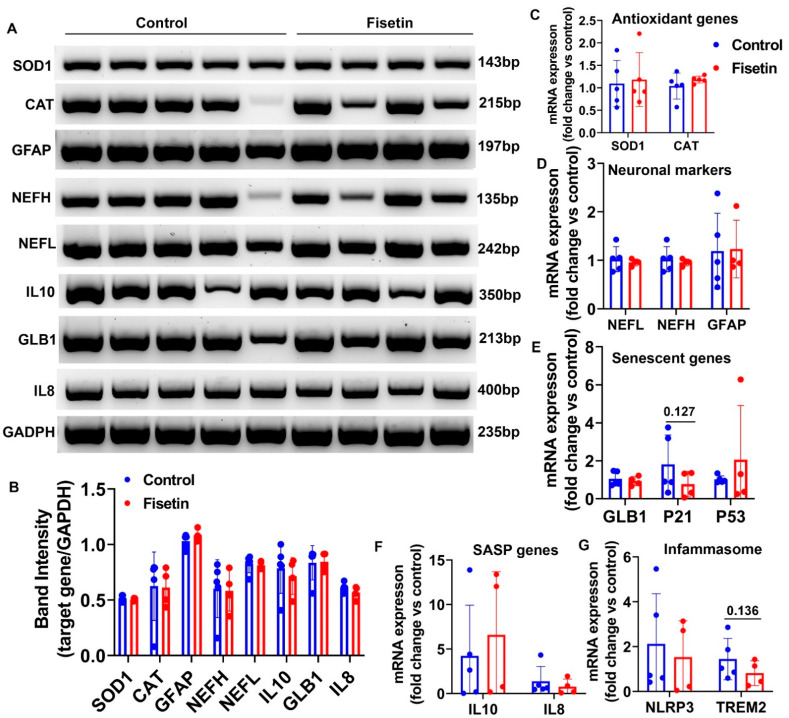
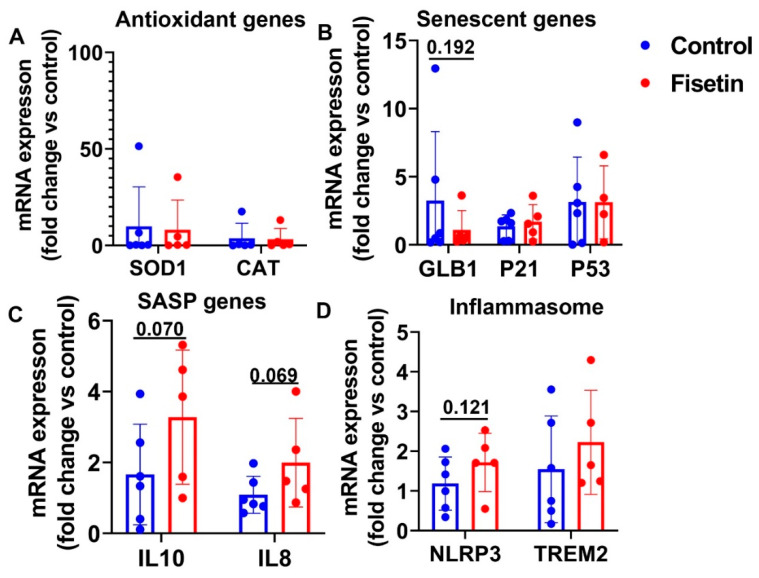
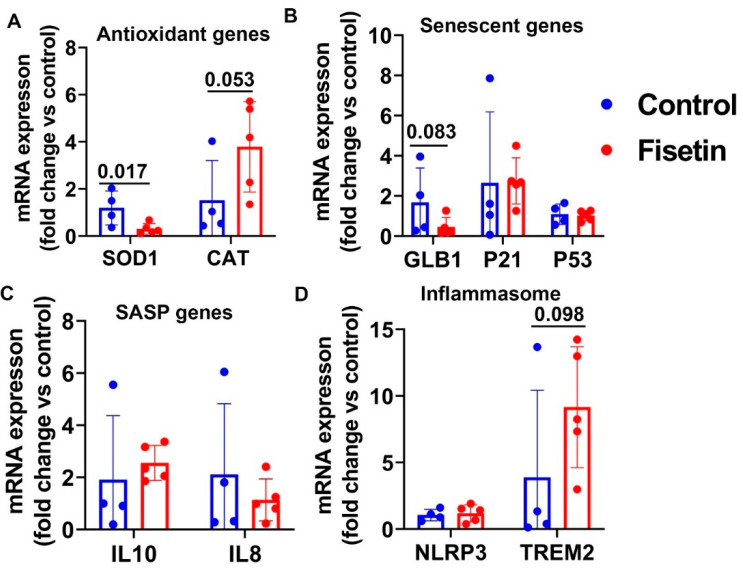
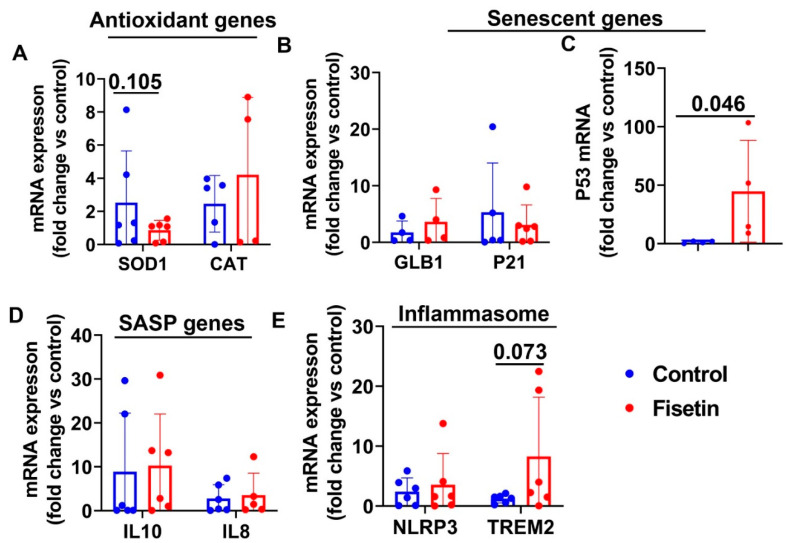
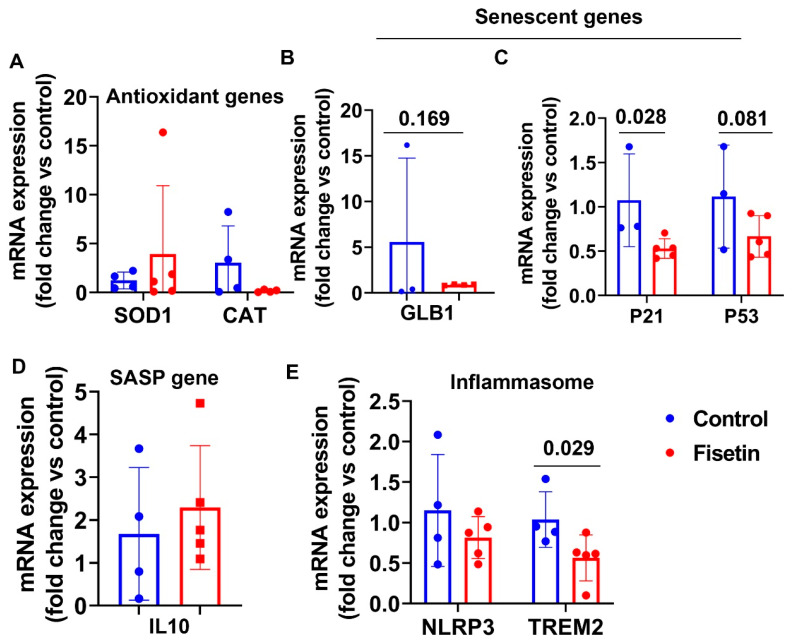
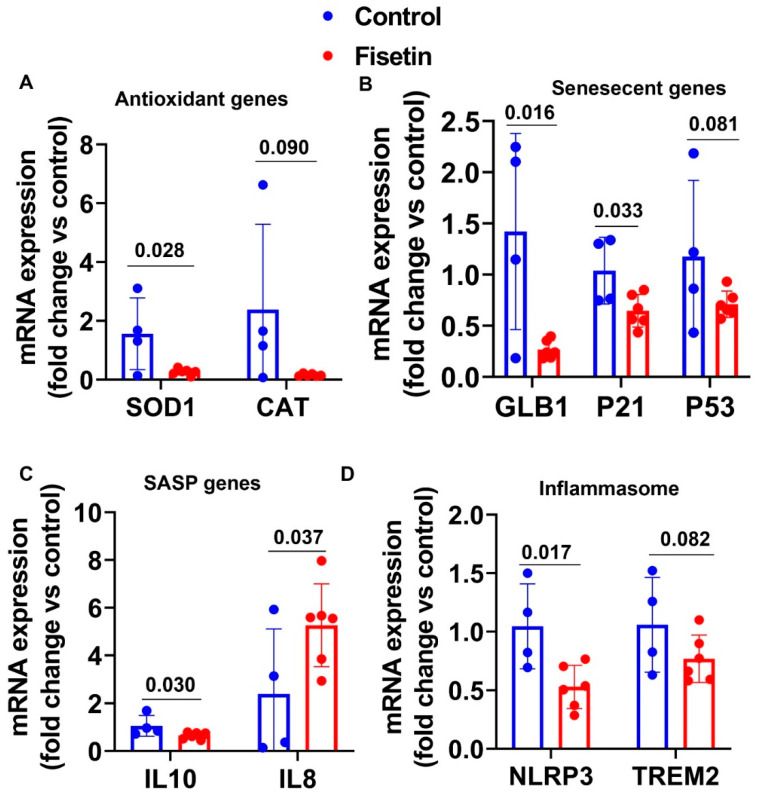
Fisetin has been shown to be beneficial for brain injury and age-related brain disease via different mechanisms. The purpose of this study was to determine the presence of senescent cells and the effects of fisetin on cellular senescence in the brain and other vital organs in old sheep, a more translational model. Female sheep 6-7 years old (N = 6) were treated with 100 mg/kg fisetin or vehicle alone on two consecutive days a week for 8 weeks. All vital organs were harvested at the time of sacrifice. Histology, immunofluorescence staining, and RT-Q-PCR were performed on different regions of brain tissues and other organs. Our results indicated that fisetin treatment at the current regimen did not affect the general morphology of the brain. The presence of senescent cells in both the cerebral brain cortex and cerebellum and non-Cornu Ammonis (CA) area of the hippocampus was detected by senescent-associated β-galactosidase (SA-β-Gal) staining and GL13 (lipofuscin) staining. The senescent cells detected were mainly neurons in both gray and white matter of either the cerebral brain cortex, cerebellum, or non-CA area of the hippocampus. Very few senescent cells were detected in the neurons of the CA1-4 area of the hippocampus, as revealed by GL13 staining and GLB1 colocalization with NEUN. Fisetin treatment significantly decreased the number of SA-β-Gal cells in brain cortex white matter and GL13 cells in the non-CA area of the hippocampus, and showed a decreasing trend of SA-β-Gal cells in the gray matter of both the cerebral brain cortex and cerebellum. Furthermore, fisetin treatment significantly decreased P16 and GLB1 cells in neuronal nuclear protein (NEUN) neurons, glial fibrillary acidic protein (GFAP) astrocytes, and ionized calcium binding adaptor molecule 1 (IBA1) microglia cells in both gray and white matter of cerebral brain cortex. Fisetin treatment significantly decreased GLB1 cells in microglia cells, astrocytes, and NEUN neurons in the non-CA area of the hippocampus. Fisetin treatment significantly decreased plasma S100B. At the mRNA level, fisetin significantly downregulated GLB1 in the liver, showed a decreasing trend in GLB1 in the lung, heart, and spleen tissues, and significantly decreased P21 expression in the liver and lung. Fisetin treatment significantly decreased TREM2 in the lung tissues and showed a trend of downregulation in the liver, spleen, and heart. A significant decrease in NRLP3 in the liver was observed after fisetin treatment. Finally, fisetin treatment significantly downregulated SOD1 in the liver and spleen while upregulating CAT in the spleen. In conclusion, we found that senescent cells were widely present in the cerebral brain cortex and cerebellum and non-CA area of the hippocampus of old sheep. Fisetin treatment significantly decreased senescent neurons, astrocytes, and microglia in both gray and white matter of the cerebral brain cortex and non-CA area of the hippocampus. In addition, fisetin treatment decreased senescent gene expressions and inflammasomes in other organs, such as the lung and the liver. Fisetin treatment represents a promising therapeutic strategy for age-related diseases.
已证明漆黄素通过不同机制对脑损伤和年龄相关的脑部疾病有益。本研究的目的是确定衰老细胞的存在以及漆黄素对老年绵羊大脑和其他重要器官细胞衰老的影响,老年绵羊是一种更具转化性的模型。6至7岁的雌性绵羊(N = 6)每周连续两天接受100 mg/kg漆黄素或单独的赋形剂治疗,持续8周。在处死时采集所有重要器官。对脑组织和其他器官的不同区域进行组织学、免疫荧光染色和RT-Q-PCR检测。我们的结果表明,按照当前方案进行漆黄素治疗不会影响大脑的总体形态。通过衰老相关β-半乳糖苷酶(SA-β-Gal)染色和GL13(脂褐素)染色检测到大脑皮层、小脑以及海马体非角回(CA)区域存在衰老细胞。检测到的衰老细胞主要是大脑皮层、小脑或海马体非CA区域灰质和白质中的神经元。如GL13染色以及GLB1与NEUN共定位所示,在海马体CA1-4区域的神经元中检测到的衰老细胞极少。漆黄素治疗显著减少了大脑皮层白质中的SA-β-Gal细胞数量以及海马体非CA区域中的GL13细胞数量,并且在大脑皮层和小脑灰质中的SA-β-Gal细胞数量呈现下降趋势。此外,漆黄素治疗显著减少了大脑皮层灰质和白质中神经元核蛋白(NEUN)神经元、胶质纤维酸性蛋白(GFAP)星形胶质细胞和离子化钙结合衔接分子1(IBA1)小胶质细胞中的P16和GLB1细胞。漆黄素治疗显著减少了海马体非CA区域小胶质细胞、星形胶质细胞和NEUN神经元中的GLB1细胞。漆黄素治疗显著降低了血浆S100B水平。在mRNA水平上,漆黄素显著下调肝脏中的GLB1,在肺、心脏和脾脏组织中的GLB1呈现下降趋势,并且显著降低肝脏和肺中的P21表达。漆黄素治疗显著降低肺组织中的TREM2,并且在肝脏、脾脏和心脏中呈现下调趋势。漆黄素治疗后观察到肝脏中NRLP3显著减少。最后,漆黄素治疗显著下调肝脏和脾脏中的SOD1,同时上调脾脏中的CAT。总之,我们发现衰老细胞广泛存在于老年绵羊的大脑皮层、小脑以及海马体非CA区域。漆黄素治疗显著减少了大脑皮层灰质和白质以及海马体非CA区域中的衰老神经元、星形胶质细胞和小胶质细胞。此外,漆黄素治疗降低了其他器官如肺和肝脏中的衰老基因表达和炎性小体。漆黄素治疗代表了一种针对年龄相关疾病的有前景的治疗策略。