Department of Oncology and Lombardi Comprehensive Cancer Center, Georgetown University Medical Center, Washington, DC 20057, USA.
Department of Paramedicine, Kyungil University, Gyeongsan-si 38428, Gyeongbuk, Republic of Korea.
Int J Mol Sci. 2023 Aug 21;24(16):13004. doi: 10.3390/ijms241613004.
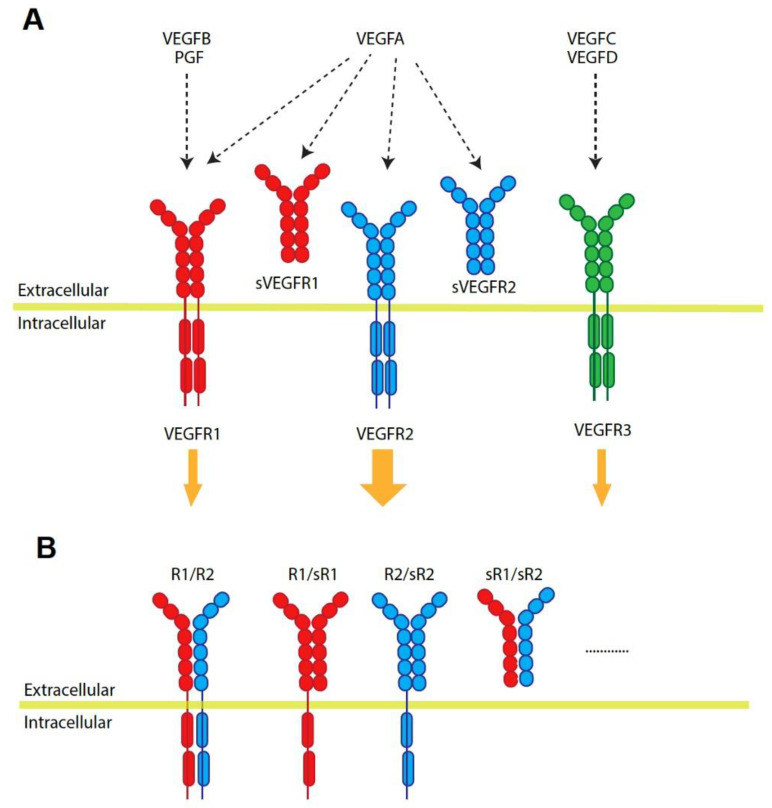
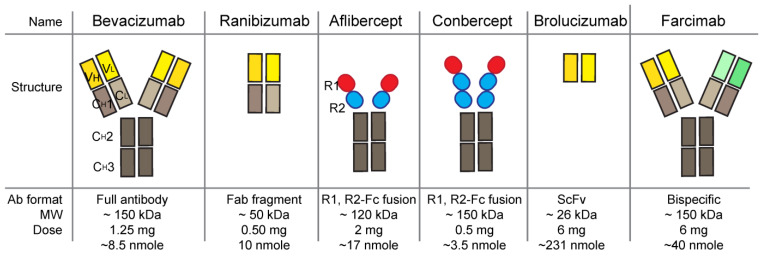
Neovascular age-related macular degeneration (nAMD) is the primary disastrous retinal disease that leads to blindness in the elderly population. In the early 2000s, nAMD resulted in irreversible vision loss and blindness with no available treatment options. However, there have been breakthrough advances in the drug development of anti-angiogenic biological agents over the last two decades. The primary target molecule for treating nAMD is the vascular endothelial growth factor (VEGF), and there are currently several anti-VEGF drugs such as bevacizumab, ranibizumab, and aflibercept, which have made nAMD more manageable than before, thus preventing vision loss. Nevertheless, it should be noted that these anti-VEGF drugs for nAMD treatment are not effective in more than half of the patients, and even those who initially gain visual improvements lose their vision over time, along with potential deterioration in the geography of atrophy. As a result, there have been continuous endeavors to improve anti-VEGF agents through better efficacy, fewer doses, expanded intervals, and additional targets. This review describes past and current anti-VEGF therapeutics used to treat nAMD and outlines future directions to improve the effectiveness and safety of anti-VEGF agents.
新生血管性年龄相关性黄斑变性(nAMD)是导致老年人群失明的主要灾难性视网膜疾病。在 21 世纪初,nAMD 导致不可逆转的视力丧失和失明,而没有可用的治疗方法。然而,在过去的二十年中,抗血管生成生物制剂的药物开发取得了突破性进展。治疗 nAMD 的主要靶分子是血管内皮生长因子(VEGF),目前有几种抗 VEGF 药物,如贝伐单抗、雷珠单抗和阿柏西普,它们使 nAMD 比以前更容易控制,从而防止视力丧失。然而,应该注意的是,这些用于 nAMD 治疗的抗 VEGF 药物在超过一半的患者中无效,即使那些最初获得视力改善的患者也会随着时间的推移失去视力,同时潜在地导致萎缩的地理恶化。因此,人们一直在努力通过更好的疗效、更少的剂量、更长的间隔和更多的靶点来改进抗 VEGF 药物。这篇综述描述了过去和现在用于治疗 nAMD 的抗 VEGF 治疗方法,并概述了改善抗 VEGF 药物效果和安全性的未来方向。