Neonatology Unit, Pietro Barilla Children's Hospital, University of Parma, Via Gramsci 14, 43126 Parma, Italy.
Pediatric Clinic, Pietro Barilla Children's Hospital, University of Parma, Via Gramsci 14, 43126 Parma, Italy.
Nutrients. 2023 Aug 9;15(16):3515. doi: 10.3390/nu15163515.
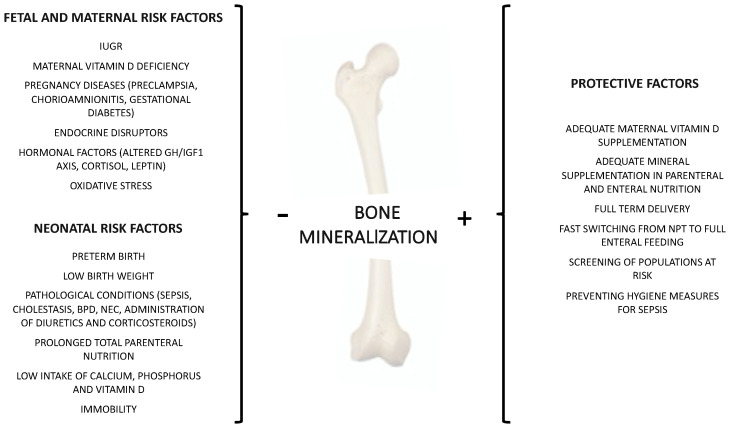
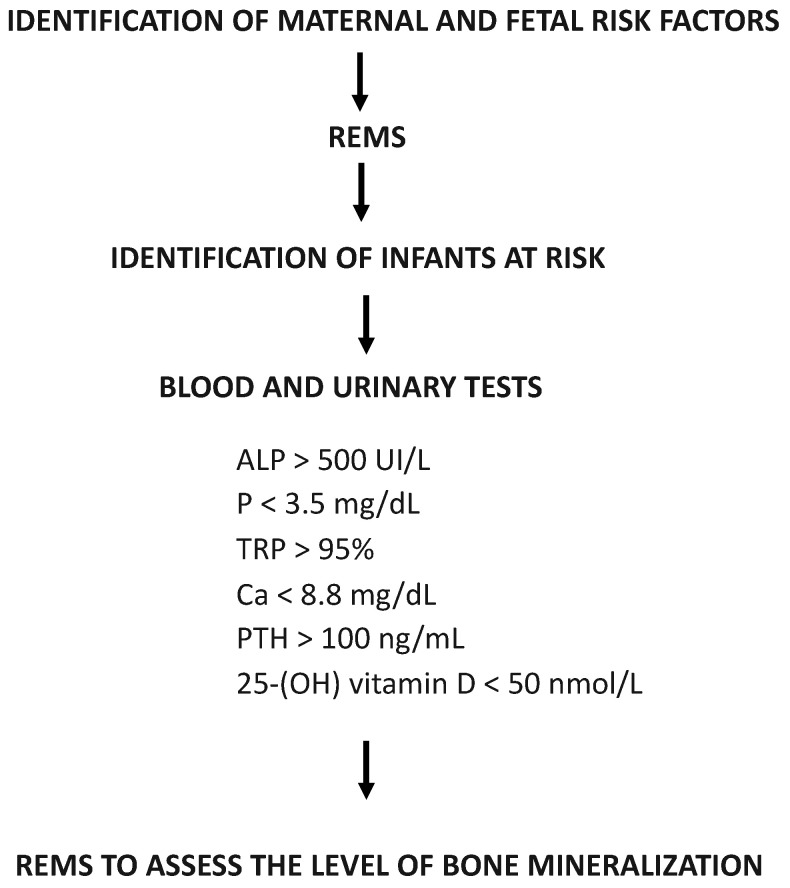
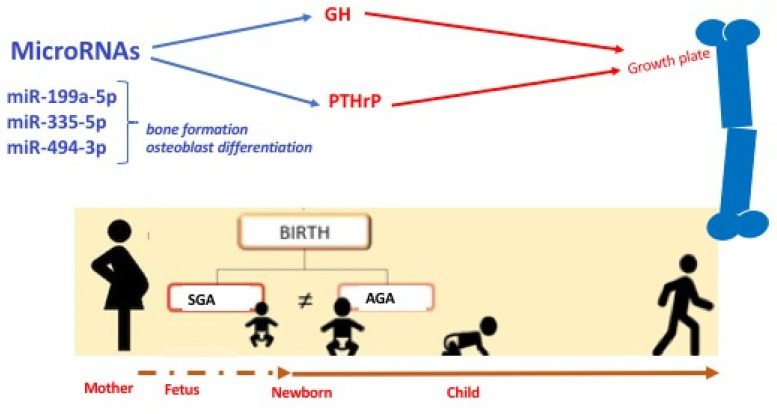
Bone health starts with maternal health and nutrition, which influences bone mass and density already in utero. The mechanisms underlying the effect of the intrauterine environment on bone health are partly unknown but certainly include the 'foetal programming' of oxidative stress and endocrine systems, which influence later skeletal growth and development. With this narrative review, we describe the current evidence for identifying patients with risk factors for developing osteopenia, today's management of these populations, and screening and prevention programs based on gestational age, weight, and morbidity. Challenges for bone health prevention include the need for new technologies that are specific and applicable to pregnant women, the foetus, and, later, the newborn. Radiofrequency ultrasound spectrometry (REMS) has proven to be a useful tool in the assessment of bone mineral density (BMD) in pregnant women. Few studies have reported that transmission ultrasound can also be used to assess BMD in newborns. The advantages of this technology in the foetus and newborn are the absence of ionising radiation, ease of use, and, above all, the possibility of performing longitudinal studies from intrauterine to extrauterine life. The use of these technologies already in the intrauterine period could help prevent associated diseases, such as osteoporosis and osteopenia, which are characterised by a reduction in bone mass and degeneration of bone structure and lead to an increased risk of fractures in adulthood with considerable social repercussions for the related direct and indirect costs.
骨骼健康始于母体健康和营养,这会影响胎儿期的骨量和骨密度。宫内环境对骨骼健康影响的机制尚不完全清楚,但肯定包括氧化应激和内分泌系统的“胎儿编程”,这会影响后期骨骼的生长和发育。通过本次叙述性综述,我们描述了目前用于识别存在发生骨质疏松症风险因素的患者的证据、这些人群的当前管理方法,以及基于胎龄、体重和发病率的筛查和预防计划。骨骼健康预防面临的挑战包括需要新的技术,这些技术必须是专门针对孕妇、胎儿,以及后期新生儿的。射频超声光谱学(REMS)已被证明是评估孕妇骨矿物质密度(BMD)的有用工具。少数研究报告称,超声传输也可用于评估新生儿的 BMD。该技术在胎儿和新生儿中的优势在于没有电离辐射、使用方便,最重要的是,能够从宫内到宫外的生命进行纵向研究。在宫内期使用这些技术可能有助于预防相关疾病,如骨质疏松症和骨质减少症,这些疾病的特征是骨量减少和骨结构退化,导致成年后骨折风险增加,对相关直接和间接成本产生重大社会影响。