Faculty of Electrical and Computer Engineering, Semnan University, Semnan, Iran.
Photonics Research Laboratory, Electrical Engineering Department, Amirkabir University of Technology, Tehran, Iran.
Sci Rep. 2023 Aug 26;13(1):13976. doi: 10.1038/s41598-023-41193-3.
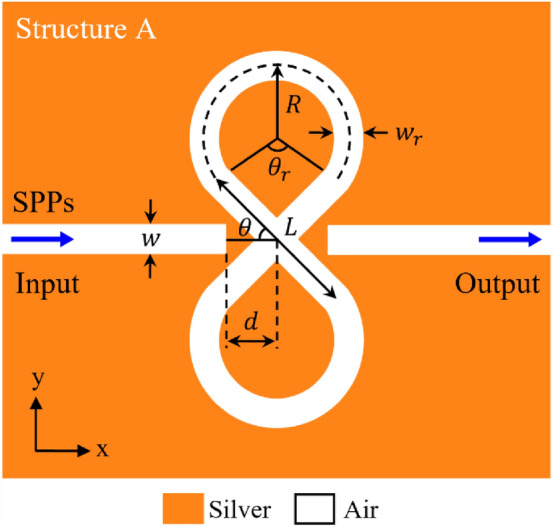
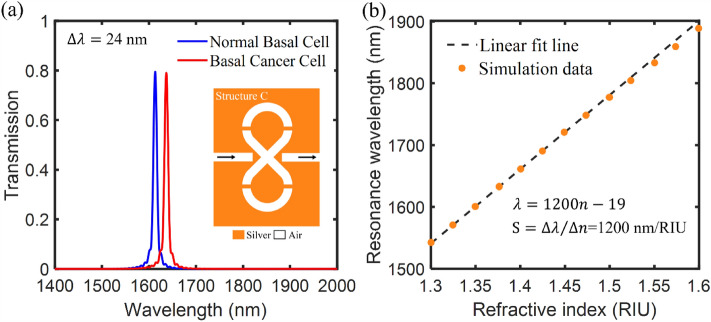
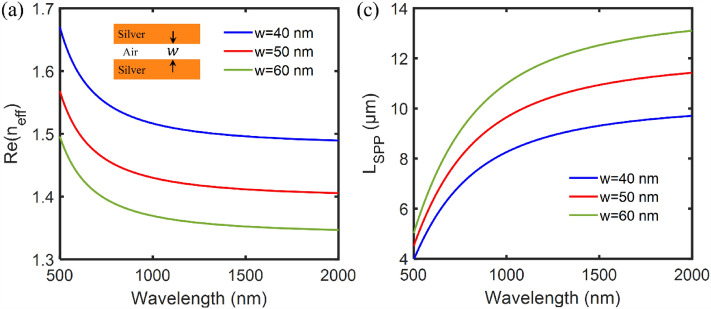
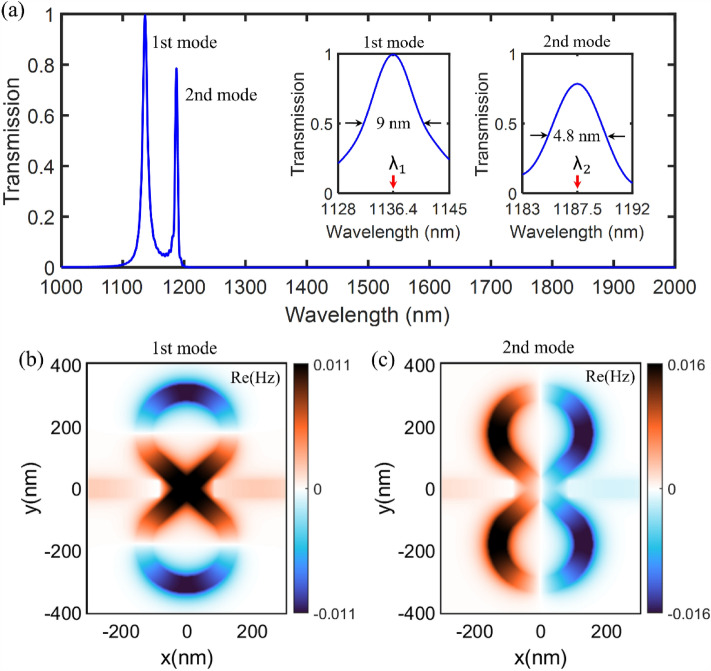
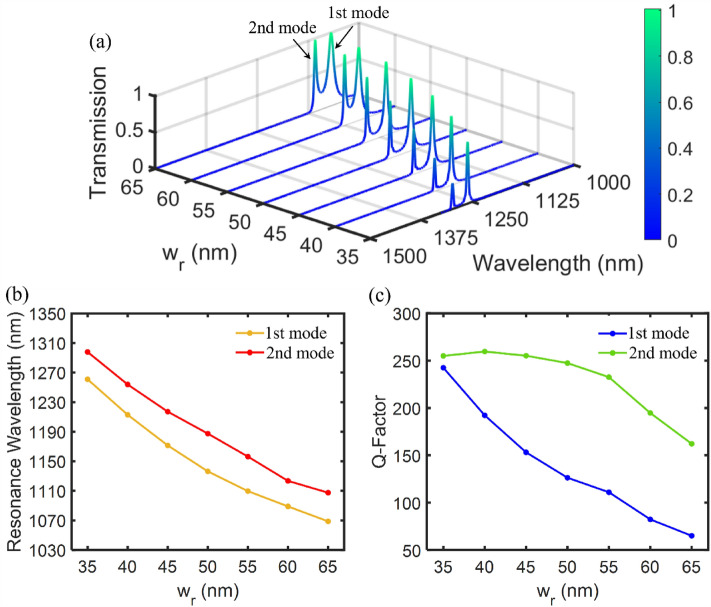
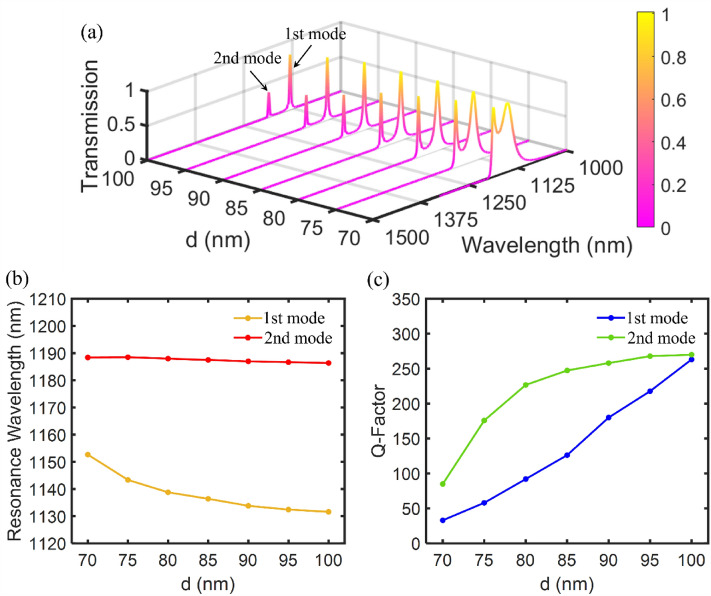
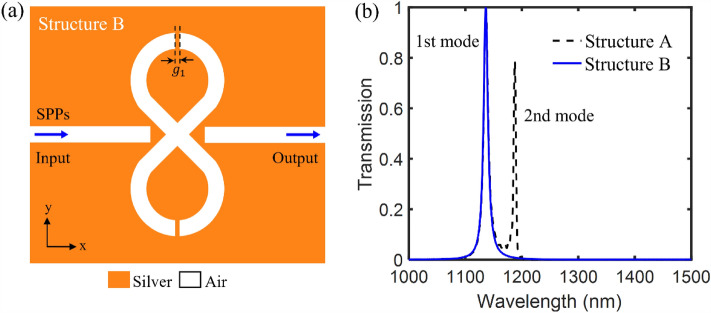
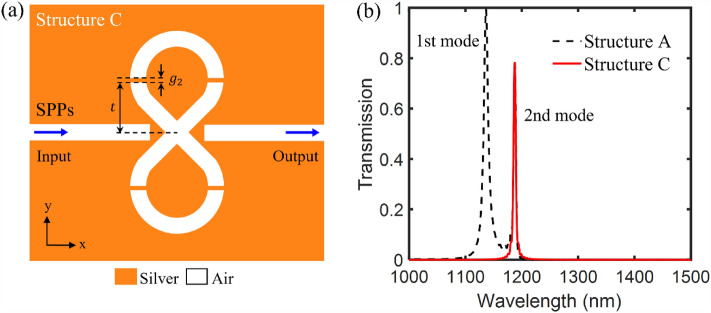
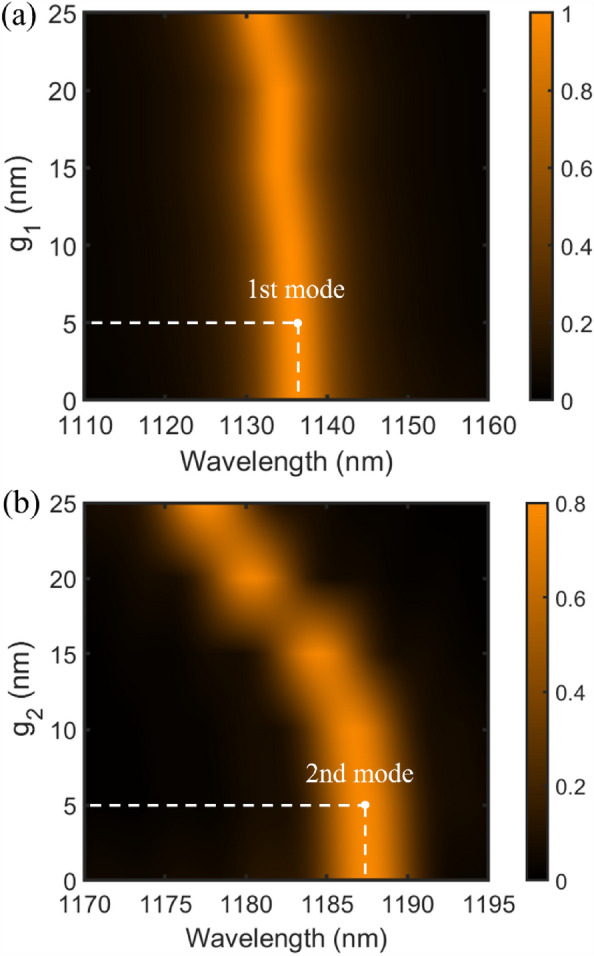
In this paper, a novel 8-shaped resonator coupled to metal-insulator-metal waveguides is used for designing plasmonic filters and sensors. The resonator supports two resonance modes, which result in peaks in the transmission spectrum of the structure. A Q-factor of 247.4 which can reach up to 270 at the wavelength of 1187.5 nm is observed. By placing vertical and horizontal metal blades in the resonator, two tunable single-mode plasmonic filters are obtained at the first and second resonance modes, respectively. The effect of structural parameters on the transmission spectrum is investigated using the finite-difference time-domain (FDTD) method. Based on the obtained results, the proposed plasmonic structure can be used for biosensing applications such as the detection of basal cancer cells with a sensitivity of 1200 nm/RIU. It is of great significance that both the sensitivity and Q-factor values for the proposed structure are higher than most recent sensors reported in the literature. Therefore, the proposed structure is a potentially promising candidate for filtering and sensing applications.
本文使用一种新型的 8 字形谐振器与金属-绝缘体-金属波导耦合,用于设计等离子体滤波器和传感器。该谐振器支持两种共振模式,这导致了结构传输谱中的峰值。观察到 Q 因子为 247.4,在 1187.5nm 的波长下可达到 270。通过在谐振器中放置垂直和水平金属叶片,在第一和第二共振模式下分别获得了两个可调谐的单模等离子体滤波器。使用时域有限差分(FDTD)方法研究了结构参数对传输谱的影响。基于所得到的结果,所提出的等离子体结构可用于生物传感应用,例如检测基底癌细胞的灵敏度为 1200nm/RIU。重要的是,与文献中报道的大多数最近的传感器相比,所提出的结构的灵敏度和 Q 因子值都更高。因此,所提出的结构是滤波和传感应用的潜在有前途的候选者。