Jia Li, Liu Lining, Zhang Yujing, Fu Wenxuan, Liu Xing, Wang Qianqian, Tanveer Mohsin, Huang Liping
College of Food and Drug, Luoyang Normal University, Luoyang, Henan, China.
International Research Center for Environmental Membrane Biology, College of Food Science and Engineering, Foshan University, Foshan, China.
Front Plant Sci. 2023 Aug 11;14:1226484. doi: 10.3389/fpls.2023.1226484. eCollection 2023.
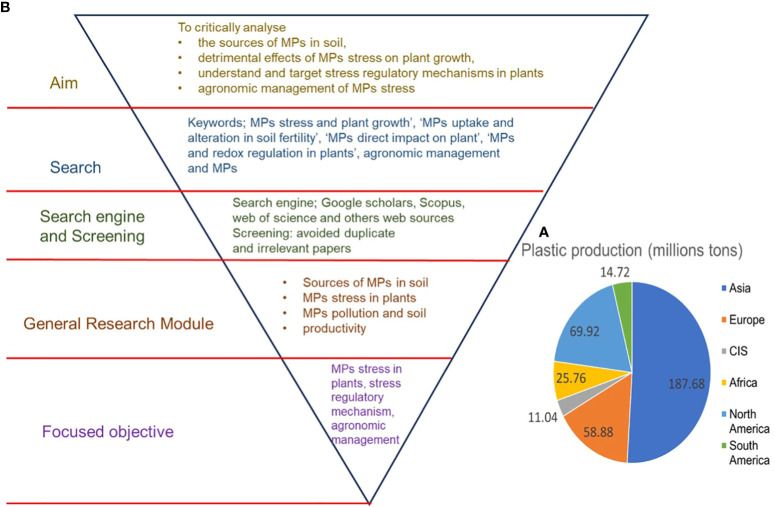
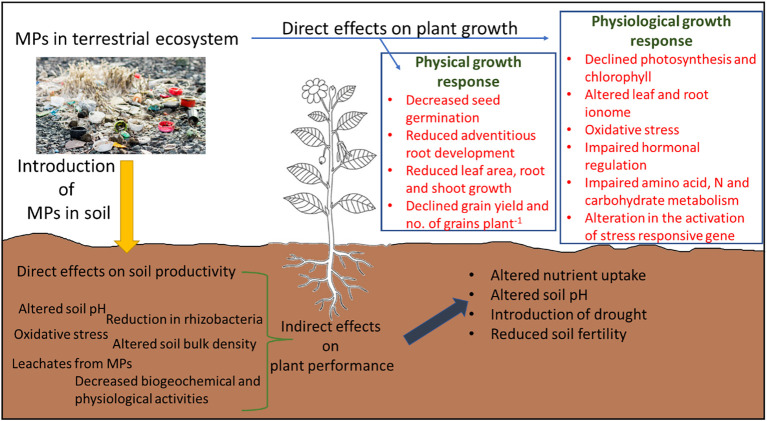
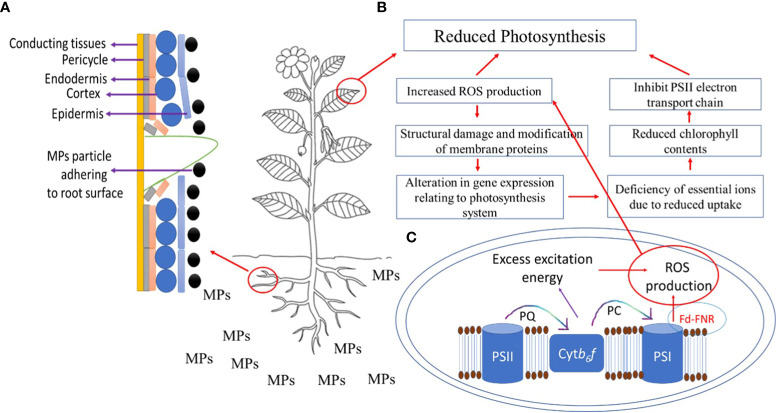
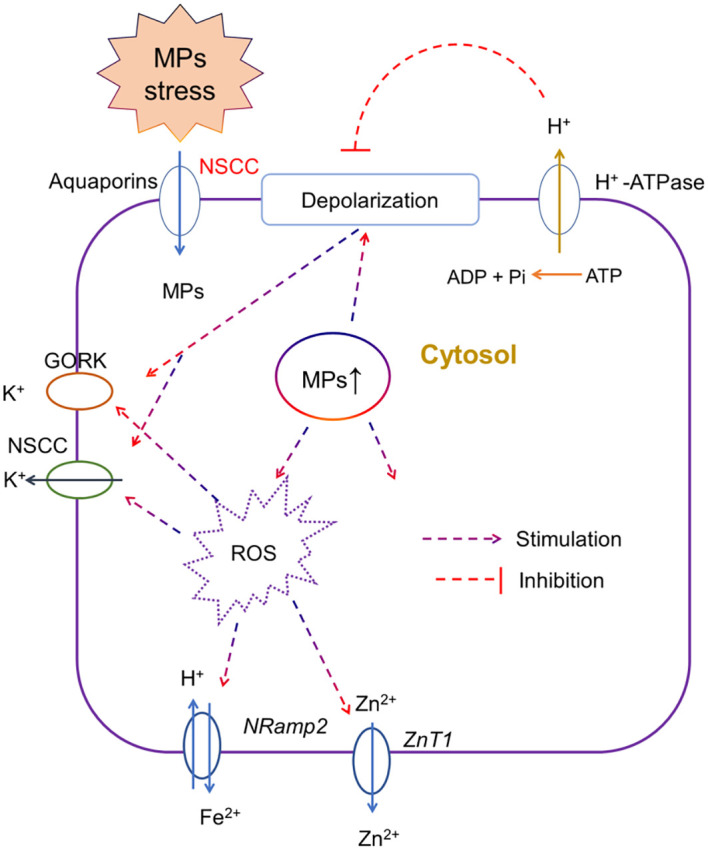
Microplastic (MP) pollution is becoming a global problem due to the resilience, long-term persistence, and robustness of MPs in different ecosystems. In terrestrial ecosystems, plants are exposed to MP stress, thereby affecting overall plant growth and development. This review article has critically analyzed the effects of MP stress in plants. We found that MP stress-induced reduction in plant physical growth is accompanied by two complementary effects: (i) blockage of pores in seed coat or roots to alter water and nutrient uptake, and (ii) induction of drought due to increased soil cracking effects of MPs. Nonetheless, the reduction in physiological growth under MP stress is accompanied by four complementary effects: (i) excessive production of ROS, (ii) alteration in leaf and root ionome, (iii) impaired hormonal regulation, and (iv) decline in chlorophyll and photosynthesis. Considering that, we suggested that targeting the redox regulatory mechanisms could be beneficial in improving tolerance to MPs in plants; however, antioxidant activities are highly dependent on plant species, plant tissue, MP type, and MP dose. MP stress also indirectly reduces plant growth by altering soil productivity. However, MP-induced negative effects vary due to the presence of different surface functional groups and particle sizes. In the end, we suggested the utilization of agronomic approaches, including the application of growth regulators, biochar, and replacing plastic mulch with crop residues, crop diversification, and biological degradation, to ameliorate the effects of MP stress in plants. The efficiency of these methods is also MP-type-specific and dose-dependent.
由于微塑料(MP)在不同生态系统中具有弹性、长期持久性和稳定性,微塑料污染正成为一个全球性问题。在陆地生态系统中,植物受到微塑料胁迫,从而影响植物的整体生长和发育。这篇综述文章批判性地分析了微塑料胁迫对植物的影响。我们发现,微塑料胁迫导致植物物理生长减少伴随着两种互补效应:(i)种皮或根部孔隙堵塞,改变水分和养分吸收;(ii)由于微塑料增加土壤开裂效应而导致干旱。尽管如此,微塑料胁迫下生理生长的减少伴随着四种互补效应:(i)活性氧过量产生;(ii)叶和根离子组改变;(iii)激素调节受损;(iv)叶绿素和光合作用下降。考虑到这一点,我们建议针对氧化还原调节机制可能有助于提高植物对微塑料的耐受性;然而,抗氧化活性高度依赖于植物种类、植物组织、微塑料类型和微塑料剂量。微塑料胁迫还通过改变土壤生产力间接降低植物生长。然而,由于存在不同的表面官能团和粒径,微塑料诱导的负面影响有所不同。最后,我们建议利用农艺方法,包括施用生长调节剂、生物炭、用作物残茬替代塑料地膜、作物多样化和生物降解,来减轻微塑料胁迫对植物的影响。这些方法的效率也因微塑料类型而异,且具有剂量依赖性。