College of Pharmaceutical Sciences, Zhejiang Chinese Medical University, Hangzhou, People's Republic of China.
The First Affiliated Hospital, Zhejiang Chinese Medical University, Hangzhou, People's Republic of China.
Drug Des Devel Ther. 2023 Aug 22;17:2461-2479. doi: 10.2147/DDDT.S414098. eCollection 2023.
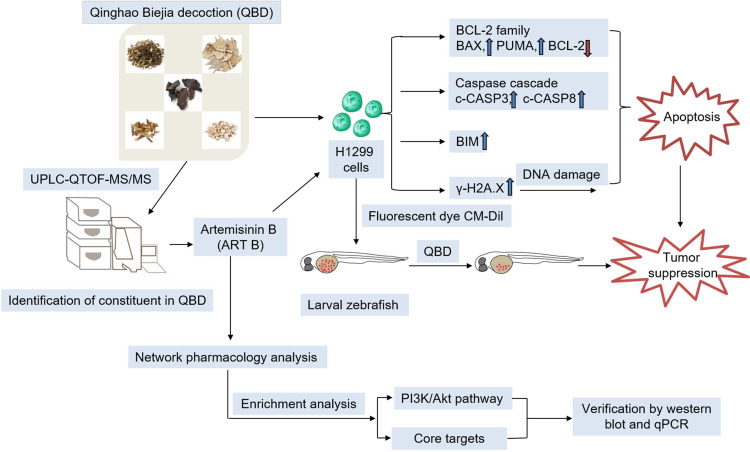
To explore the pharmacological effects and mechanisms of Qinghao Biejia decoction (QBD) against non-small-cell lung cancer (NSCLC) based on network pharmacology and to verify the anticancer effect of artemisinin B (ART B), the active ingredient of QBD, on H1299 cells.
Ultra-performance liquid chromatography coupled with quadrupole-time-of-flight mass spectrometry (UPLC-QTOF-MS/MS) was applied to explore the chemoprofile of QBD. A zebrafish xenograft model was used to determine the anti-cancer efficacy of QBD. Cell counting kit-8 assay, terminal deoxyribonucleotide transferase-mediated-dUTP nick-end labeling assay; immunofluorescence, and flow cytometry were used to evaluate the in vitro anti-proliferative and pro-apoptotic effects of QBD and ART B on H1299 cells. Subsequently, the related targets and action mechanisms of both QBD and ART B predicted by network pharmacological analyses were experimentally validated by real-time PCR and Western blot assays on H1299 cells.
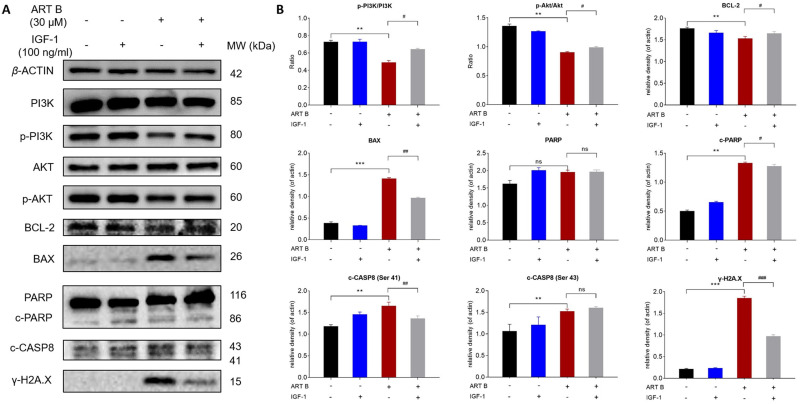
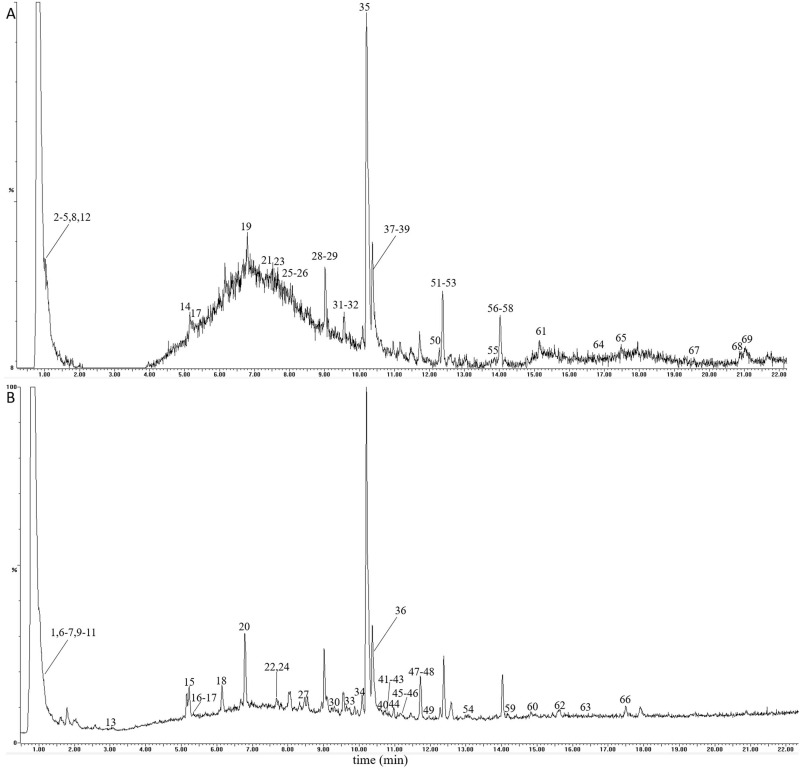
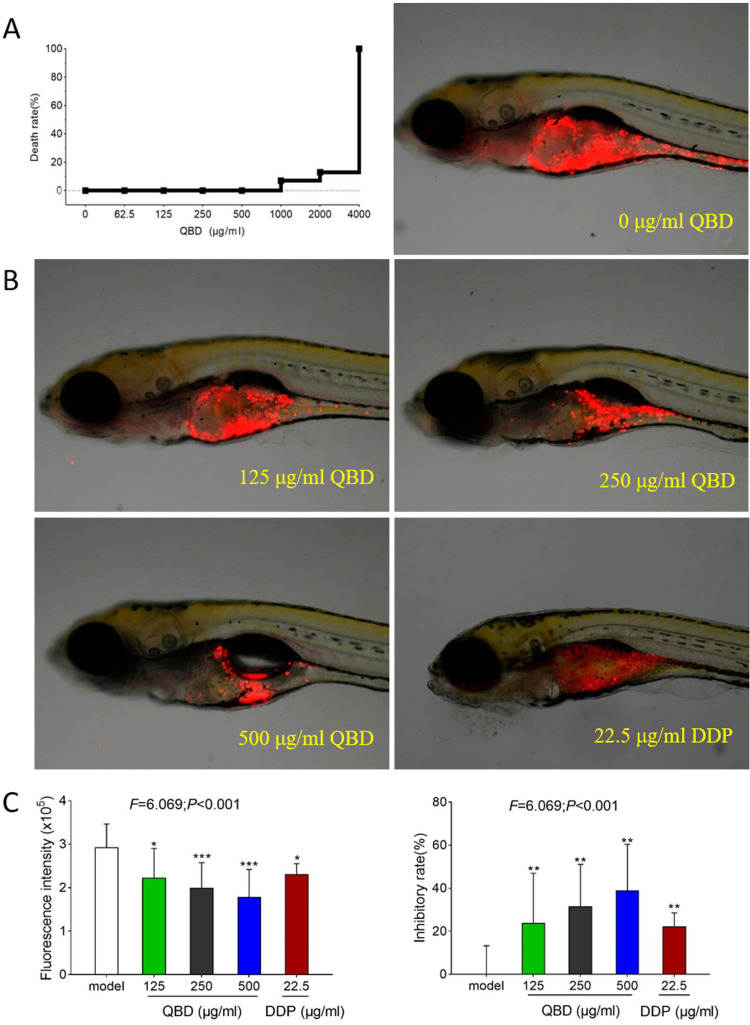
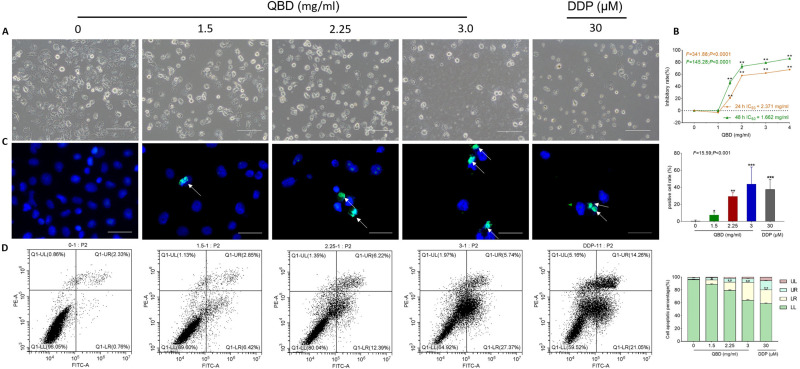
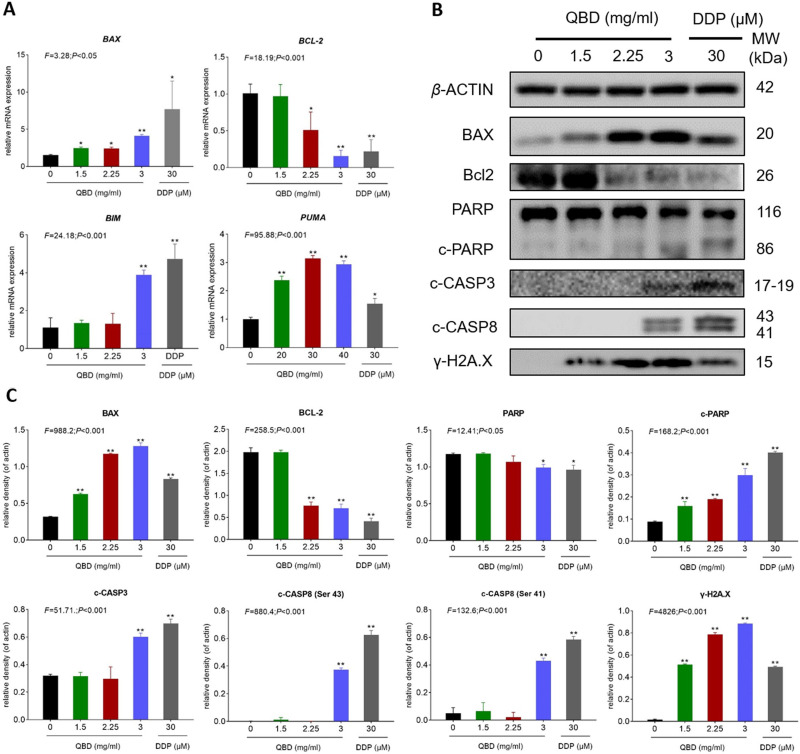
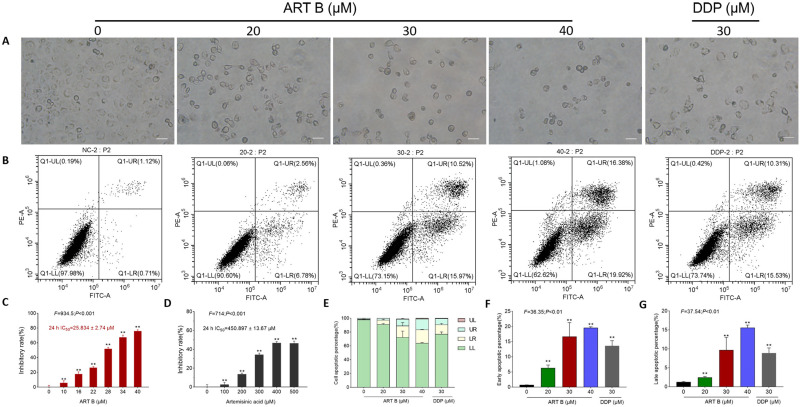
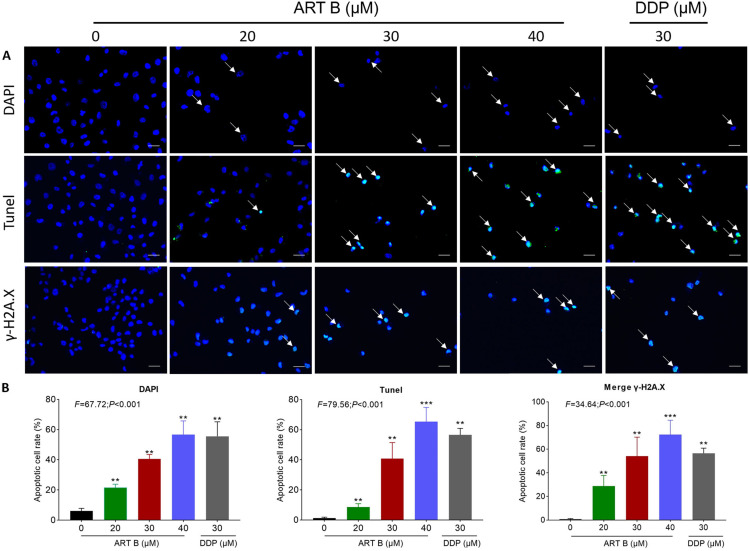
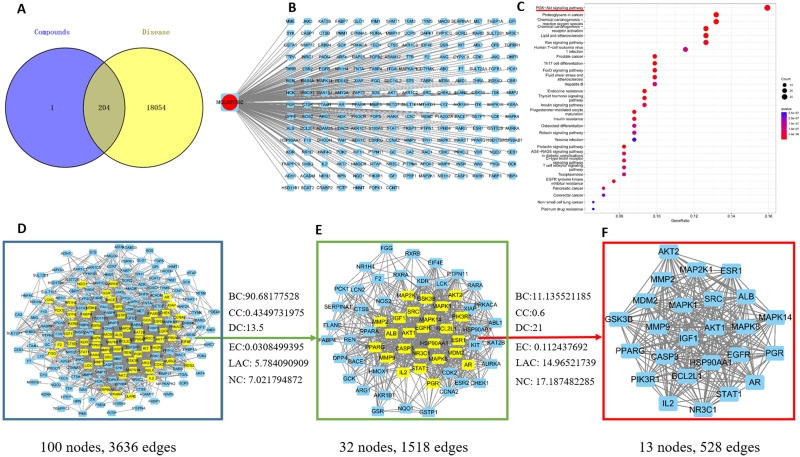
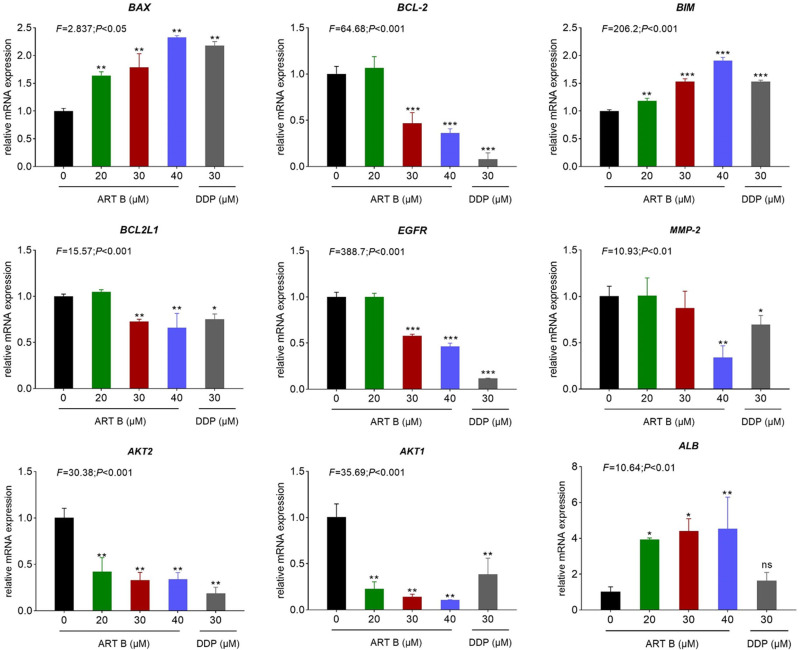
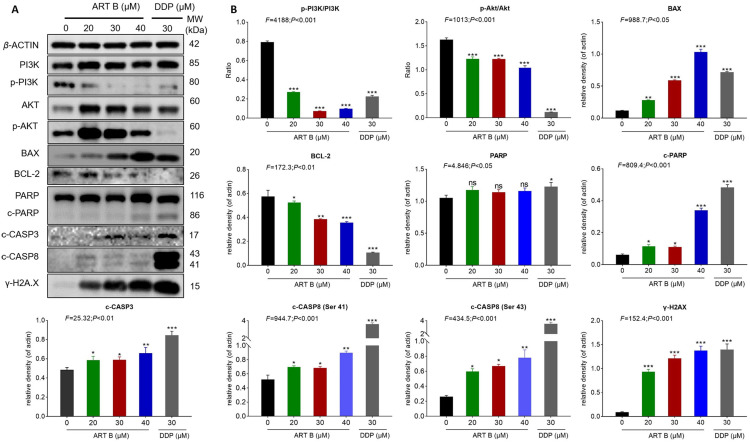
UPLC-QTOF-MS/MS identified a total of 69 compounds (such as ART B, mangiferin, and artemisinic acid) in QBD. The in vivo data showed that QBD significantly inhibited the growth of H1299 cells in xenograft larval zebrafish from 125 to 500 μg/mL. The in vitro data showed that QBD induced apoptosis of H1299 cells, accompanied by down-regulating the expression of BCL-2 and up-regulating the expression of BIM, PUMA, BAX, c-PARP, γ-H2A.X, c-CASP3, and c-CASP8. Alike QBD, ART B exerted similar anti-proliferative and pro-apoptotic effects on H1299 cells. Moreover, ART B inhibited expressions of , and , and up-regulated expression. Mechanistically, ART B promoted apoptosis of H1299 cells by inhibiting PI3K/Akt signaling pathway.
This study revealed the anti-NSCLC efficacy of QBD. ART B, the effective component of QBD, plays an anti-NSCLC role by down-regulating the PI3K-Akt signaling pathway. It suggests that QBD and ART B are promising drug candidates for NSCLC treatment.
基于网络药理学探讨青蒿鳖甲汤(QBD)治疗非小细胞肺癌(NSCLC)的药理作用和机制,并验证 QBD 的活性成分青蒿素 B(ART B)对 H1299 细胞的抗癌作用。
采用超高效液相色谱-四极杆飞行时间质谱联用(UPLC-QTOF-MS/MS)技术探索 QBD 的化学成分谱。采用斑马鱼异种移植模型确定 QBD 的抗癌疗效。采用细胞计数试剂盒-8(CCK-8)检测、末端脱氧核苷酸转移酶介导的 dUTP 缺口末端标记(TUNEL)检测、免疫荧光和流式细胞术评估 QBD 和 ART B 对 H1299 细胞的体外增殖抑制和促凋亡作用。随后,通过实时 PCR 和 Western blot 实验在 H1299 细胞上验证网络药理学分析预测的 QBD 和 ART B 的相关靶点和作用机制。
UPLC-QTOF-MS/MS 鉴定出 QBD 中共有 69 种化合物(如 ART B、芒果苷和青蒿酸)。体内数据显示,QBD 以浓度依赖性方式(125 至 500 μg/mL)显著抑制异种移植幼虫斑马鱼中 H1299 细胞的生长。体外数据显示,QBD 诱导 H1299 细胞凋亡,同时下调 BCL-2 表达,上调 BIM、PUMA、BAX、c-PARP、γ-H2A.X、c-CASP3 和 c-CASP8 的表达。与 QBD 类似,ART B 对 H1299 细胞也具有类似的增殖抑制和促凋亡作用。此外,ART B 抑制 、和 的表达,上调 表达。机制上,ART B 通过抑制 PI3K/Akt 信号通路促进 H1299 细胞凋亡。
本研究揭示了 QBD 对 NSCLC 的治疗作用。QBD 的有效成分 ART B 通过下调 PI3K/Akt 信号通路发挥抗 NSCLC 作用。这表明 QBD 和 ART B 是治疗 NSCLC 的有前途的候选药物。