Corona Giuseppe, Di Gregorio Emanuela, Buonadonna Angela, Lombardi Davide, Scalone Simona, Steffan Agostino, Miolo Gianmaria
Immunopathology and Cancer Biomarkers Unit, Centro di Riferimento Oncologico di Aviano (CRO), IRCCS, Aviano, Italy.
Medical Oncology and Cancer Prevention Unit, Centro di Riferimento Oncologico di Aviano (CRO), IRCCS, Aviano, Italy.
Front Pharmacol. 2023 Aug 11;14:1212634. doi: 10.3389/fphar.2023.1212634. eCollection 2023.
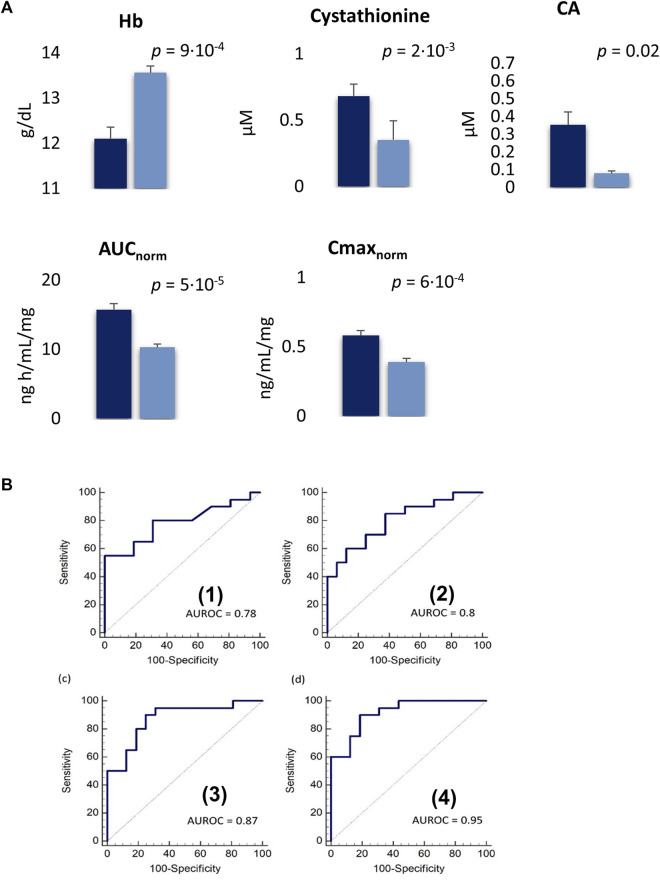
Trabectedin is an anti-cancer drug commonly used for the treatment of patients with metastatic soft tissue sarcoma (mSTS). Despite its recognized efficacy, significant variability in pharmacological response has been observed among mSTS patients. To address this issue, this pharmacometabolomics study aimed to identify pre-dose plasma metabolomics signatures that can explain individual variations in trabectedin pharmacokinetics and overall clinical response to treatment. In this study, 40 mSTS patients treated with trabectedin administered by 24 h-intravenous infusion at a dose of 1.5 mg/m were enrolled. The patients' baseline plasma metabolomics profiles, which included derivatives of amino acids and bile acids, were analyzed using multiple reaction monitoring LC-MS/MS together with their pharmacokinetics profile of trabectedin. Multivariate Partial least squares regression and univariate statistical analyses were utilized to identify correlations between baseline metabolite concentrations and trabectedin pharmacokinetics, while Partial Least Squares-Discriminant Analysis was employed to evaluate associations with clinical response. The multiple regression model, derived from the correlation between the AUC of trabectedin and pre-dose metabolomics, exhibited the best performance by incorporating cystathionine, hemoglobin, taurocholic acid, citrulline, and the phenylalanine/tyrosine ratio. This model demonstrated a bias of 4.6% and a precision of 17.4% in predicting drug AUC, effectively accounting for up to 70% of the inter-individual pharmacokinetic variability. Through the use of Partial least squares-Discriminant Analysis, cystathionine and hemoglobin were identified as specific metabolic signatures that effectively distinguish patients with stable disease from those with progressive disease. The findings from this study provide compelling evidence to support the utilization of pre-dose metabolomics in uncovering the underlying causes of pharmacokinetic variability of trabectedin, as well as facilitating the identification of patients who are most likely to benefit from this treatment.
曲贝替定是一种常用于治疗转移性软组织肉瘤(mSTS)患者的抗癌药物。尽管其疗效已得到认可,但在mSTS患者中观察到了显著的药理反应变异性。为了解决这个问题,这项药物代谢组学研究旨在确定给药前血浆代谢组学特征,以解释曲贝替定药代动力学和总体临床治疗反应的个体差异。在本研究中,纳入了40例接受曲贝替定治疗的mSTS患者,以1.5mg/m²的剂量通过24小时静脉输注给药。使用多反应监测液相色谱-质谱/质谱分析患者的基线血浆代谢组学谱,其中包括氨基酸和胆汁酸的衍生物,以及曲贝替定的药代动力学谱。利用多元偏最小二乘回归和单变量统计分析来确定基线代谢物浓度与曲贝替定药代动力学之间的相关性,同时采用偏最小二乘判别分析来评估与临床反应的关联。由曲贝替定的曲线下面积(AUC)与给药前代谢组学之间的相关性得出的多元回归模型,通过纳入胱硫醚、血红蛋白、牛磺胆酸、瓜氨酸和苯丙氨酸/酪氨酸比值,表现出了最佳性能。该模型在预测药物AUC时偏差为4.6%,精度为17.4%,有效解释了高达70%的个体间药代动力学变异性。通过使用偏最小二乘判别分析,胱硫醚和血红蛋白被确定为特定的代谢特征,可有效区分病情稳定的患者和病情进展的患者。本研究结果提供了有力证据,支持利用给药前代谢组学来揭示曲贝替定药代动力学变异性的潜在原因,并有助于识别最可能从该治疗中获益的患者。