Division of Endocrinology, Diabetes, and Metabolism, Beth Israel Deaconess Medical Center and Harvard Medical School, Boston, MA, USA.
Division of Endocrinology, Diabetes, and Metabolism, Beth Israel Deaconess Medical Center and Harvard Medical School, Boston, MA, USA.
Mol Metab. 2023 Nov;77:101795. doi: 10.1016/j.molmet.2023.101795. Epub 2023 Aug 26.
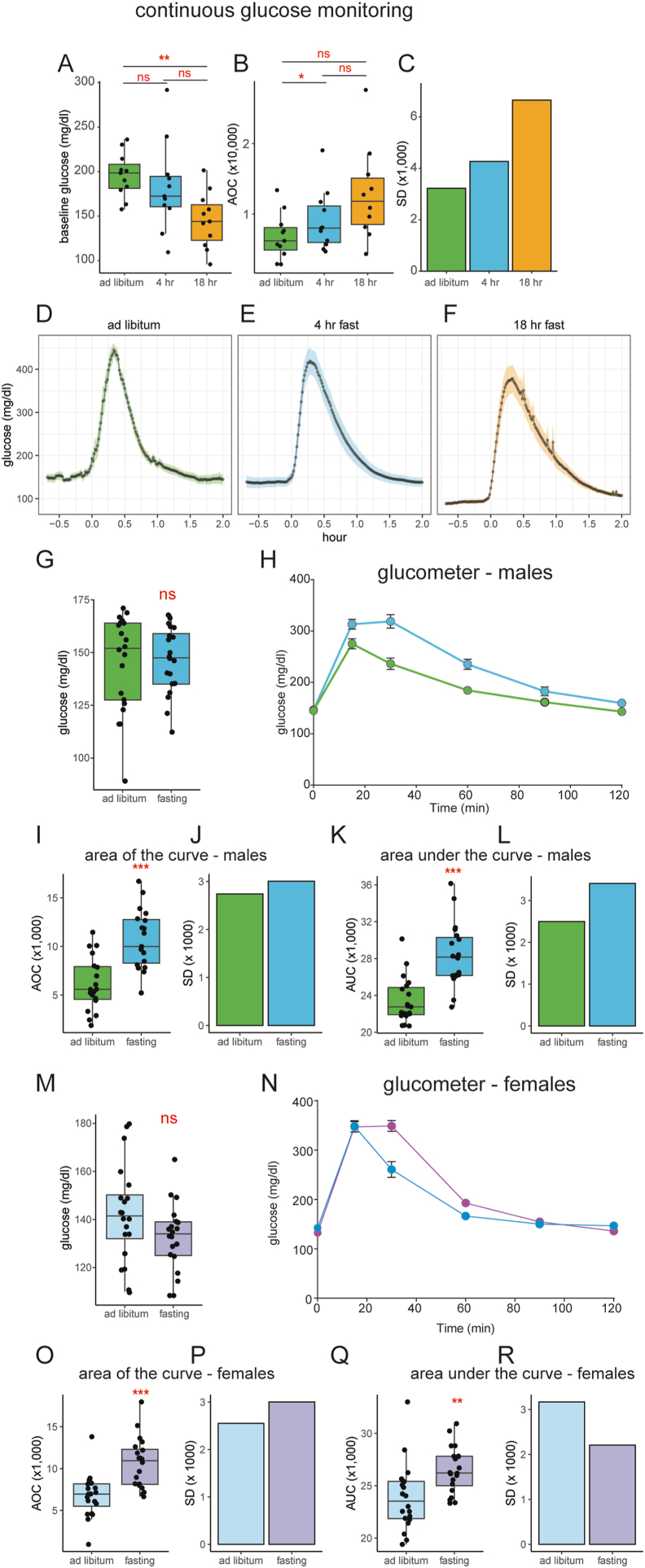
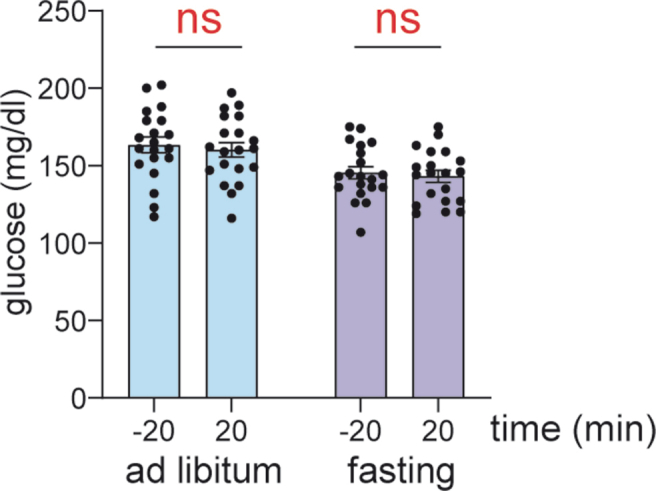
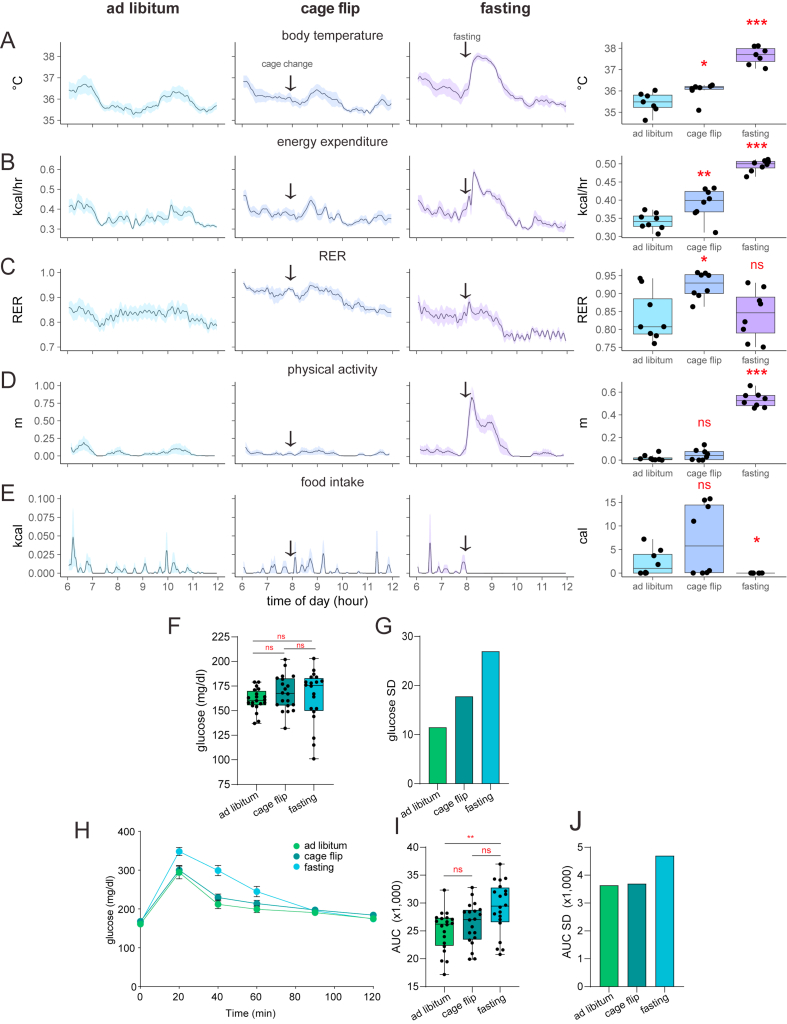
This study was performed to determine the effect of fasting on reproducibility of the glucose tolerance test. Due to individual variation in animal feeding behaviors, fasting animals prior to metabolic and behavioral experiments is widely held to reduce inter-subject variation in glucose and metabolic parameters of preclinical rodent models. Reducing variability is especially important for studies where initial metabolite levels can influence the magnitude of experimental interventions, but fasting also imposes stress that may distort the variables of interest. One such intervention is the glucose tolerance test (GTT) which measures the maximum response and recovery following a bolus of exogenous glucose. We sought to investigate how fasting affects the response of individual mice to a GTT.
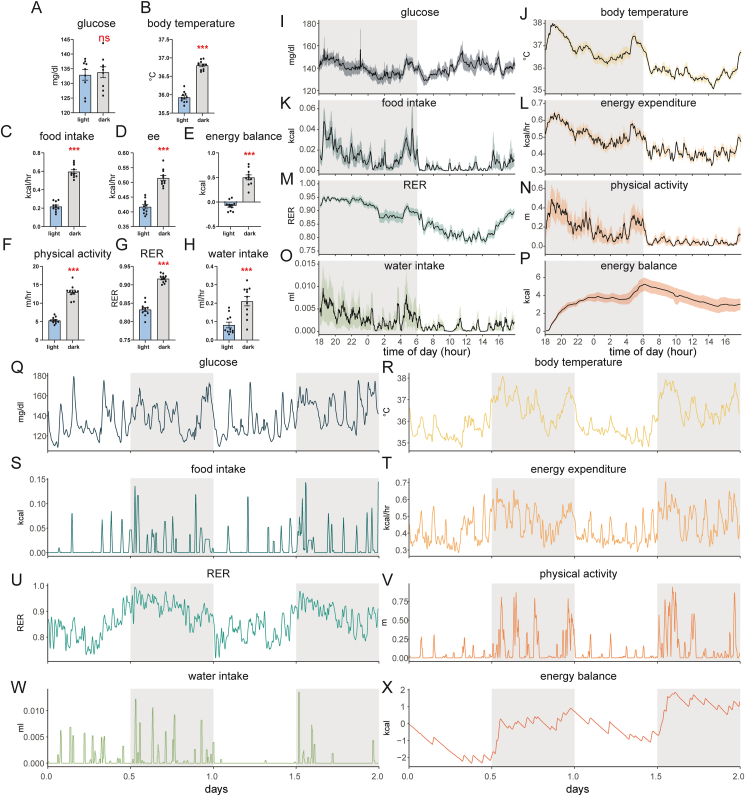
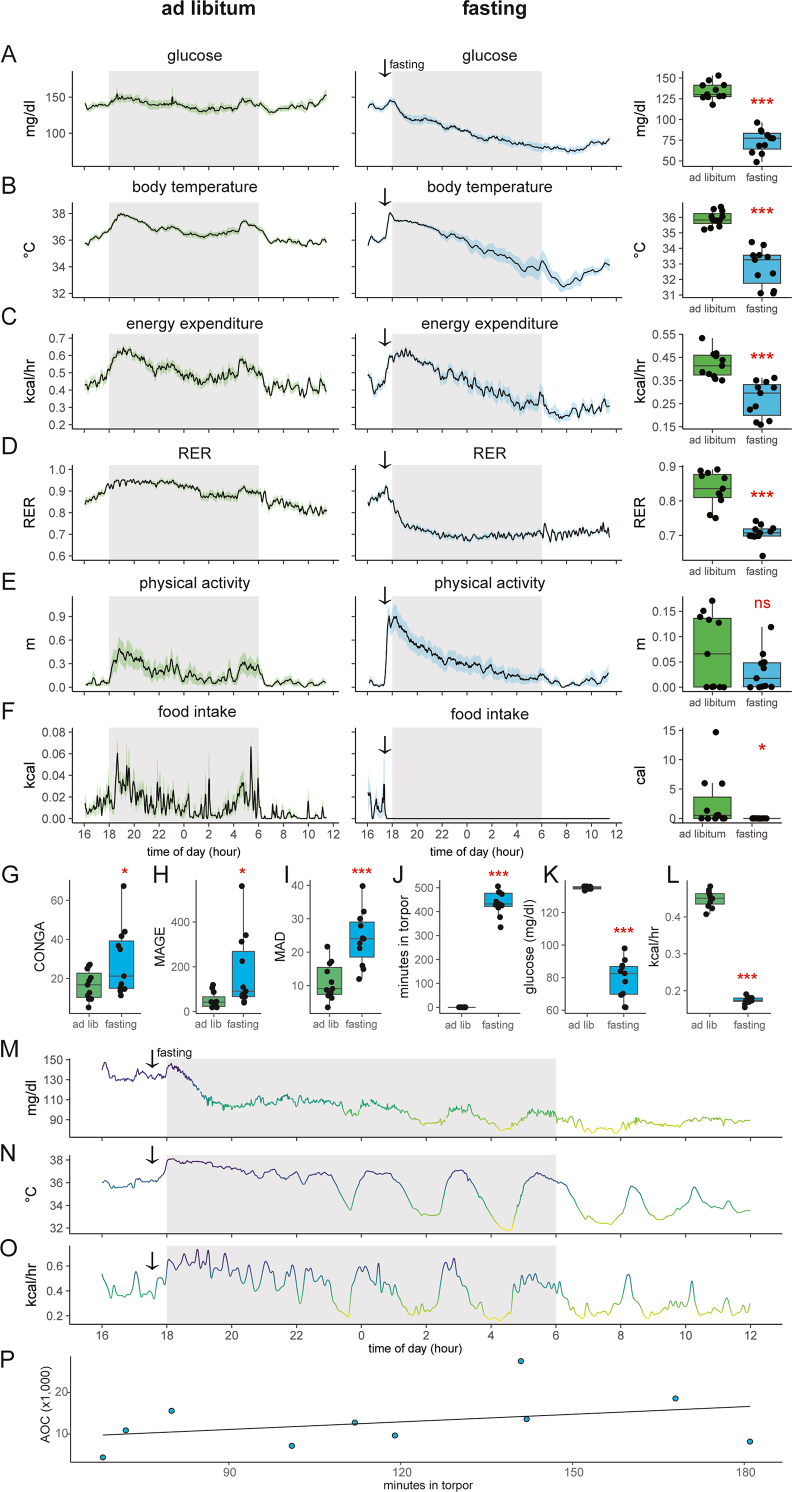
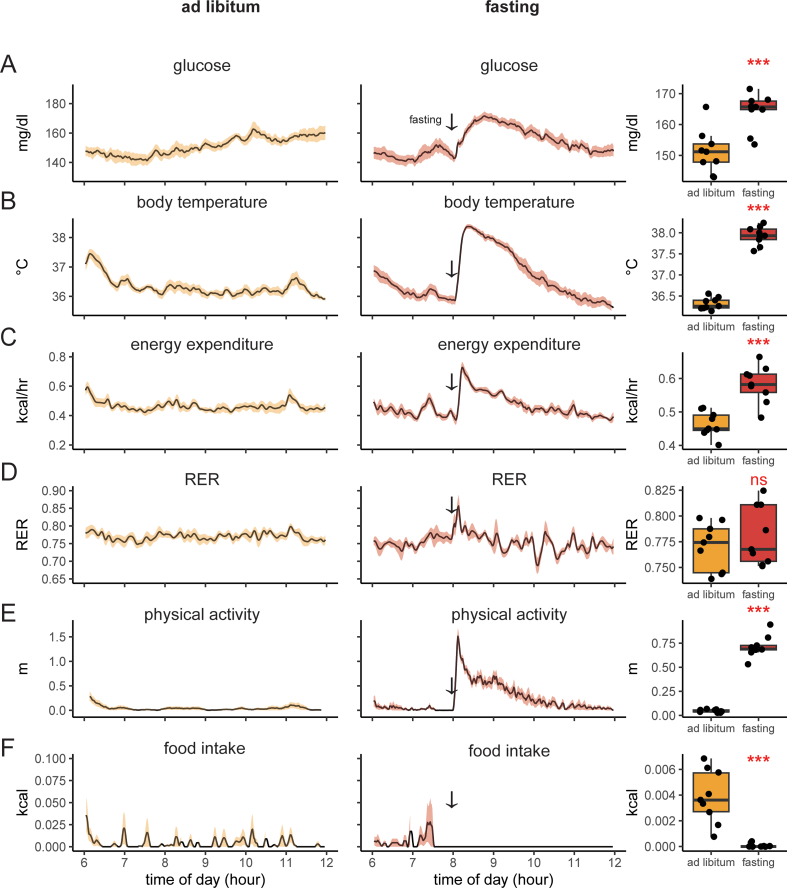
Using simultaneous continuous glucose monitoring (CGM) and indirect calorimetry, we quantified blood glucose, physical activity, body temperature, metabolic rates, and food consumption levels on a minute-to-minute basis in adult male mice for 4 weeks. We tested the effects of a 4-h or 18-h fast on the GTT to examine the effect of food withdrawal in light or dark photoperiods. Studies were also performed with 4-h fasting in additional mice without implanted CGM probes.
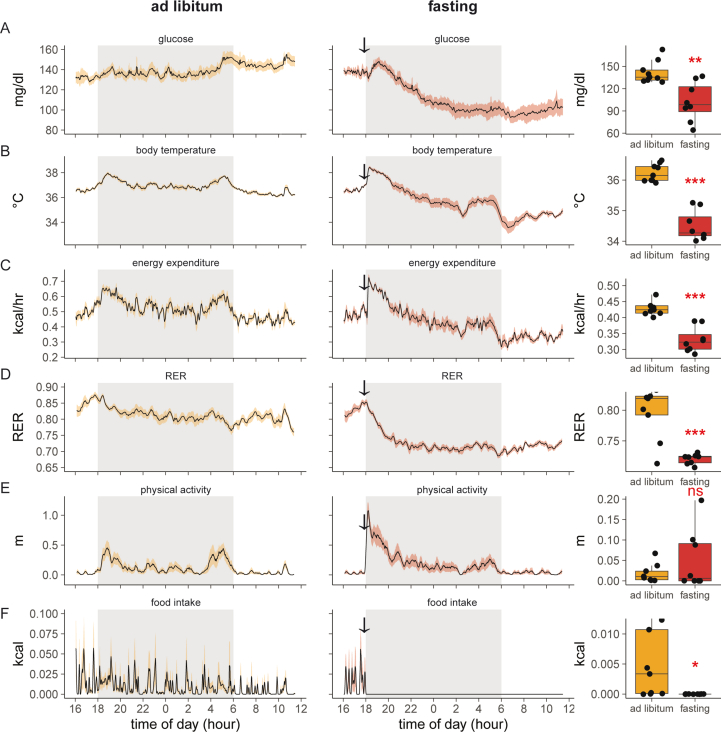
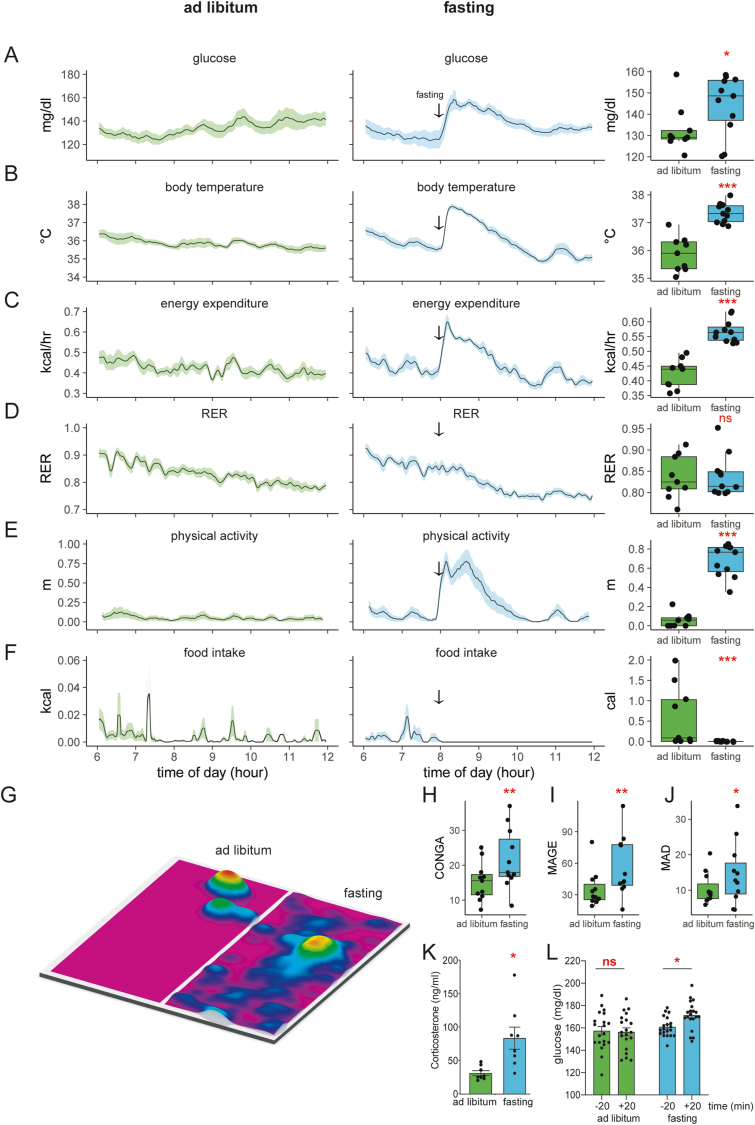
Contrary to our expectations, a 4-h fast during the light photoperiod promotes a paradoxical increase in inter-animal variation in metabolic rate, physical activity, body temperature, glycemia, and glucose tolerance. This hyperglycemic and hyper-metabolic phenotype promotes increased corticosterone levels and is consistent with a behavioral stress response to food deprivation, even in well-fed mice. We find that mice undergoing an 18-h fast entered torpor, a hibernation-like state. In addition to low body temperature and metabolic rate, torpor is also associated with glucose levels 56 mg/dl lower than those seen in mice with ad libitum access to food. Moreover, the time spent in torpor affects the response to a GTT.
Our results suggest fasting mice before glucose tolerance testing, and perhaps other experiments, can have the opposite of the intended effect where fasting can increase, rather than decrease, experimental variability.
本研究旨在确定禁食对葡萄糖耐量试验重现性的影响。由于动物喂养行为的个体差异,在进行代谢和行为实验之前禁食动物,被广泛认为可以降低临床前啮齿动物模型中葡萄糖和代谢参数的个体间变异性。降低变异性对于那些初始代谢物水平可能影响实验干预幅度的研究尤为重要,但禁食也会带来压力,从而可能扭曲感兴趣的变量。葡萄糖耐量试验(GTT)就是这样一种干预措施,它可以测量外源性葡萄糖冲击后最大反应和恢复情况。我们试图研究禁食如何影响个体小鼠对 GTT 的反应。
使用连续血糖监测(CGM)和间接测热法,我们在 4 周内以每分钟为单位量化成年雄性小鼠的血糖、体力活动、体温、代谢率和食物摄入量。我们测试了 4 小时或 18 小时禁食对 GTT 的影响,以检查在光照或黑暗光周期下禁食对葡萄糖耐量的影响。在没有植入 CGM 探头的其他小鼠中,我们还进行了 4 小时禁食的研究。
与我们的预期相反,在光照周期中禁食 4 小时会导致代谢率、体力活动、体温、血糖和葡萄糖耐量的个体间变异性反常增加。这种高血糖和高代谢表型会导致皮质酮水平升高,这与禁食引起的行为应激反应一致,即使是在营养充足的小鼠中也是如此。我们发现,禁食 18 小时的小鼠进入了蛰伏状态,类似于冬眠状态。除了体温和代谢率降低外,蛰伏还与血糖水平降低 56mg/dl 有关,与自由进食的小鼠相比,血糖水平降低了 56mg/dl。此外,处于蛰伏状态的时间会影响 GTT 的反应。
我们的研究结果表明,在进行葡萄糖耐量试验之前,禁食小鼠,也许还有其他实验,可能会产生与预期相反的效果,即禁食会增加而不是减少实验变异性。