Centre for Geographical Studies, Institute of Geography and Spatial Planning, University of Lisbon, Lisbon, Portugal.
Associated Laboratory TERRA, Lisbon, Portugal.
PLoS Negl Trop Dis. 2022 Sep 12;16(9):e0010715. doi: 10.1371/journal.pntd.0010715. eCollection 2022 Sep.
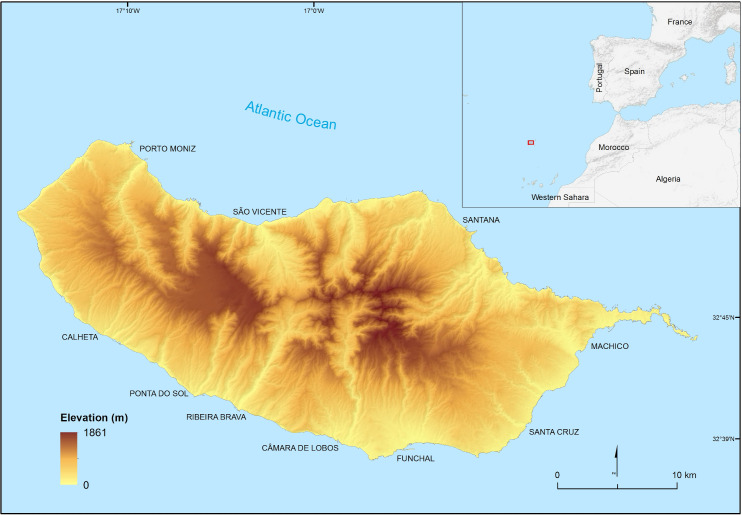
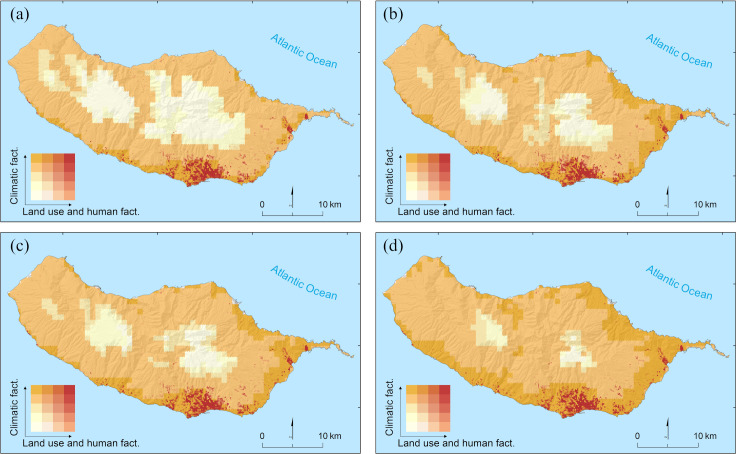
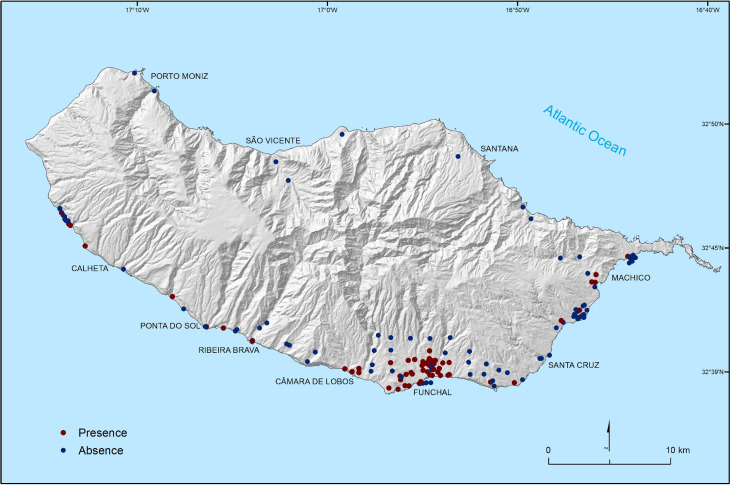
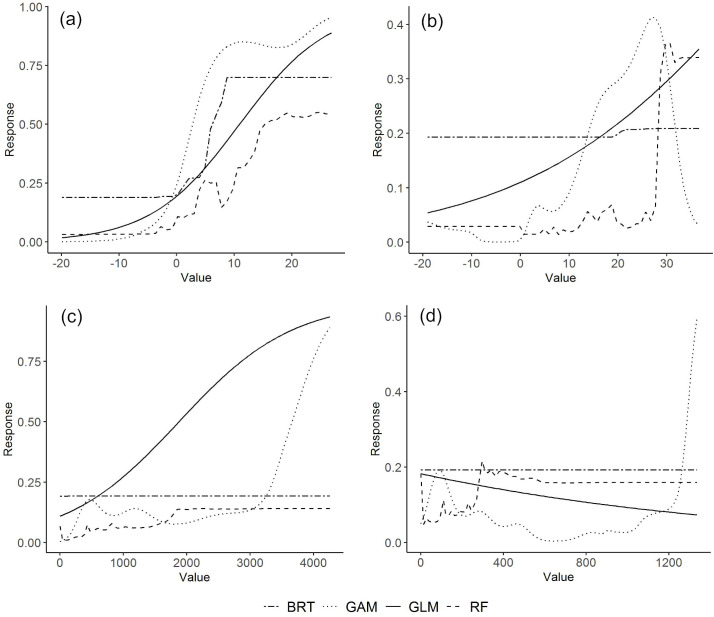
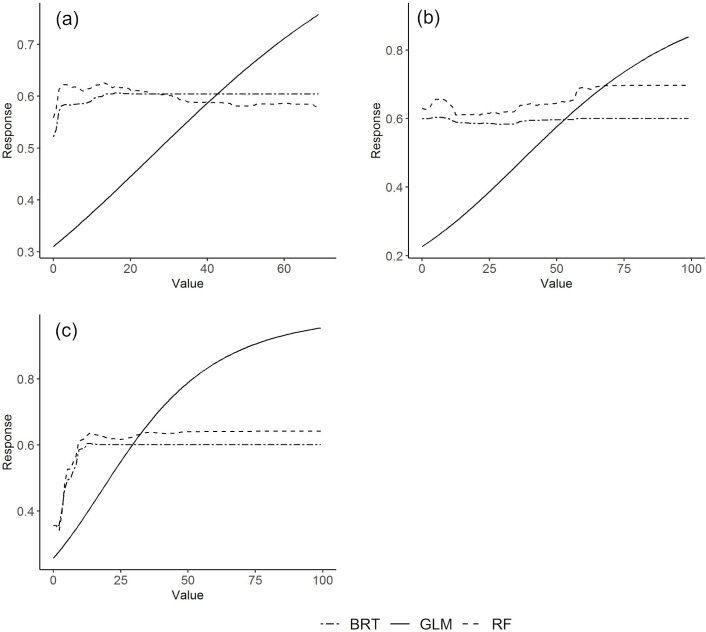
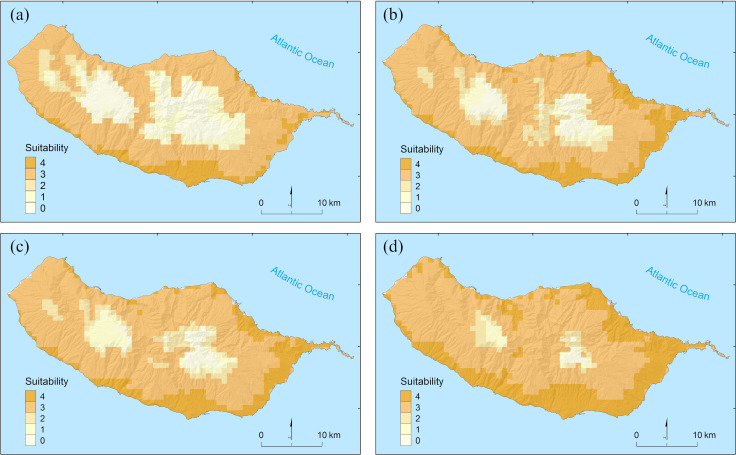
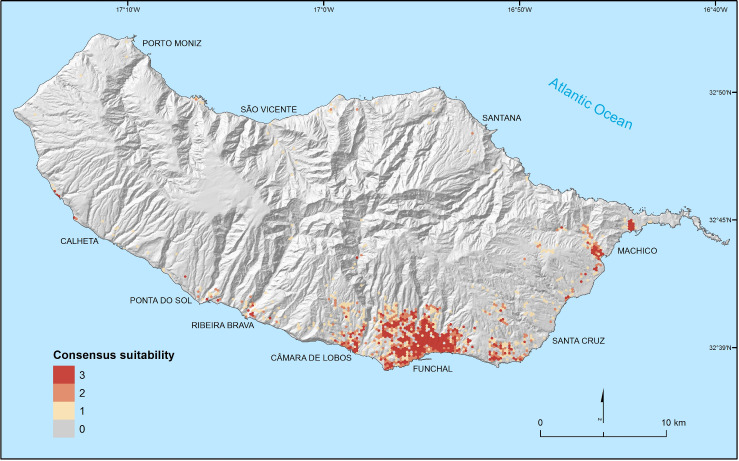
The Aedes aegypti mosquito is the main vector for several diseases of global importance, such as dengue and yellow fever. This species was first identified on Madeira Island in 2005, and between 2012 and 2013 was responsible for an outbreak of dengue that affected several thousand people. However, the potential distribution of the species on the island remains poorly investigated. Here we assess the suitability of current and future climatic conditions to the species on the island and complement this assessment with estimates of the suitability of land use and human settlement conditions. We used four modelling algorithms (boosted regression trees, generalized additive models, generalized linear models and random forest) and data on the distribution of the species worldwide and across the island. For both climatic and non-climatic factors, suitability estimates predicted the current distribution of the species with good accuracy (mean area under the Receiver Operating Characteristic curve = 0.88 ±0.06, mean true skill statistic = 0.72 ±0.1). Minimum temperature of coldest month was the most influential climatic predictor, while human population density, residential housing density and public spaces were the most influential predictors describing land use and human settlement conditions. Suitable areas under current climates are predicted to occur mainly in the warmer and densely inhabited coastal areas of the southern part of the island, where the species is already established. By mid-century (2041-2060), the extent of climatically suitable areas is expected to increase, mainly towards higher altitudes and in the eastern part of the island. Our work shows that ongoing efforts to monitor and prevent the spread of Ae. aegypti on Madeira Island will have to increasingly consider the effects of climate change.
埃及伊蚊是几种具有全球重要性的疾病的主要传播媒介,如登革热和黄热病。该物种于 2005 年首次在马德拉岛被发现,2012 年至 2013 年期间,该物种导致了数千人感染登革热的疫情。然而,该物种在该岛的潜在分布仍未得到充分研究。在这里,我们评估了当前和未来气候条件对该物种在岛上的适宜性,并通过对土地利用和人类居住条件适宜性的估计来补充这一评估。我们使用了四种建模算法(提升回归树、广义加性模型、广义线性模型和随机森林)和全球及岛上该物种分布的数据。对于气候和非气候因素,适宜性估计值以较高的精度预测了该物种的当前分布(平均接收者操作特征曲线下面积=0.88±0.06,平均真技能统计量=0.72±0.1)。最冷月最低温度是最具影响力的气候预测因子,而人口密度、住宅住房密度和公共空间是描述土地利用和人类居住条件的最具影响力的预测因子。预计在当前气候下,适宜地区主要分布在该岛南部温暖且人口密集的沿海地区,该物种已经在这些地区存在。到本世纪中叶(2041-2060 年),气候适宜区的范围预计将扩大,主要向更高的海拔和该岛的东部地区扩展。我们的工作表明,马德拉岛正在进行的监测和预防埃及伊蚊传播的工作将不得不越来越多地考虑气候变化的影响。