Max Planck Institute for Biology of Ageing, Joseph-Stelzmann-Strasse 9B, 50931, Cologne, Germany.
Department of Neurodegenerative Disease, UCL Institute of Neurology, Queen Square, London, WC1N 3BG, UK.
Acta Neuropathol Commun. 2023 Aug 29;11(1):140. doi: 10.1186/s40478-023-01634-6.
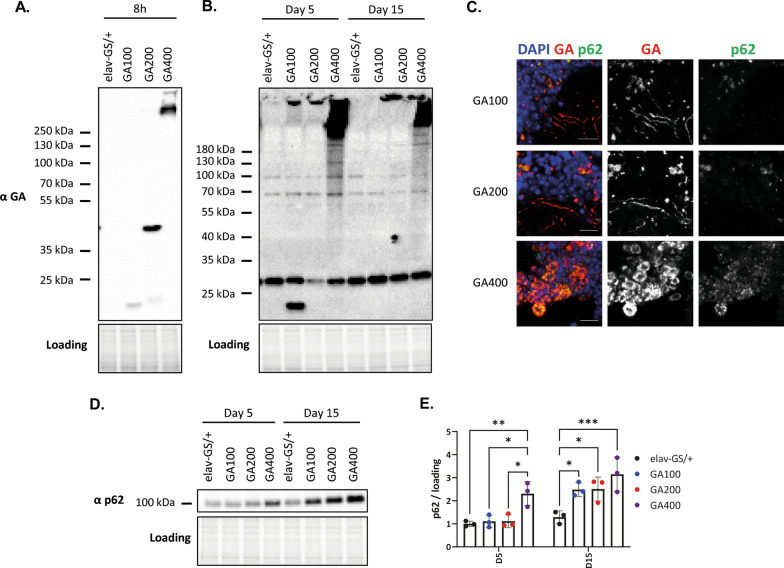
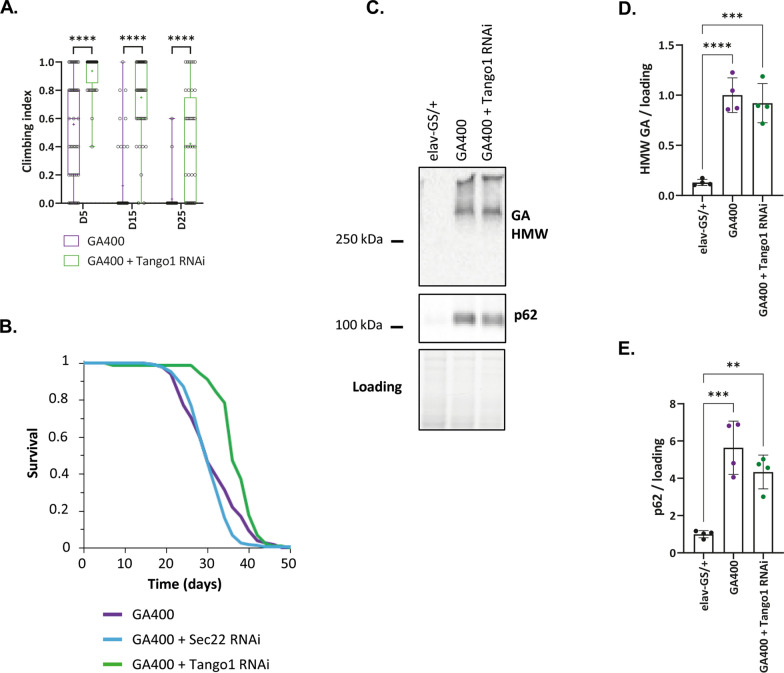
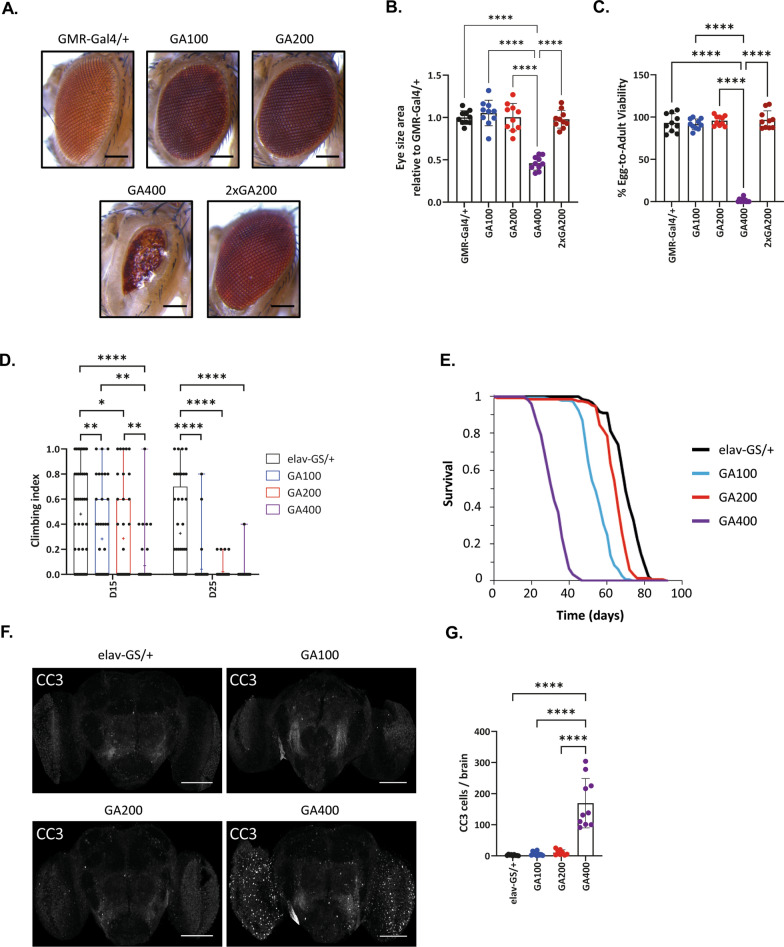
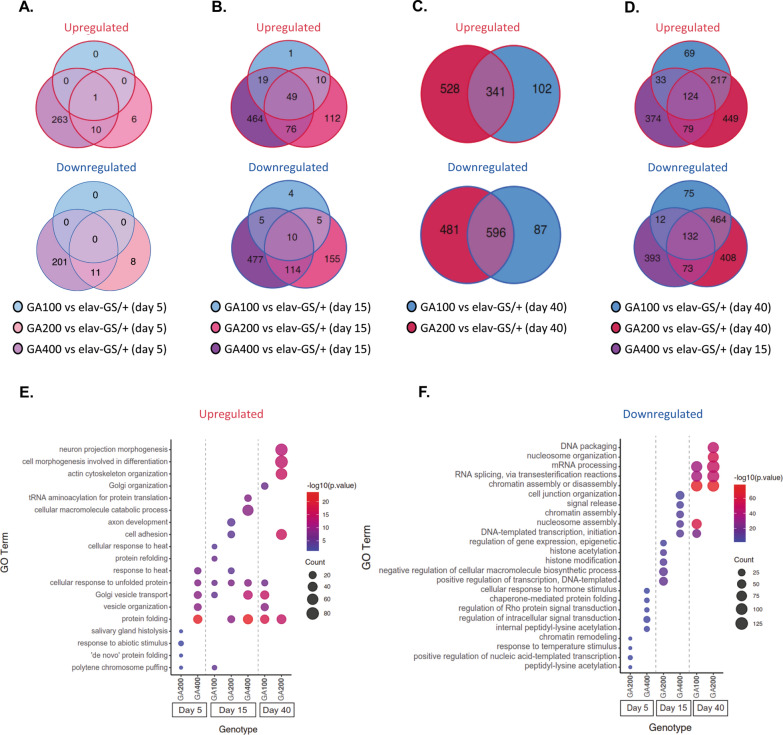
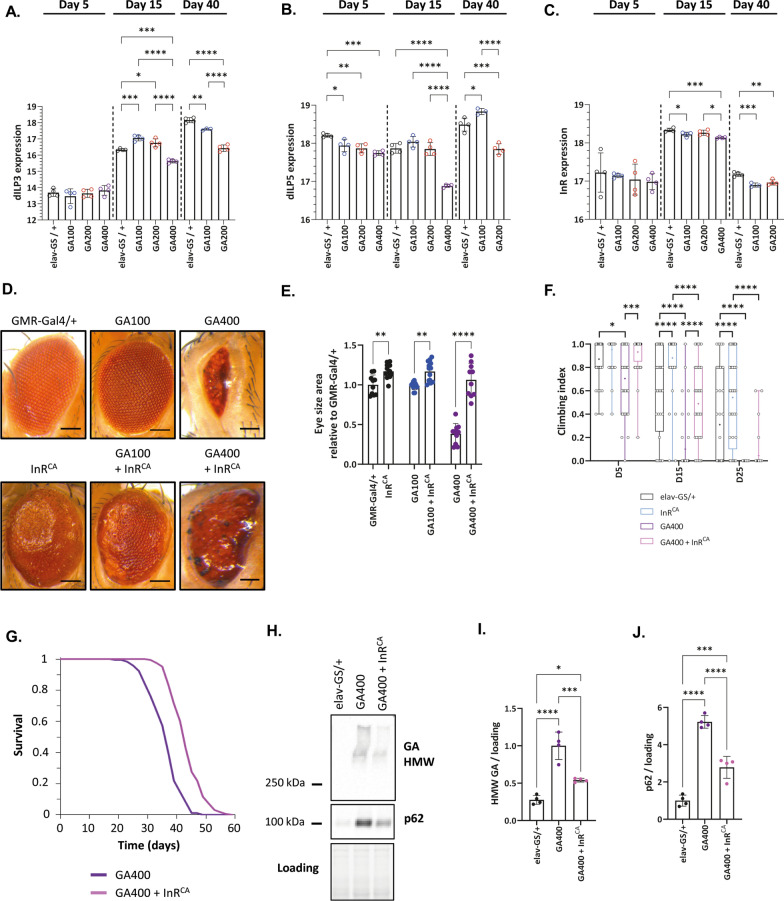
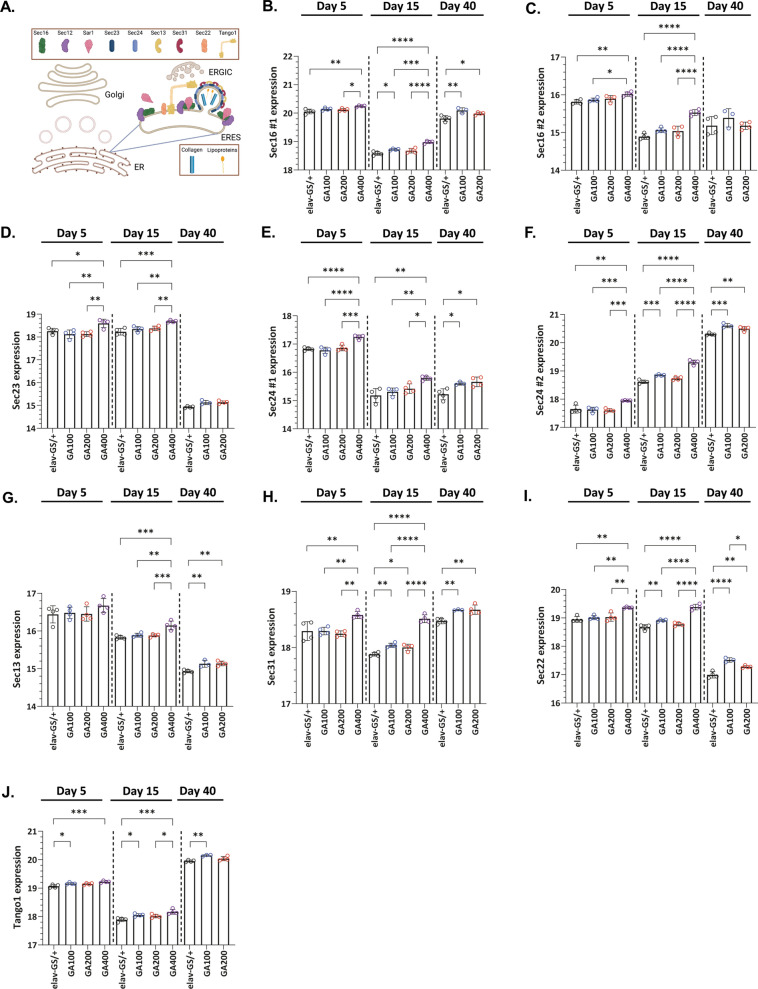
GC hexanucleotide repeat expansions in a non-coding region of the C9orf72 gene are the most common cause of familial amyotrophic lateral sclerosis (ALS) and frontotemporal dementia (FTD). GC insertion length is variable, and patients can carry up to several thousand repeats. Dipeptide repeat proteins (DPRs) translated from GC transcripts are thought to be a main driver of toxicity. Experiments in model organisms with relatively short DPRs have shown that arginine-rich DPRs are most toxic, while polyGlycine-Alanine (GA) DPRs cause only mild toxicity. However, GA is the most abundant DPR in patient brains, and experimental work in animals has generally relied on the use of low numbers of repeats, with DPRs often tagged for in vivo tracking. Whether repeat length or tagging affect the toxicity of GA has not been systematically assessed. Therefore, we generated Drosophila fly lines expressing GA100, GA200 or GA400 specifically in adult neurons. Consistent with previous studies, expression of GA100 and GA200 caused only mild toxicity. In contrast, neuronal expression of GA400 drastically reduced climbing ability and survival of flies, indicating that long GA DPRs can be highly toxic in vivo. This toxicity could be abolished by tagging GA400. Proteomics analysis of fly brains showed a repeat-length-dependent modulation of the brain proteome, with GA400 causing earlier and stronger changes than shorter GA proteins. PolyGA expression up-regulated proteins involved in ER to Golgi trafficking, and down-regulated proteins involved in insulin signalling. Experimental down-regulation of Tango1, a highly conserved regulator of ER-to Golgi transport, partially rescued GA400 toxicity, suggesting that misregulation of this process contributes to polyGA toxicity. Experimentally increasing insulin signaling also rescued GA toxicity. In summary, our data show that long polyGA proteins can be highly toxic in vivo, and that they may therefore contribute to ALS/FTD pathogenesis in patients.
C9orf72 基因非编码区的 GC 六核苷酸重复扩增是家族性肌萎缩侧索硬化症 (ALS) 和额颞叶痴呆 (FTD) 的最常见原因。GC 插入长度可变,患者可携带多达数千个重复序列。从 GC 转录本翻译而来的二肽重复蛋白 (DPR) 被认为是毒性的主要驱动因素。在具有相对较短 DPR 的模式生物中的实验表明,富含精氨酸的 DPR 毒性最大,而聚甘氨酸-丙氨酸 (GA) DPR 仅引起轻微毒性。然而,GA 是患者大脑中最丰富的 DPR,动物实验工作通常依赖于使用少量重复序列,并且 DPR 通常标记用于体内跟踪。重复长度或标记是否会影响 GA 的毒性尚未系统评估。因此,我们生成了在成年神经元中特异性表达 GA100、GA200 或 GA400 的果蝇系。与之前的研究一致,表达 GA100 和 GA200 仅引起轻微毒性。相比之下,GA400 在神经元中的表达极大地降低了果蝇的攀爬能力和存活率,表明长 GA DPR 在体内具有高度毒性。这种毒性可以通过标记 GA400 来消除。果蝇大脑的蛋白质组学分析显示,大脑蛋白质组受到重复长度的依赖性调节,GA400 比较短的 GA 蛋白更早和更强地引起变化。多 GA 表达上调了参与内质网到高尔基体运输的蛋白质,下调了参与胰岛素信号的蛋白质。实验下调高度保守的内质网到高尔基体运输调节剂 Tango1,部分挽救了 GA400 的毒性,表明该过程的失调导致了多 GA 毒性。实验性增加胰岛素信号也挽救了 GA 毒性。总之,我们的数据表明,长的多 GA 蛋白在体内可能具有高度毒性,因此它们可能导致患者的 ALS/FTD 发病机制。