Tarnanas Ioannis, Vlamos Panagiotis, Harms Dr Robbert
Altoida Inc., Washington DC, Washington, DC (DC), 20003, USA.
Bioinformatics and Human Electrophysiology Laboratory (BiHELab), Department of Informatics, Ionian University, 7 Tsirigoti Square, Corfu, Greece.
Open Res Eur. 2022 Jan 10;1:146. doi: 10.12688/openreseurope.14216.2. eCollection 2021.
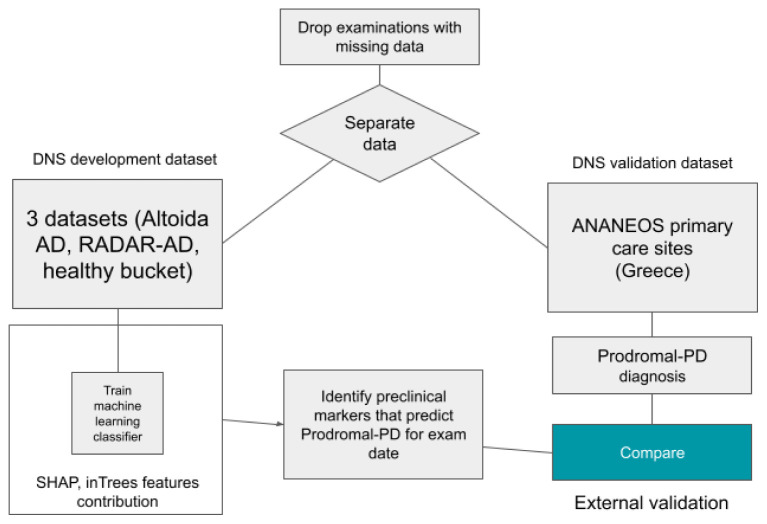
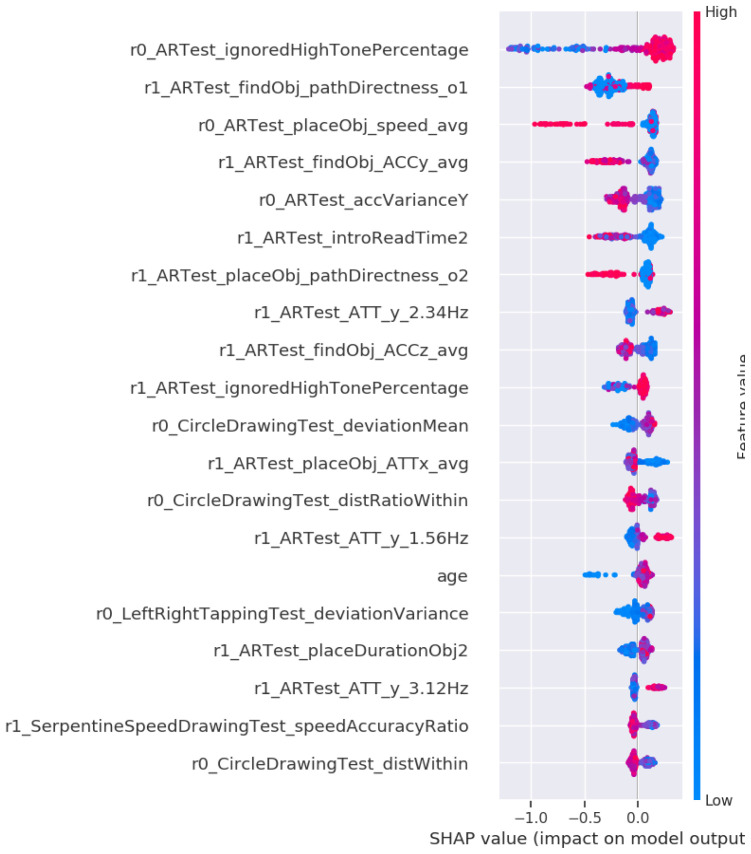
Parkinson's disease (PD) is the fastest growing neurodegeneration and has a prediagnostic phase with a lot of challenges to identify clinical and laboratory biomarkers for those in the earliest stages or those 'at risk'. Despite the current research effort, further progress in this field hinges on the more effective application of digital biomarker and artificial intelligence applications at the prediagnostic stages of PD. It is of the highest importance to stratify such prediagnostic subjects that seem to have the most neuroprotective benefit from drugs. However, current initiatives to identify individuals at risk or in the earliest stages that might be candidates for future clinical trials are still challenging due to the limited accuracy and explainability of existing prediagnostic detection and progression prediction solutions. In this brief paper, we report on a novel digital neuro signature (DNS) for prodromal-PD based on selected digital biomarkers previously discovered on preclinical Alzheimer's disease. (AD). Our preliminary results demonstrated a standard DNS signature for both preclinical AD and prodromal PD, containing a ranked selection of features. This novel DNS signature was rapidly repurposed out of 793 digital biomarker features and selected the top 20 digital biomarkers that are predictive and could detect both the biological signature of preclinical AD and the biological mechanism of a-synucleinopathy in prodromal PD. The resulting model can provide physicians with a pool of patients potentially eligible for therapy and comes along with information about the importance of the digital biomarkers that are predictive, based on SHapley Additive exPlanations (SHAP). Similar initiatives could clarify the stage before and around diagnosis, enabling the field to push into unchartered territory at the earliest stages of the disease.
帕金森病(PD)是增长最快的神经退行性疾病,且存在一个诊断前阶段,要为处于最早期或“有风险”的人群识别临床和实验室生物标志物面临诸多挑战。尽管目前有研究投入,但该领域的进一步进展取决于在帕金森病诊断前阶段更有效地应用数字生物标志物和人工智能应用。对那些似乎能从药物中获得最大神经保护益处的诊断前受试者进行分层至关重要。然而,由于现有诊断前检测和病情进展预测解决方案的准确性和可解释性有限,目前识别可能成为未来临床试验候选者的有风险或最早期个体的举措仍具有挑战性。在这篇简短的论文中,我们报告了一种基于先前在临床前阿尔茨海默病(AD)中发现的选定数字生物标志物的前驱期帕金森病新型数字神经特征(DNS)。我们的初步结果展示了临床前AD和前驱期PD的标准DNS特征,其中包含一系列经过排序的特征选择。这种新型DNS特征是从793个数字生物标志物特征中快速重新确定的,并选出了前20个具有预测性且能检测临床前AD生物特征以及前驱期PD中α-突触核蛋白病生物机制的数字生物标志物。所得模型可为医生提供一批可能符合治疗条件的患者群体,并基于夏普利值加法解释(SHAP)提供有关具有预测性的数字生物标志物重要性的信息。类似的举措可以明确诊断前及诊断前后的阶段,使该领域能够在疾病的最早阶段进入未知领域。