Department of Gastroenterology, Renmin Hospital of Wuhan University, Wuhan, China.
Hubei Key Laboratory of Digestive Diseases, Wuhan, China.
Front Immunol. 2023 Aug 14;14:1196065. doi: 10.3389/fimmu.2023.1196065. eCollection 2023.
Oxidative stress and inflammatory responses are critical factors in ulcerative colitis disease pathogenesis. Nuclear factor erythroid 2-related factor 2 (Nrf2) modulates oxidative stress and suppresses inflammatory responses, and the protective benefits of Nrf2 activation have been associated with the therapy of ulcerative colitis. MicroRNA-200a (miR-200a) could target Kelch-like ECH-associated protein 1 (Keap1) and activate the Nrf2-regulated antioxidant pathway. Nevertheless, whether miR-200a modulates the Keap1/Nrf2 pathway in dextran sulfate sodium (DSS)-induced colonic damage is unknown. Here, our research intends to examine the impact of miR-200a in the model of DSS-induced colitis.
Prior to DSS intervention, we overexpressed miR-200a in mice for four weeks using an adeno-associated viral (AAV) vector to address this problem. ELISA detected the concentration of inflammation-related cytokines. The genes involved in inflammatory reactions and oxidative stress were identified using quantitative reverse transcription-polymerase chain reaction (qRT-PCR), western blot, and immunofluorescence. Moreover, we applied siRNAs to weakened Nrf2 expression to confirm the hypothesis that miR-200a provided protection via Nrf2.
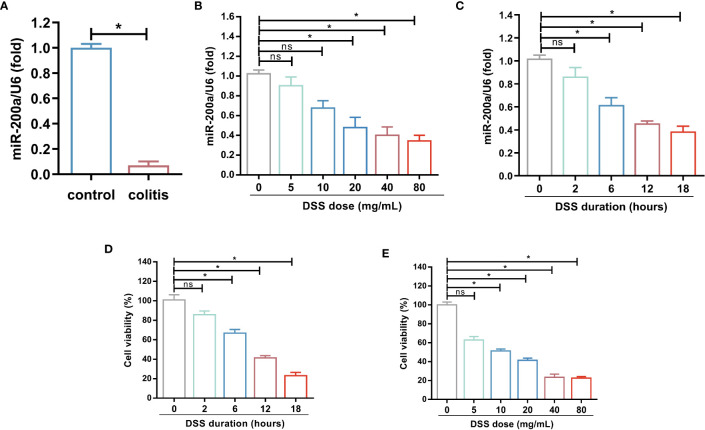
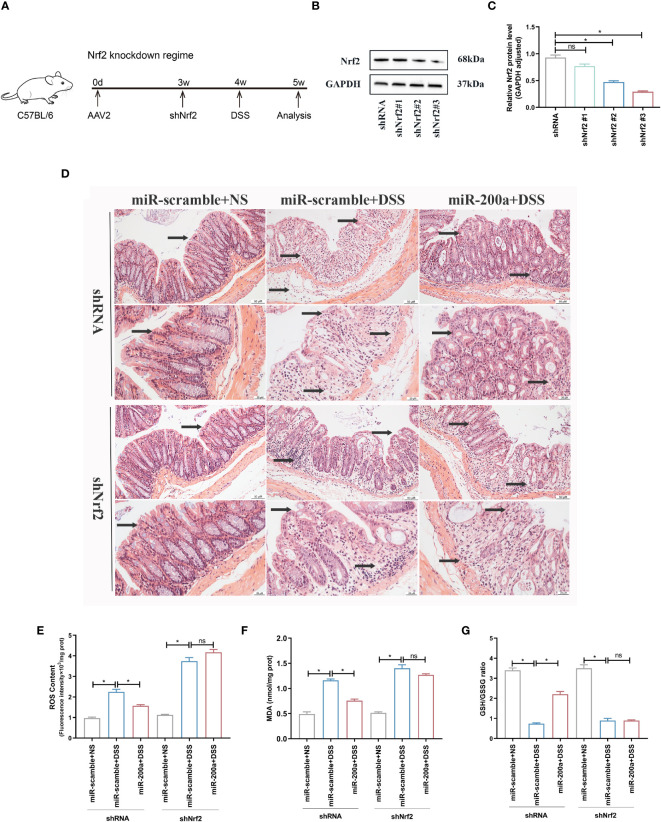
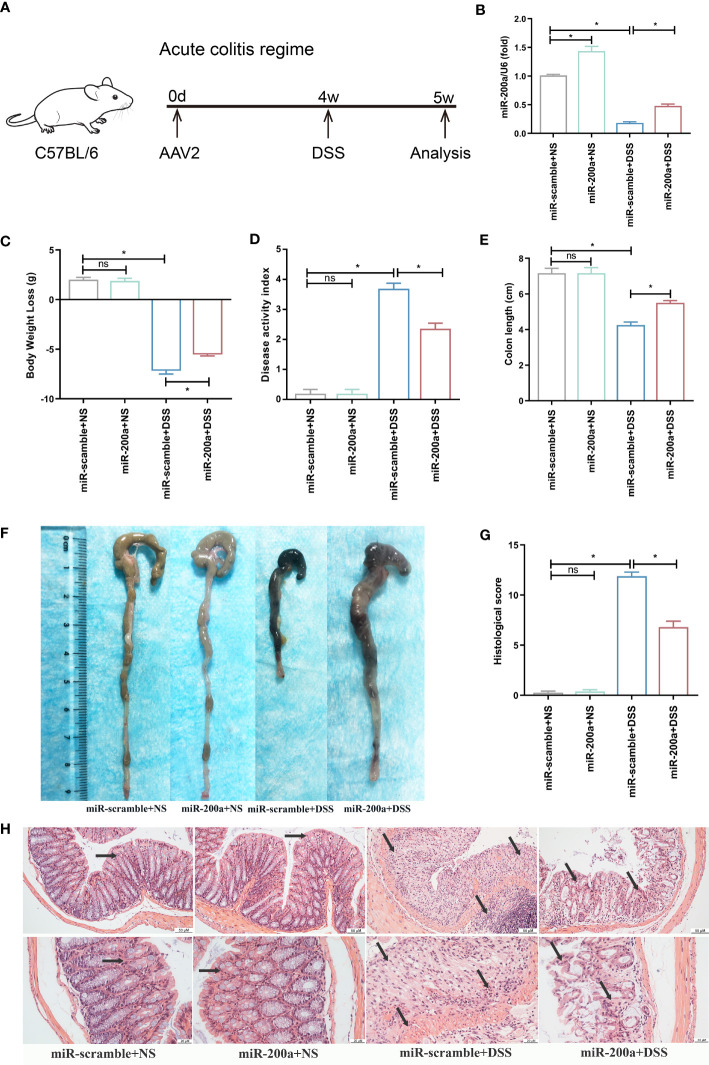
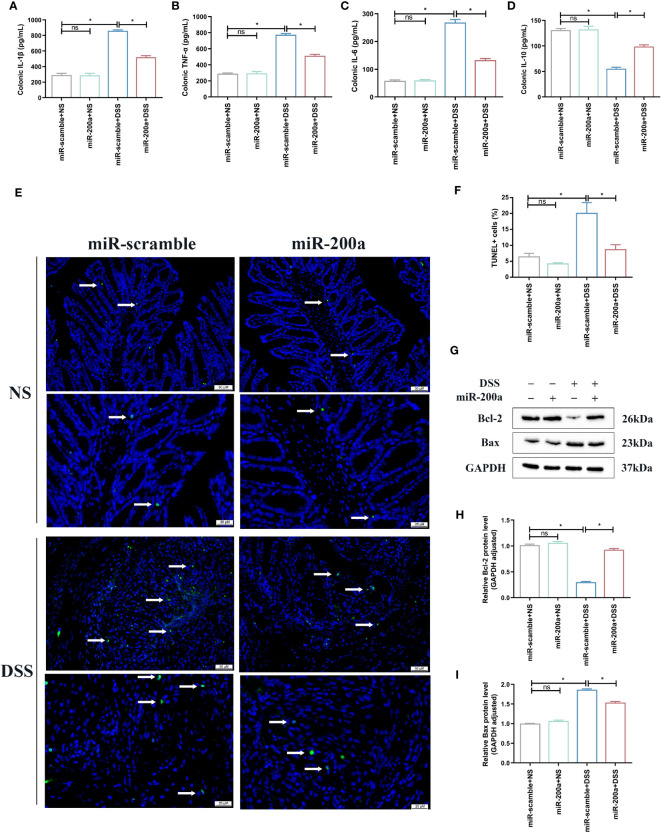
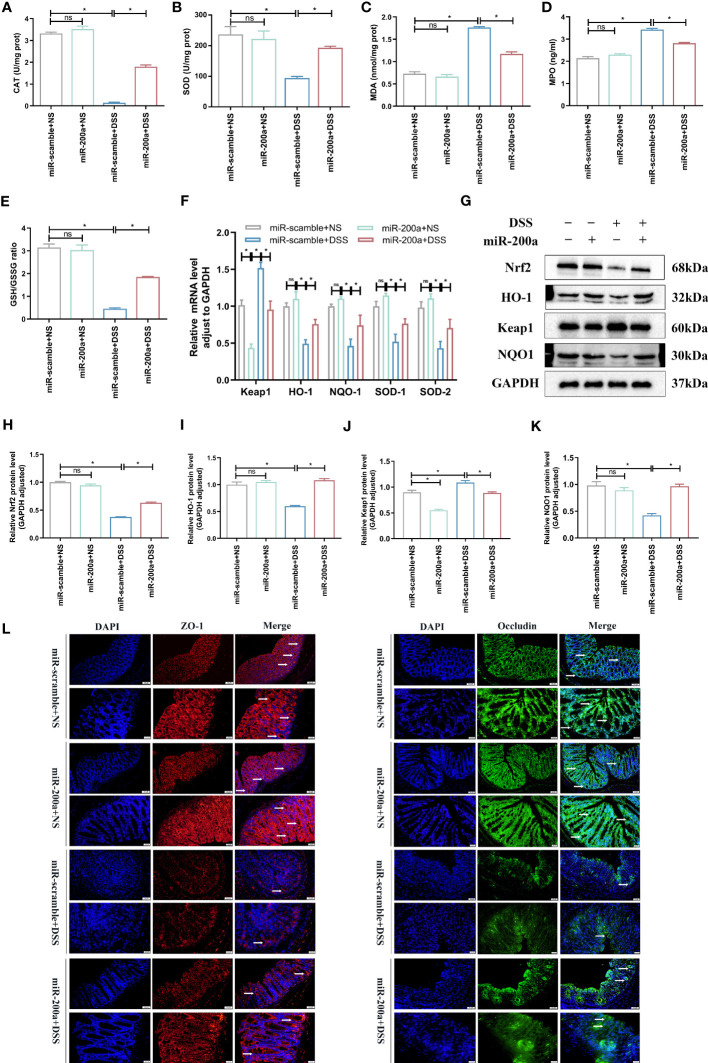
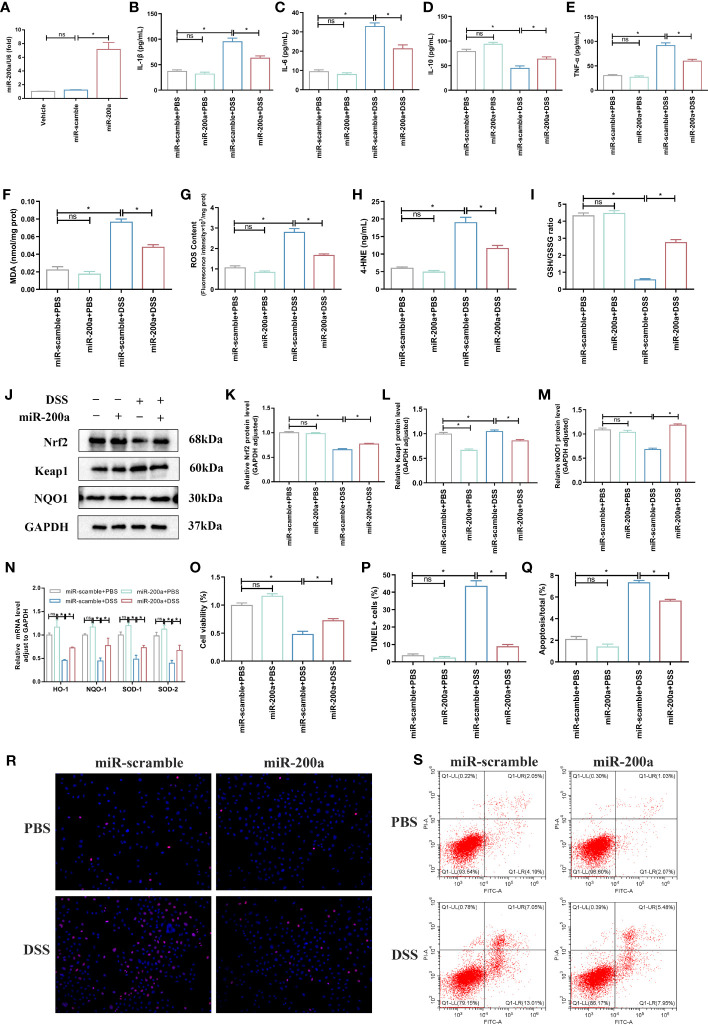
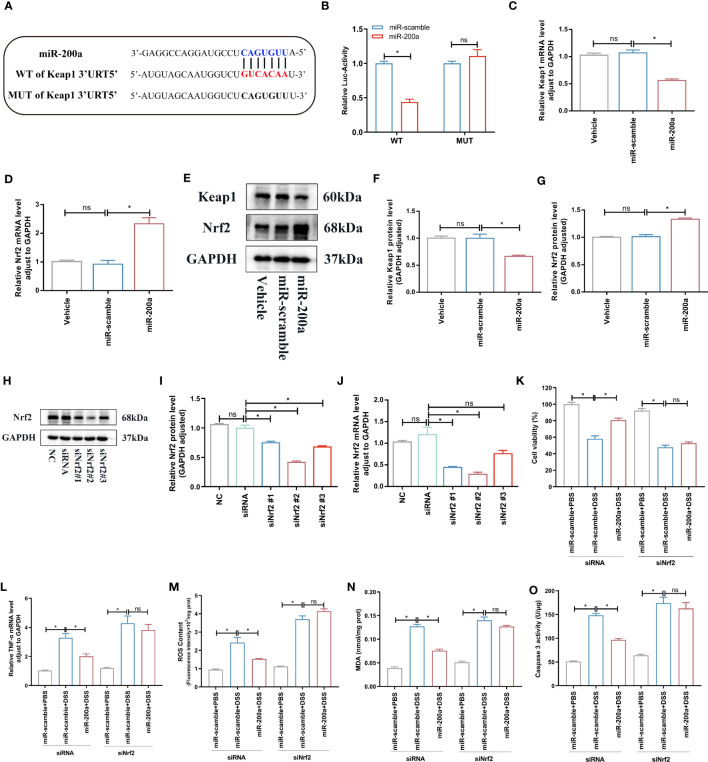
The present study discovered miR-200a down-regulation, excessive inflammatory activation, enterocyte apoptosis, colonic dysfunction, and Keap1/Nrf2 antioxidant pathway inactivation in mouse colitis and NCM460 cells under DSS induction. However, our data demonstrated that miR-200a overexpression represses Keap1 and activates the Nrf2 antioxidant pathway, thereby alleviating these adverse alterations in animal and cellular models. Significantly, following Nrf2 deficiency, we failed to observe the protective benefits of miR-200a against colonic damage.
Taken together, through activating the Keap1/Nrf2 signaling pathway, miR-200a protected against DSS-induced colonic damage. These studies offer an innovative therapeutic approach for ulcerative colitis.
氧化应激和炎症反应是溃疡性结肠炎发病机制中的关键因素。核因子红细胞 2 相关因子 2(Nrf2)调节氧化应激并抑制炎症反应,Nrf2 激活的保护益处与溃疡性结肠炎的治疗有关。微小 RNA-200a(miR-200a)可以靶向 Kelch 样 ECH 相关蛋白 1(Keap1)并激活 Nrf2 调节的抗氧化途径。然而,miR-200a 是否调节葡聚糖硫酸钠(DSS)诱导的结肠损伤中的 Keap1/Nrf2 途径尚不清楚。在这里,我们的研究旨在研究 miR-200a 在 DSS 诱导的结肠炎模型中的作用。
在 DSS 干预之前,我们使用腺相关病毒(AAV)载体在小鼠中过表达 miR-200a 四周,以解决这个问题。ELISA 检测炎症相关细胞因子的浓度。使用定量逆转录-聚合酶链反应(qRT-PCR)、western blot 和免疫荧光检测炎症反应和氧化应激相关基因。此外,我们应用 siRNAs 减弱 Nrf2 的表达,以证实 miR-200a 通过 Nrf2 提供保护的假设。
本研究发现 miR-200a 在小鼠结肠炎和 DSS 诱导的 NCM460 细胞中下调,炎症过度激活,肠上皮细胞凋亡,结肠功能障碍和 Keap1/Nrf2 抗氧化途径失活。然而,我们的数据表明,miR-200a 的过表达抑制 Keap1 并激活 Nrf2 抗氧化途径,从而减轻动物和细胞模型中的这些不利变化。重要的是,在 Nrf2 缺乏的情况下,我们未能观察到 miR-200a 对结肠损伤的保护作用。
总之,通过激活 Keap1/Nrf2 信号通路,miR-200a 防止了 DSS 诱导的结肠损伤。这些研究为溃疡性结肠炎提供了一种创新的治疗方法。