
乳腺密度与经 MRI 检测诊断为乳腺癌的女性中恶性病变可能性的关系。
Breast density and the likelihood of malignant MRI-detected lesions in women diagnosed with breast cancer.
机构信息
Department of Radiology, Tampere University Hospital, Elämänaukio 1, 33520, Tampere, Finland.
Faculty of Medicine and Health Technology, Tampere University, Tampere, Finland.
出版信息
Eur Radiol. 2023 Nov;33(11):8080-8088. doi: 10.1007/s00330-023-10072-w. Epub 2023 Aug 30.
OBJECTIVES
To assess whether mammographic breast density in women diagnosed with breast cancer correlates with the total number of incidental magnetic resonance imaging (MRI)-detected lesions and the likelihood of the lesions being malignant.
METHODS
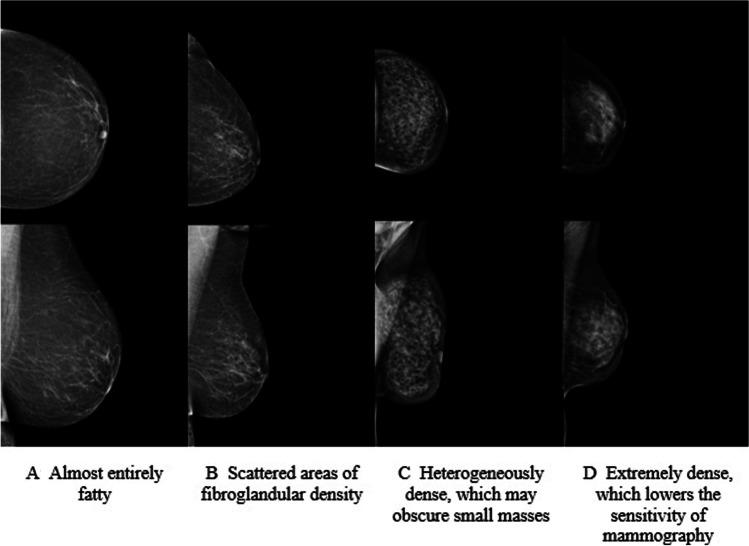
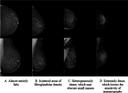
Patients diagnosed with breast cancer meeting the EUSOBI and EUSOMA criteria for preoperative breast MRI routinely undergo mammography and ultrasound before MRI at our institution. Incidental suspicious breast lesions detected in MRI are biopsied. We included patients diagnosed with invasive breast cancers between 2014 and 2019 who underwent preoperative breast MRI. One reader retrospectively determined breast density categories according to the 5 edition of the BI-RADS lexicon.
RESULTS
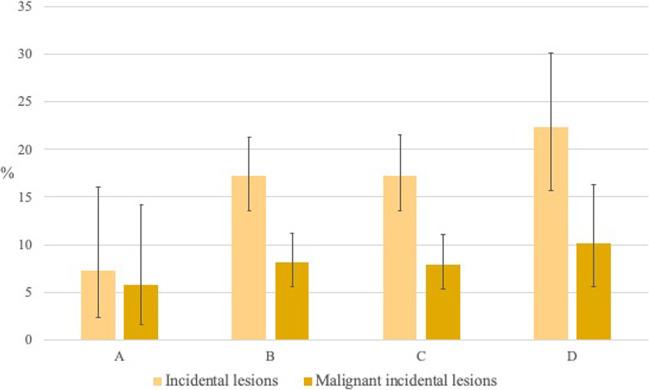
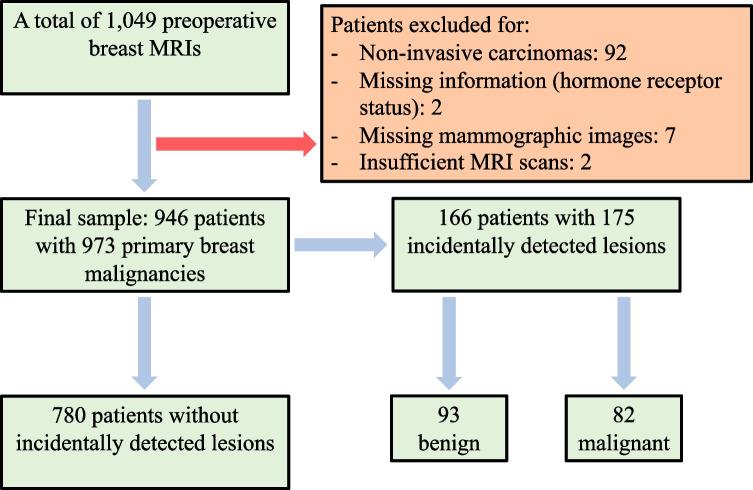
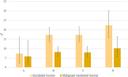
Of 946 patients with 973 malignant primary breast tumors, 166 (17.5%) had a total of 175 (18.0%) incidental MRI-detected lesions (82 (46.9%) malignant and 93 (53.1%) benign). High breast density according to BI-RADS was associated with higher incidence of all incidental enhancing lesions in preoperative breast MRIs: 2.66 (95% confidence interval: 1.03-6.86) higher for BI-RADS density category B, 2.68 (1.04-6.92) for category C, and 3.67 (1.36-9.93) for category D compared to category A (p < 0.05). However, high breast density did not predict higher incidence of malignant incidental lesions (p = 0.741). Incidental MRI-detected lesions in the contralateral breast were more likely benign (p < 0.001): 18 (27.3%)/48 (72.7%) vs. 64 (58.7%)/45 (41.3%) malignant/benign incidental lesions in contralateral vs. ipsilateral breasts.
CONCLUSION
Women diagnosed with breast cancer who have dense breasts have more incidental MRI-detected lesions, but higher breast density does not translate to increased likelihood of malignant incidental lesions.
CLINICAL RELEVANCE STATEMENT
Dense breasts should not be considered as an indication for preoperative breast MRI in women diagnosed with breast cancer.
KEY POINTS
• The role of preoperative MRI of patients with dense breasts diagnosed with breast cancer is under debate. • Women with denser breasts have a higher incidence of all MRI-detected incidental breast lesions, but the incidence of malignant MRI-detected incidental lesions is not higher than in women with fatty breasts. • High breast density alone should not indicate preoperative breast MRI.
目的
评估女性乳腺癌诊断后的乳房密度与偶然发现的磁共振成像(MRI)检测到的病变总数以及病变恶性的可能性之间是否存在相关性。
方法
在我们的机构中,符合 EUSOBI 和 EUSOMA 术前乳腺 MRI 标准的乳腺癌患者常规进行乳腺 X 线摄影和超声检查。在 MRI 中偶然发现可疑的乳腺病变会进行活检。我们纳入了 2014 年至 2019 年间接受过术前乳腺 MRI 的浸润性乳腺癌患者。一名读者根据 BI-RADS 词汇表的第 5 版回顾性地确定了乳腺密度类别。
结果
在 946 名患有 973 例恶性原发性乳腺肿瘤的患者中,有 166 名(17.5%)总共发现 175 例(18.0%)偶然发现的 MRI 检测到的病变(82 例(46.9%)恶性和 93 例(53.1%)良性)。根据 BI-RADS,高乳腺密度与术前乳腺 MRI 中所有偶然增强病变的发生率更高相关:BI-RADS 密度类别 B 高 2.66(95%置信区间:1.03-6.86),类别 C 高 2.68(1.04-6.92),类别 D 高 3.67(1.36-9.93),与类别 A 相比(p < 0.05)。然而,高乳腺密度并不能预测偶然发现的恶性病变的发生率更高(p = 0.741)。对侧乳腺偶然发现的 MRI 检测到的病变更可能是良性的(p < 0.001):对侧乳腺 18 例(27.3%)/48 例(72.7%)与同侧乳腺 64 例(58.7%)/45 例(41.3%)恶性/良性偶然病变。
结论
患有乳腺癌且乳房致密的女性有更多偶然发现的 MRI 检测到的病变,但更高的乳腺密度并不意味着偶然发现的恶性病变的可能性增加。
临床意义
对于诊断为乳腺癌的致密乳房女性,不应考虑进行术前乳腺 MRI。
关键点
• 术前 MRI 在诊断为乳腺癌且乳房致密的患者中的作用存在争议。• 乳腺密度较高的女性偶然发现的所有 MRI 检测到的乳腺病变发生率较高,但偶然发现的恶性 MRI 检测到的病变发生率并不高于乳腺脂肪较多的女性。• 仅乳腺密度高不应表明进行术前乳腺 MRI。


 Zotero 插件