Department of Obstetrics and Gynaecology, University of Melbourne, Mercy Hospital for Women, 163 Studley Road, Heidelberg, VIC, 3084, Australia.
Mercy Perinatal, Mercy Hospital for Women, Heidelberg, VIC, Australia.
BMC Med. 2023 Aug 30;21(1):332. doi: 10.1186/s12916-023-03042-y.
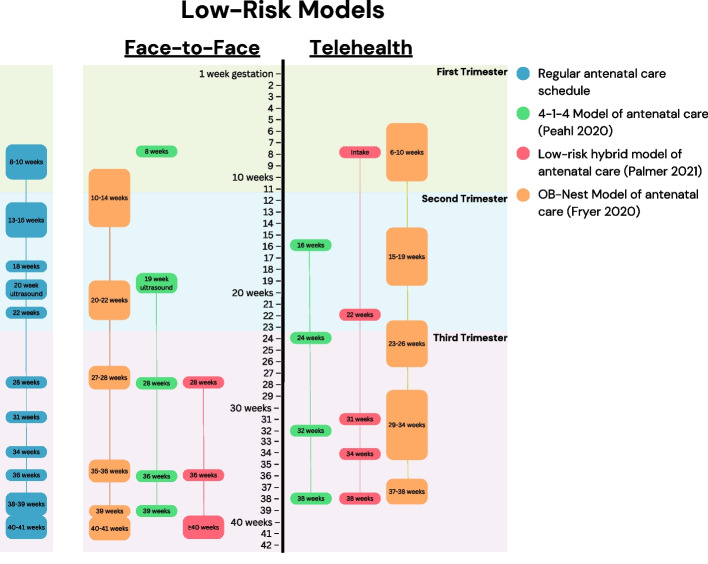
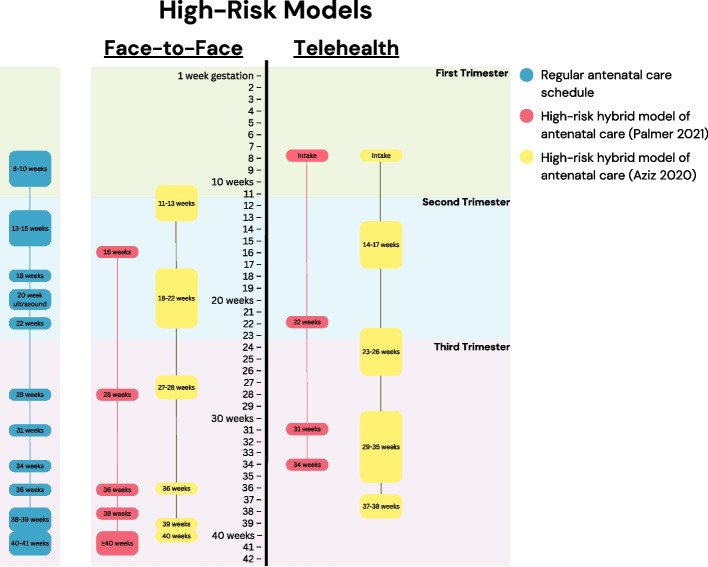
For decades, antenatal care in high-resource settings has involved 12-14 face-to-face visits across pregnancy. The COVID-19 pandemic forced many care providers to rapidly embrace telehealth to reduce face-to-face visits. Here we review recent advances in telehealth used to provide antenatal care.
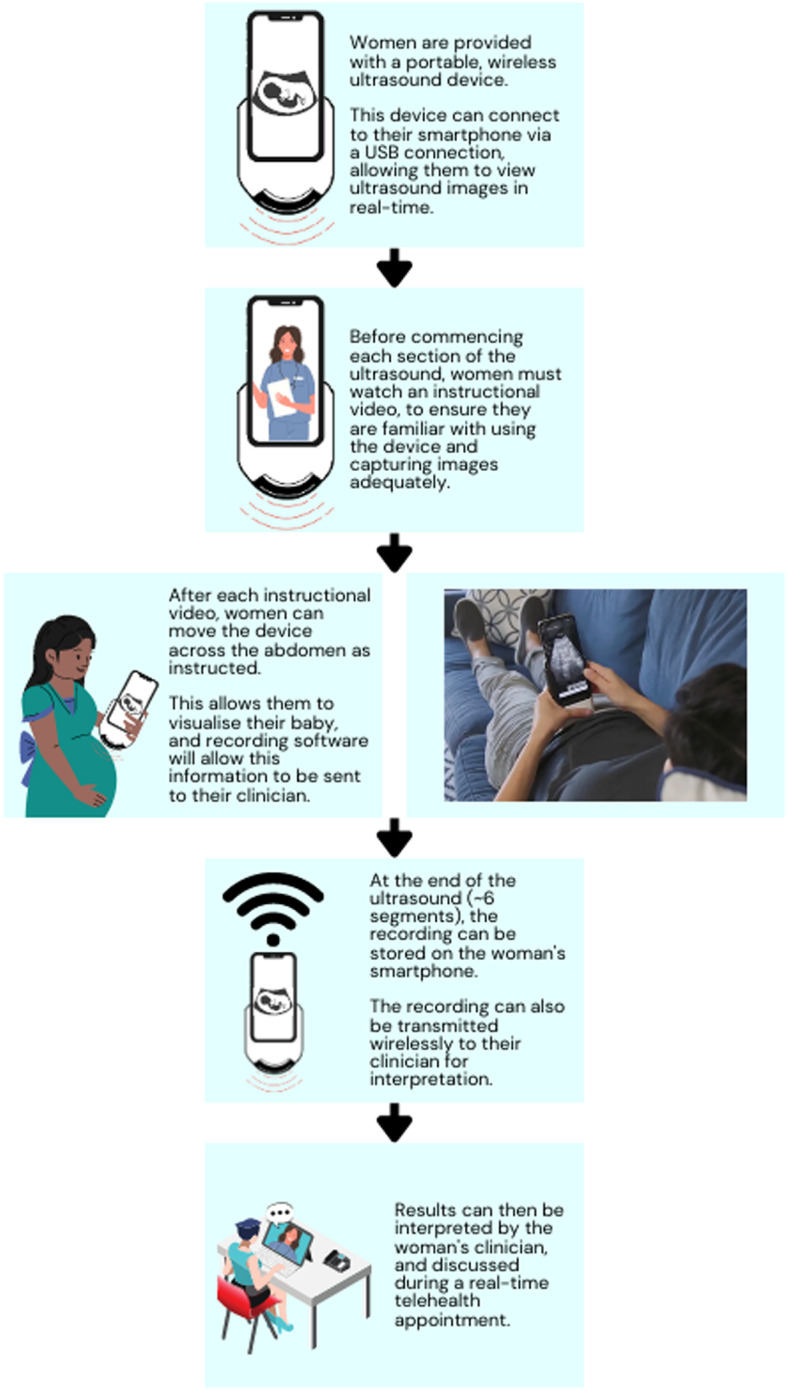
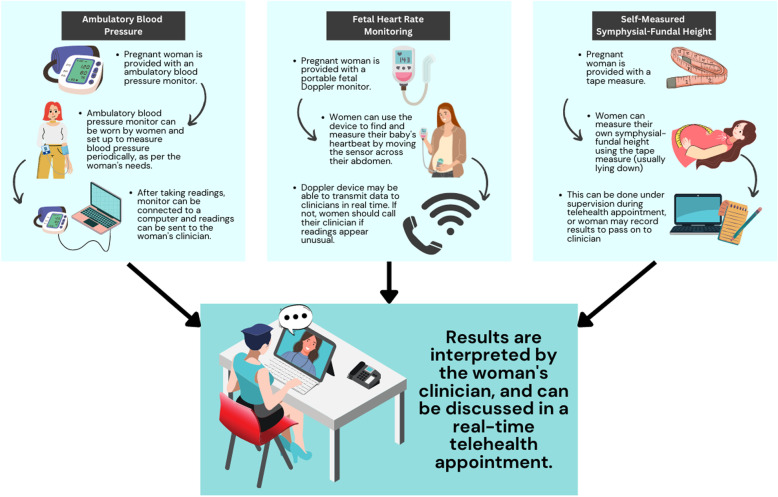
We conducted a narrative review examining the impact of telehealth on obstetric care. Two broad types of telehealth are used in antenatal care. The first is real-time telehealth, where consultations are done virtually instead of face-to-face. The second is remote monitoring, where in-clinic physical examinations are replaced with at-home alternatives. These can include blood pressure monitoring, fetal heart rate monitoring, and emerging technologies such as tele-ultrasound. Large cohort studies conducted during the pandemic era have shown that telehealth appears not to have increased adverse clinical outcomes for mothers or babies. However, further studies may be required to confidently conclude rare outcomes are unchanged, such as maternal mortality, serious morbidity, or stillbirth. Health economic studies suggest telehealth has the potential to reduce the financial cost of care provision. Telehealth in antenatal care seems to be acceptable to both pregnant women and healthcare providers.
Adoption of telehealth technologies may improve the antenatal care experience for women and reduce healthcare expenditure without adversely impacting health outcomes for the mother or baby. More studies are warranted to confirm telehealth does not alter the risk of rare outcomes such as maternal or neonatal mortality.
几十年来,高资源环境中的产前护理涉及怀孕期内 12-14 次面对面就诊。COVID-19 大流行迫使许多医护人员迅速采用远程医疗以减少面对面就诊。在此,我们回顾了用于提供产前护理的远程医疗的最新进展。
我们进行了一项叙述性综述,考察了远程医疗对产科护理的影响。两种广泛的远程医疗类型用于产前护理。第一种是实时远程医疗,其中咨询是通过虚拟方式而不是面对面进行的。第二种是远程监测,其中临床体格检查被替代为家庭替代方法。这些可以包括血压监测、胎儿心率监测以及新兴技术,如远程超声。在大流行时代进行的大型队列研究表明,远程医疗似乎并未增加母亲或婴儿的不良临床结局。然而,可能需要进一步的研究来有信心地得出罕见结局没有改变的结论,例如孕产妇死亡、严重发病率或死产。卫生经济学研究表明,远程医疗有可能降低护理提供的财务成本。远程医疗在产前护理中似乎可以被孕妇和医疗保健提供者接受。
采用远程医疗技术可以改善妇女的产前护理体验,并降低医疗支出,而不会对母婴的健康结果产生不利影响。需要更多的研究来证实远程医疗不会改变孕产妇或新生儿死亡率等罕见结局的风险。