• 文献检索
  • 文档翻译
  • 深度研究
  • 学术资讯
  • Suppr Zotero 插件Zotero 插件
  • 邀请有礼
  • 套餐&价格
  • 历史记录
应用&插件
Suppr Zotero 插件Zotero 插件浏览器插件Mac 客户端Windows 客户端微信小程序
定价
高级版会员购买积分包购买API积分包
服务
文献检索文档翻译深度研究API 文档MCP 服务
关于我们
关于 Suppr公司介绍联系我们用户协议隐私条款
关注我们

Suppr 超能文献

核心技术专利:CN118964589B侵权必究
粤ICP备2023148730 号-1Suppr @ 2026

文献检索

告别复杂PubMed语法,用中文像聊天一样搜索,搜遍4000万医学文献。AI智能推荐,让科研检索更轻松。

立即免费搜索

文件翻译

保留排版,准确专业,支持PDF/Word/PPT等文件格式,支持 12+语言互译。

免费翻译文档

深度研究

AI帮你快速写综述,25分钟生成高质量综述,智能提取关键信息,辅助科研写作。

立即免费体验

基于全血检查分类算法的 SARS-CoV-2 预测策略。

SARS-CoV-2 Prediction Strategy Based on Classification Algorithms from a Full Blood Examination.

机构信息

Laboratory of Mathematics, Computing and Applications, Mohammed V University in Rabat, Faculty of Sciences, Rabat, Morocco.

Laboratory of Conception and Systems (Electronics, Signals and Informatics), Mohammed V University in Rabat, Faculty of Sciences, Rabat, Morocco.

出版信息

ScientificWorldJournal. 2023 Aug 22;2023:3248192. doi: 10.1155/2023/3248192. eCollection 2023.

DOI:10.1155/2023/3248192
PMID:37649715
原文链接:https://pmc.ncbi.nlm.nih.gov/articles/PMC10465262/
Abstract

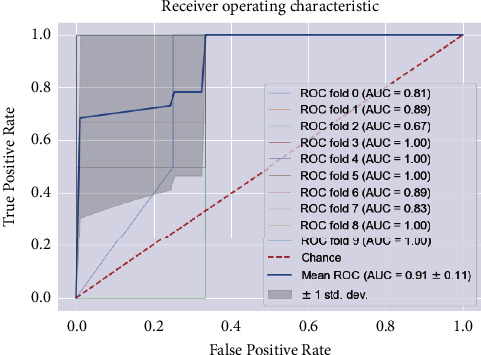
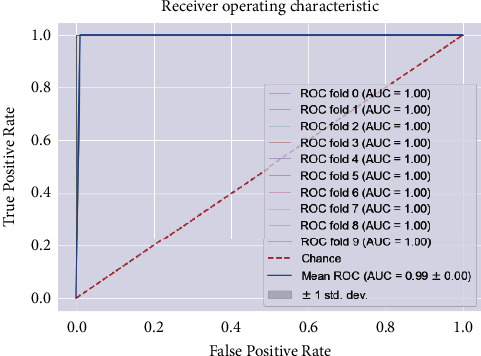
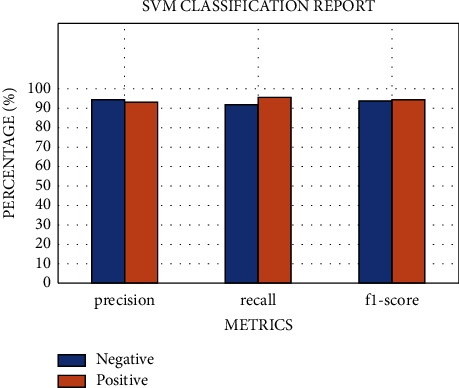
A fast and efficient diagnosis of serious infectious diseases, such as the recent SARS-CoV-2, is necessary in order to curb both the spread of existing variants and the emergence of new ones. In this regard and recognizing the shortcomings of the reverse transcription-polymerase chain reaction (RT-PCR) and rapid diagnostic test (RDT), strategic planning in the public health system is required. In particular, helping researchers develop a more accurate diagnosis means to distinguish patients with symptoms with COVID-19 from other common infections is what is needed. The aim of this study was to train and optimize the support vector machine (SVM) and K-nearest neighbors (KNN) classifiers to rapidly identify SARS-CoV-2 (positive/negative) patients through a simple complete blood test without any prior knowledge of the patient's health state or symptoms. After applying both models to a sample of patients at Israelita Albert Einstein at São Paulo, Brazil (solely for two examined groups of patients' data: "regular ward" and "not admitted to the hospital"), it was found that both provided early and accurate detection, based only on a selected blood profile via the statistical test of dependence (ANOVA test). The best performance was achieved by the improved SVM technique on nonhospitalized patients, with precision, recall, accuracy, and AUC values reaching 94%, 96%, 95%, and 99%, respectively, which supports the potential of this innovative strategy to significantly improve initial screening.

摘要

为了遏制现有变体的传播和新变体的出现,快速有效地诊断严重传染病(如最近的 SARS-CoV-2)是必要的。在这方面,并认识到逆转录-聚合酶链反应(RT-PCR)和快速诊断测试(RDT)的缺点,需要公共卫生系统的战略规划。特别是,帮助研究人员开发更准确的诊断方法,以区分有 COVID-19 症状的患者与其他常见感染,这是所需要的。本研究的目的是通过简单的全血检查,无需事先了解患者的健康状况或症状,训练和优化支持向量机(SVM)和 K-最近邻(KNN)分类器,以快速识别 SARS-CoV-2(阳性/阴性)患者。在将这两种模型应用于巴西圣保罗以色列裔阿尔伯特·爱因斯坦的患者样本后(仅用于两组患者数据的检查:“普通病房”和“未住院”),发现这两种模型都仅基于通过依赖关系的统计检验(ANOVA 检验)从选定的血液特征中进行早期和准确的检测。改进后的 SVM 技术在非住院患者中的性能最佳,其精度、召回率、准确性和 AUC 值分别达到 94%、96%、95%和 99%,这支持了这一创新策略在显著改善初始筛选方面的潜力。
https://cdn.ncbi.nlm.nih.gov/pmc/blobs/cd64/10465262/a540ae821f1f/TSWJ2023-3248192.015.jpg
https://cdn.ncbi.nlm.nih.gov/pmc/blobs/cd64/10465262/449a0de04264/TSWJ2023-3248192.001.jpg
https://cdn.ncbi.nlm.nih.gov/pmc/blobs/cd64/10465262/ee8acbc032e5/TSWJ2023-3248192.002.jpg
https://cdn.ncbi.nlm.nih.gov/pmc/blobs/cd64/10465262/0d928d3a9590/TSWJ2023-3248192.003.jpg
https://cdn.ncbi.nlm.nih.gov/pmc/blobs/cd64/10465262/a1c607192a56/TSWJ2023-3248192.004.jpg
https://cdn.ncbi.nlm.nih.gov/pmc/blobs/cd64/10465262/5682a29c7673/TSWJ2023-3248192.005.jpg
https://cdn.ncbi.nlm.nih.gov/pmc/blobs/cd64/10465262/e3ede269765d/TSWJ2023-3248192.006.jpg
https://cdn.ncbi.nlm.nih.gov/pmc/blobs/cd64/10465262/cba7dea815a2/TSWJ2023-3248192.007.jpg
https://cdn.ncbi.nlm.nih.gov/pmc/blobs/cd64/10465262/7f15336c9d5d/TSWJ2023-3248192.008.jpg
https://cdn.ncbi.nlm.nih.gov/pmc/blobs/cd64/10465262/a53aa290e8b2/TSWJ2023-3248192.009.jpg
https://cdn.ncbi.nlm.nih.gov/pmc/blobs/cd64/10465262/047a7b49ab00/TSWJ2023-3248192.010.jpg
https://cdn.ncbi.nlm.nih.gov/pmc/blobs/cd64/10465262/44fff3b30e36/TSWJ2023-3248192.011.jpg
https://cdn.ncbi.nlm.nih.gov/pmc/blobs/cd64/10465262/4cb0ecfd8c2e/TSWJ2023-3248192.012.jpg
https://cdn.ncbi.nlm.nih.gov/pmc/blobs/cd64/10465262/13301cd786fb/TSWJ2023-3248192.013.jpg
https://cdn.ncbi.nlm.nih.gov/pmc/blobs/cd64/10465262/a1edf8f27e66/TSWJ2023-3248192.014.jpg
https://cdn.ncbi.nlm.nih.gov/pmc/blobs/cd64/10465262/a540ae821f1f/TSWJ2023-3248192.015.jpg
https://cdn.ncbi.nlm.nih.gov/pmc/blobs/cd64/10465262/449a0de04264/TSWJ2023-3248192.001.jpg
https://cdn.ncbi.nlm.nih.gov/pmc/blobs/cd64/10465262/ee8acbc032e5/TSWJ2023-3248192.002.jpg
https://cdn.ncbi.nlm.nih.gov/pmc/blobs/cd64/10465262/0d928d3a9590/TSWJ2023-3248192.003.jpg
https://cdn.ncbi.nlm.nih.gov/pmc/blobs/cd64/10465262/a1c607192a56/TSWJ2023-3248192.004.jpg
https://cdn.ncbi.nlm.nih.gov/pmc/blobs/cd64/10465262/5682a29c7673/TSWJ2023-3248192.005.jpg
https://cdn.ncbi.nlm.nih.gov/pmc/blobs/cd64/10465262/e3ede269765d/TSWJ2023-3248192.006.jpg
https://cdn.ncbi.nlm.nih.gov/pmc/blobs/cd64/10465262/cba7dea815a2/TSWJ2023-3248192.007.jpg
https://cdn.ncbi.nlm.nih.gov/pmc/blobs/cd64/10465262/7f15336c9d5d/TSWJ2023-3248192.008.jpg
https://cdn.ncbi.nlm.nih.gov/pmc/blobs/cd64/10465262/a53aa290e8b2/TSWJ2023-3248192.009.jpg
https://cdn.ncbi.nlm.nih.gov/pmc/blobs/cd64/10465262/047a7b49ab00/TSWJ2023-3248192.010.jpg
https://cdn.ncbi.nlm.nih.gov/pmc/blobs/cd64/10465262/44fff3b30e36/TSWJ2023-3248192.011.jpg
https://cdn.ncbi.nlm.nih.gov/pmc/blobs/cd64/10465262/4cb0ecfd8c2e/TSWJ2023-3248192.012.jpg
https://cdn.ncbi.nlm.nih.gov/pmc/blobs/cd64/10465262/13301cd786fb/TSWJ2023-3248192.013.jpg
https://cdn.ncbi.nlm.nih.gov/pmc/blobs/cd64/10465262/a1edf8f27e66/TSWJ2023-3248192.014.jpg
https://cdn.ncbi.nlm.nih.gov/pmc/blobs/cd64/10465262/a540ae821f1f/TSWJ2023-3248192.015.jpg

相似文献

1
SARS-CoV-2 Prediction Strategy Based on Classification Algorithms from a Full Blood Examination.基于全血检查分类算法的 SARS-CoV-2 预测策略。
ScientificWorldJournal. 2023 Aug 22;2023:3248192. doi: 10.1155/2023/3248192. eCollection 2023.
2
Effectiveness and cost-effectiveness of four different strategies for SARS-CoV-2 surveillance in the general population (CoV-Surv Study): a structured summary of a study protocol for a cluster-randomised, two-factorial controlled trial.在普通人群中进行 SARS-CoV-2 监测的四种不同策略的有效性和成本效益(CoV-Surv 研究):一项关于集群随机、双因素对照试验的研究方案的结构化总结。
Trials. 2021 Jan 8;22(1):39. doi: 10.1186/s13063-020-04982-z.
3
An Overview of Supervised Machine Learning Methods and Data Analysis for COVID-19 Detection.用于 COVID-19 检测的监督机器学习方法和数据分析概述。
J Healthc Eng. 2021 Nov 22;2021:4733167. doi: 10.1155/2021/4733167. eCollection 2021.
4
Bean Extract-Based Gargle for Efficient Diagnosis of Active COVID-19 Infection Using Rapid Antigen Tests.基于豆提取物的含漱液可用于使用快速抗原检测高效诊断活动性 COVID-19 感染。
Microbiol Spectr. 2022 Feb 23;10(1):e0161421. doi: 10.1128/spectrum.01614-21. Epub 2022 Feb 16.
5
Rapid Triage of Children with Suspected COVID-19 Using Laboratory-Based Machine-Learning Algorithms.基于实验室的机器学习算法对疑似 COVID-19 患儿的快速分诊。
Viruses. 2023 Jul 8;15(7):1522. doi: 10.3390/v15071522.
6
[Evaluation of the Rapid Antigen Detection Kit with the Polymerase Chain Reaction for Detection of SARS-CoV-2 in Respiratory Samples].[用于呼吸道样本中检测严重急性呼吸综合征冠状病毒2的快速抗原检测试剂盒与聚合酶链反应的评估]
Mikrobiyol Bul. 2022 Apr;56(2):263-273. doi: 10.5578/mb.20229806.
7
A Computational Approach in the Diagnostic Process of COVID-19: The Missing Link between the Laboratory and Emergency Department.一种 COVID-19 诊断过程中的计算方法:实验室与急诊部之间缺失的环节。
Front Biosci (Landmark Ed). 2023 Feb 22;28(2):31. doi: 10.31083/j.fbl2802031.
8
Classification Models for COVID-19 Test Prioritization in Brazil: Machine Learning Approach.巴西 COVID-19 检测优先级分类模型:机器学习方法。
J Med Internet Res. 2021 Apr 8;23(4):e27293. doi: 10.2196/27293.
9
Classification of SARS-CoV-2 viral genome sequences using Neurochaos Learning.利用神经混沌学习对 SARS-CoV-2 病毒基因组序列进行分类。
Med Biol Eng Comput. 2022 Aug;60(8):2245-2255. doi: 10.1007/s11517-022-02591-3. Epub 2022 Jun 7.
10
Comparative Performance of a New SARS-CoV-2 Rapid Detection System.新型 SARS-CoV-2 快速检测系统的比较性能。
Microbiol Spectr. 2021 Oct 31;9(2):e0020521. doi: 10.1128/Spectrum.00205-21. Epub 2021 Oct 13.

本文引用的文献

1
Automatic diagnosis of COVID-19 with MCA-inspired TQWT-based classification of chest X-ray images.基于 MCA 启发的 TQWT 分类的胸部 X 射线图像对 COVID-19 的自动诊断。
Comput Biol Med. 2023 Jan;152:106331. doi: 10.1016/j.compbiomed.2022.106331. Epub 2022 Nov 23.
2
McS-Net: Multi-class Siamese network for severity of COVID-19 infection classification from lung CT scan slices.McS-Net:用于从肺部CT扫描切片对新冠病毒感染严重程度进行多类别分类的连体网络
Appl Soft Comput. 2022 Dec;131:109683. doi: 10.1016/j.asoc.2022.109683. Epub 2022 Oct 17.
3
Equilibrium-based COVID-19 diagnosis from routine blood tests: A sparse deep convolutional model.
基于平衡的新冠病毒疾病常规血液检测诊断:一种稀疏深度卷积模型
Expert Syst Appl. 2023 Mar 1;213:118935. doi: 10.1016/j.eswa.2022.118935. Epub 2022 Oct 3.
4
Data analytics and knowledge management approach for COVID-19 prediction and control.用于新冠肺炎预测与防控的数据分析和知识管理方法
Int J Inf Technol. 2023;15(2):937-954. doi: 10.1007/s41870-022-00967-0. Epub 2022 Jun 11.
5
COVID-19 image classification using deep learning: Advances, challenges and opportunities.基于深度学习的 COVID-19 图像分类:进展、挑战与机遇。
Comput Biol Med. 2022 May;144:105350. doi: 10.1016/j.compbiomed.2022.105350. Epub 2022 Mar 3.
6
Full autopsy in a confirmed COVID-19 patient in Lagos, Nigeria - A case report.尼日利亚拉各斯一名确诊新冠病毒肺炎患者的完整尸检——病例报告。
Hum Pathol (N Y). 2021 Jun;24:200524. doi: 10.1016/j.ehpc.2021.200524. Epub 2021 May 16.
7
COVIDNet-CT: A Tailored Deep Convolutional Neural Network Design for Detection of COVID-19 Cases From Chest CT Images.COVIDNet-CT:一种用于从胸部CT图像中检测新冠肺炎病例的定制深度卷积神经网络设计。
Front Med (Lausanne). 2020 Dec 23;7:608525. doi: 10.3389/fmed.2020.608525. eCollection 2020.
8
Severity Detection for the Coronavirus Disease 2019 (COVID-19) Patients Using a Machine Learning Model Based on the Blood and Urine Tests.基于血液和尿液检测的机器学习模型对2019冠状病毒病(COVID-19)患者的严重程度检测
Front Cell Dev Biol. 2020 Jul 31;8:683. doi: 10.3389/fcell.2020.00683. eCollection 2020.
9
Forecasting Brazilian and American COVID-19 cases based on artificial intelligence coupled with climatic exogenous variables.基于人工智能并结合气候外部变量预测巴西和美国的新冠疫情病例。
Chaos Solitons Fractals. 2020 Oct;139:110027. doi: 10.1016/j.chaos.2020.110027. Epub 2020 Jun 30.
10
COVID-19 Patient Health Prediction Using Boosted Random Forest Algorithm.使用增强随机森林算法预测 COVID-19 患者的健康状况。
Front Public Health. 2020 Jul 3;8:357. doi: 10.3389/fpubh.2020.00357. eCollection 2020.