Department of Gastroenterology, Changhai Hospital, Naval Medical University, Shanghai 200433, China.
Department of Thoracic Surgery, Changhai Hospital, Naval Medical University, Shanghai 200433, China.
Chin Med J (Engl). 2024 Jul 20;137(14):1724-1735. doi: 10.1097/CM9.0000000000002832. Epub 2023 Aug 31.
Early detection of esophageal squamous cell carcinoma (ESCC) can considerably improve the prognosis of patients. Aberrant cell-free DNA (cfDNA) methylation signatures are a promising tool for detecting ESCC. However, available markers based on cell-free DNA methylation are still inadequate. This study aimed to identify ESCC-specific cfDNA methylation markers and evaluate the diagnostic performance in the early detection of ESCC.
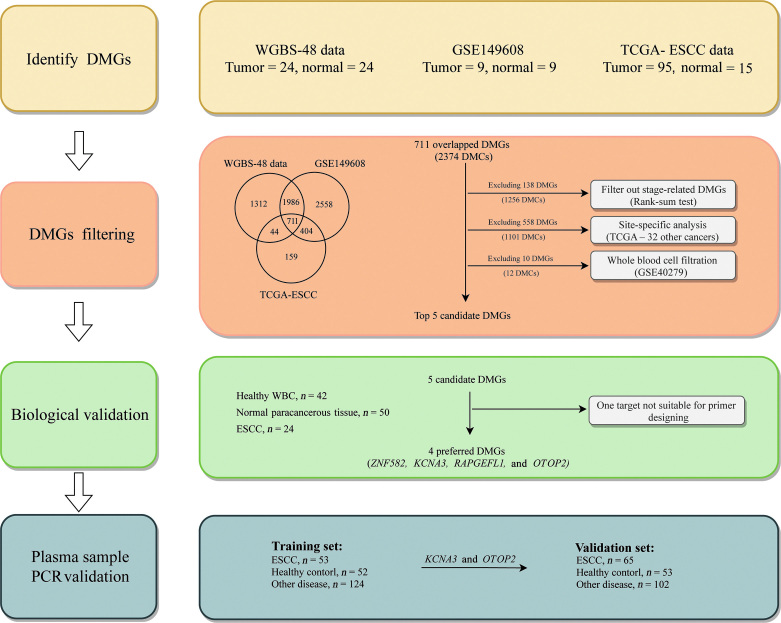
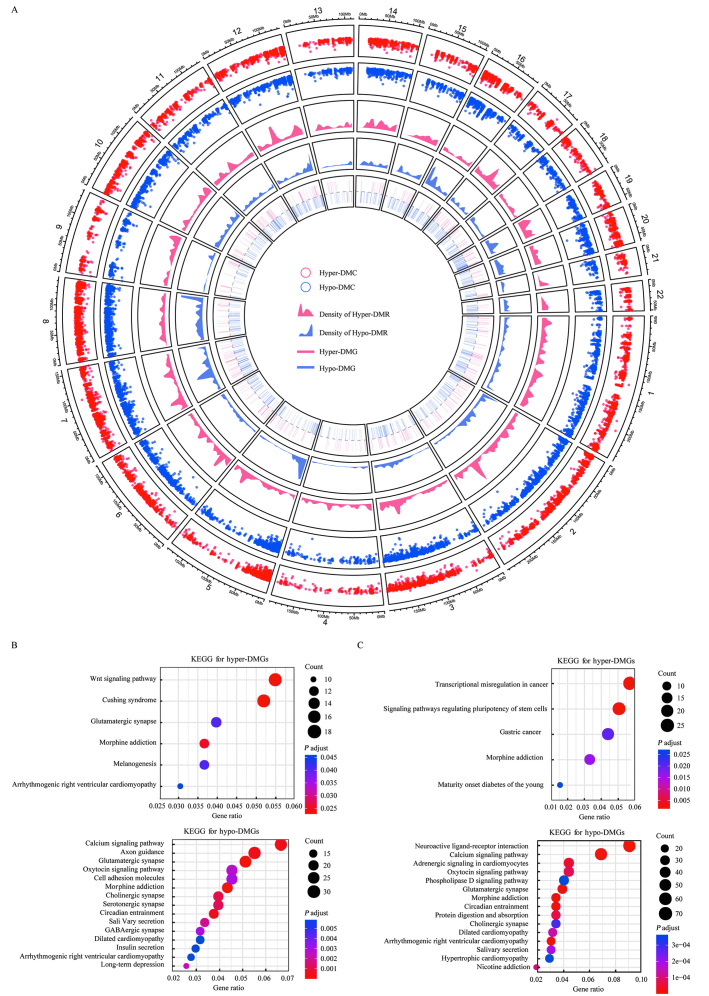
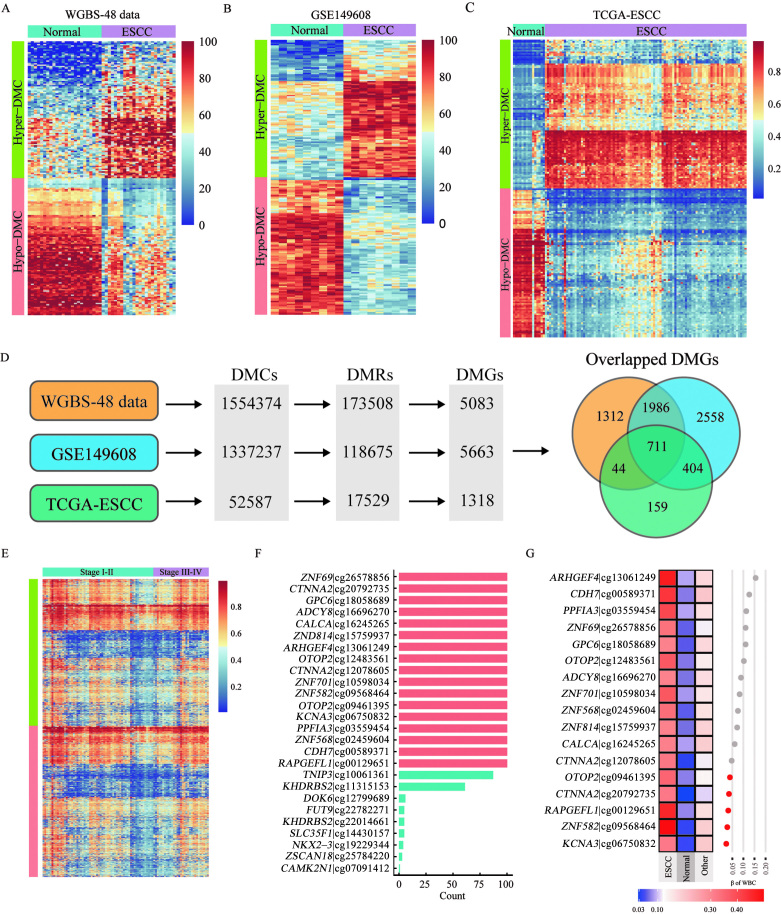
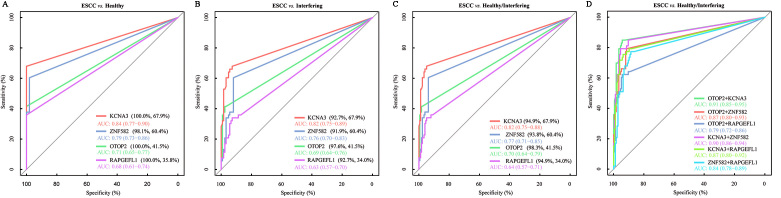
We performed whole-genome bisulfite sequencing (WGBS) for 24 ESCC tissues and their normal adjacent tissues. Based on the WGBS data, we identified 21,469,837 eligible CpG sites (CpGs). By integrating several methylation datasets, we identified several promising ESCC-specific cell-free DNA methylation markers. Finally, we developed a dual-marker panel based on methylated KCNA3 and OTOP2 , and then, we evaluated its performance in our training and validation cohorts.
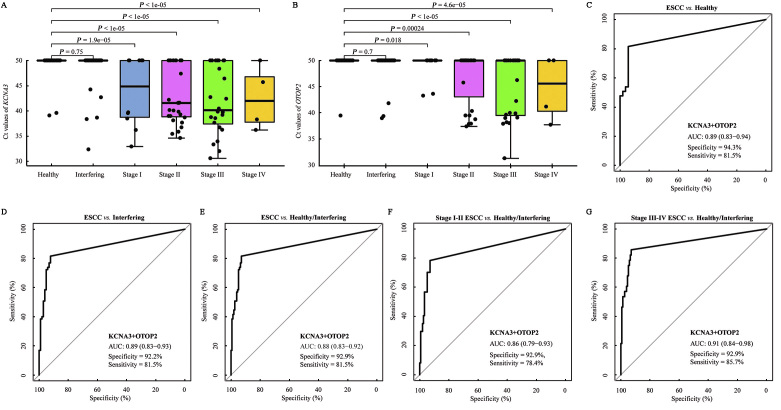
The ESCC diagnostic model constructed based on KCNA3 and OTOP2 had an AUC of 0.91 [95% CI: 0.85-0.95], and an optimal sensitivity and specificity of 84.91% and 94.32%, respectively, in the training cohort. In the independent validation cohort, the AUC was 0.88 [95% CI: 0.83-0.92], along with an optimal sensitivity of 81.5% and specificity of 92.9%. The model sensitivity for stage I-II ESCC was 78.4%, which was slightly lower than the sensitivity of the model (85.7%) for stage III-IV ESCC.
The dual-target panel based on cfDNA showed excellent performance for detecting ESCC and might be an alternative strategy for screening ESCC.
早期检测食管鳞状细胞癌(ESCC)可以显著改善患者的预后。异常的游离细胞 DNA(cfDNA)甲基化特征是检测 ESCC 的一种很有前途的工具。然而,基于游离细胞 DNA 甲基化的现有标志物仍然不足。本研究旨在鉴定 ESCC 特异性 cfDNA 甲基化标志物,并评估其在 ESCC 早期检测中的诊断性能。
我们对 24 例 ESCC 组织及其正常相邻组织进行了全基因组亚硫酸氢盐测序(WGBS)。基于 WGBS 数据,我们鉴定了 21469837 个合格的 CpG 位点(CpGs)。通过整合几个甲基化数据集,我们鉴定了几个有前途的 ESCC 特异性游离细胞 DNA 甲基化标志物。最后,我们基于甲基化的 KCNA3 和 OTOP2 开发了一个双标志物面板,并在我们的训练和验证队列中评估了其性能。
基于 KCNA3 和 OTOP2 构建的 ESCC 诊断模型在训练队列中的 AUC 为 0.91[95%CI:0.85-0.95],最佳敏感性和特异性分别为 84.91%和 94.32%。在独立验证队列中,AUC 为 0.88[95%CI:0.83-0.92],最佳敏感性为 81.5%,特异性为 92.9%。该模型对 I 期-II 期 ESCC 的敏感性为 78.4%,略低于对 III 期-IV 期 ESCC 的模型敏感性(85.7%)。
基于 cfDNA 的双靶标panel 对检测 ESCC 具有优异的性能,可能是筛查 ESCC 的替代策略。