McGuire Thomas M, Buchard Antoine, Williams Charlotte
Department of Chemistry, Chemistry Research Laboratory, University of Oxford, 12 Mansfield Road, Oxford, OX1 3TA, U.K.
Department of Chemistry, Institute for Sustainability, University of Bath, Claverton Down, Bath BA2 7AY, U.K.
J Am Chem Soc. 2023 Sep 13;145(36):19840-19848. doi: 10.1021/jacs.3c05863. Epub 2023 Aug 31.
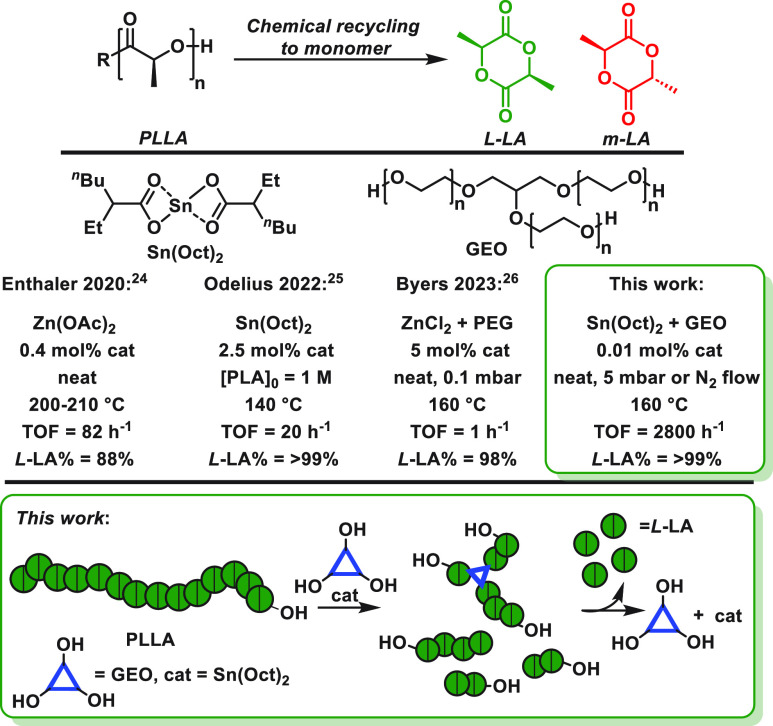
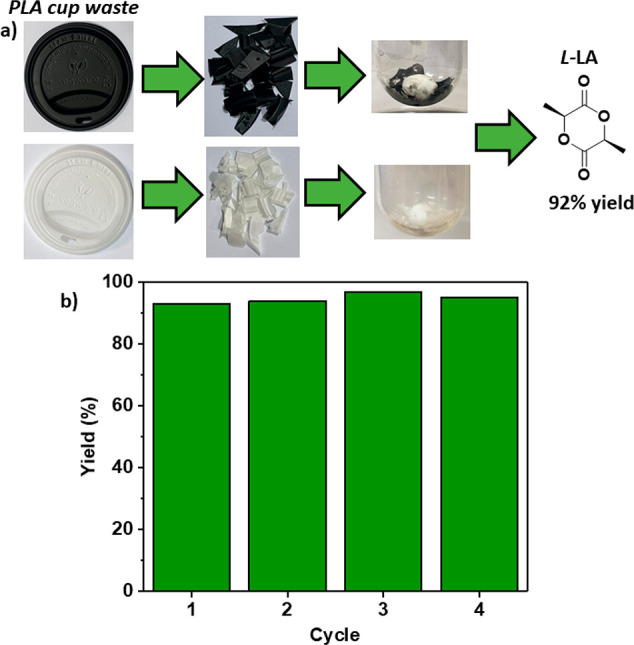
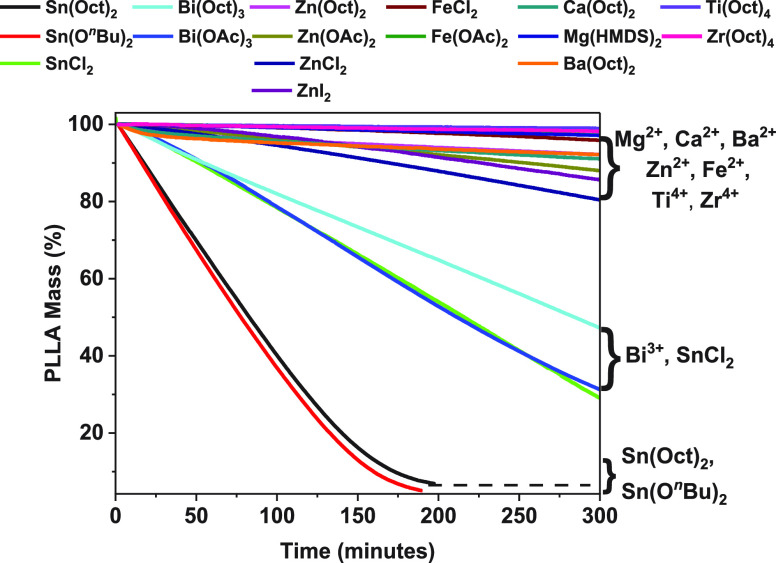
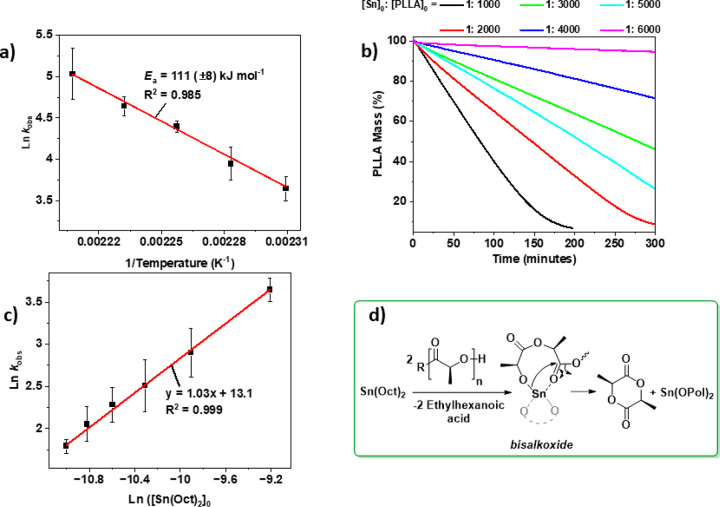
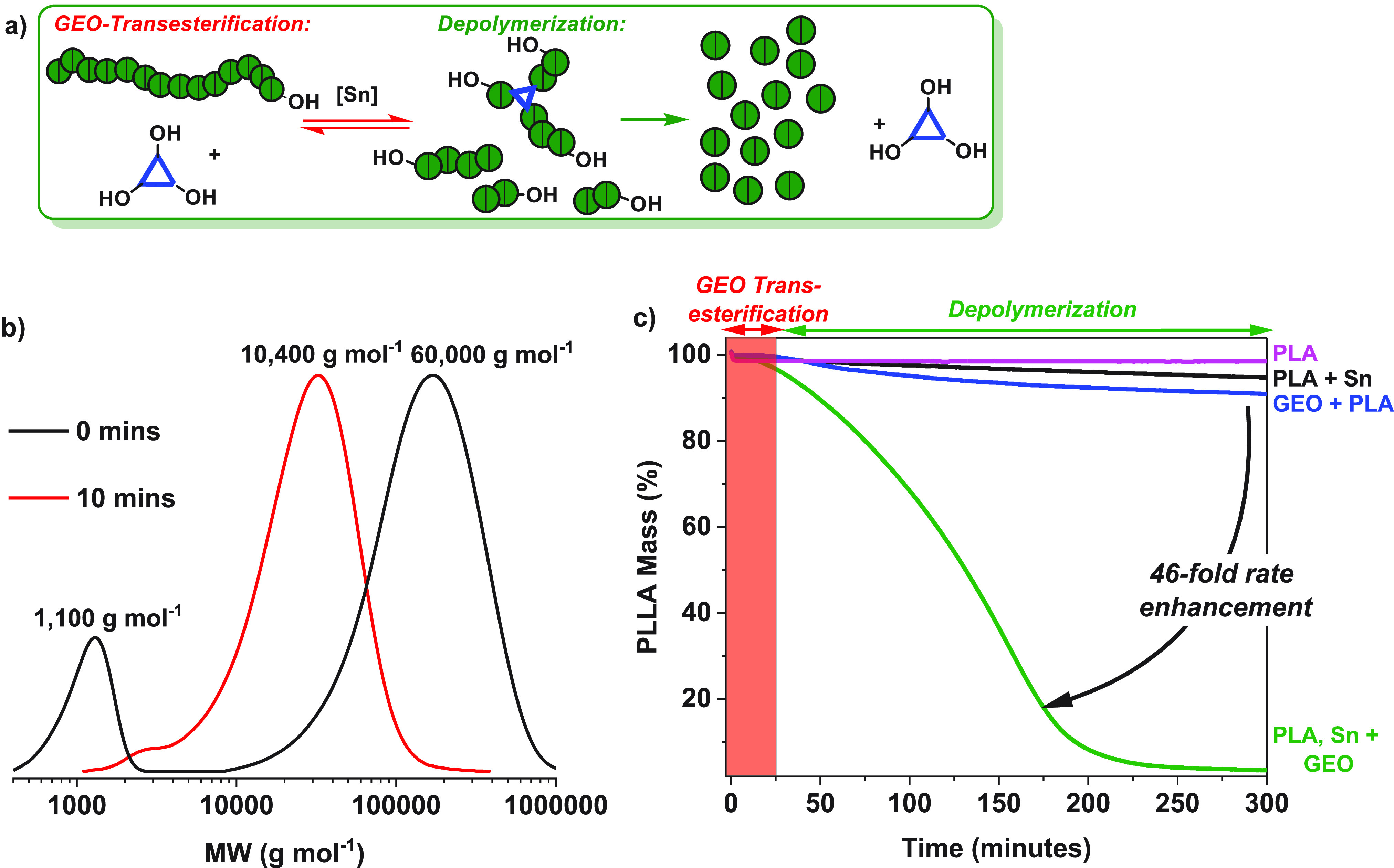
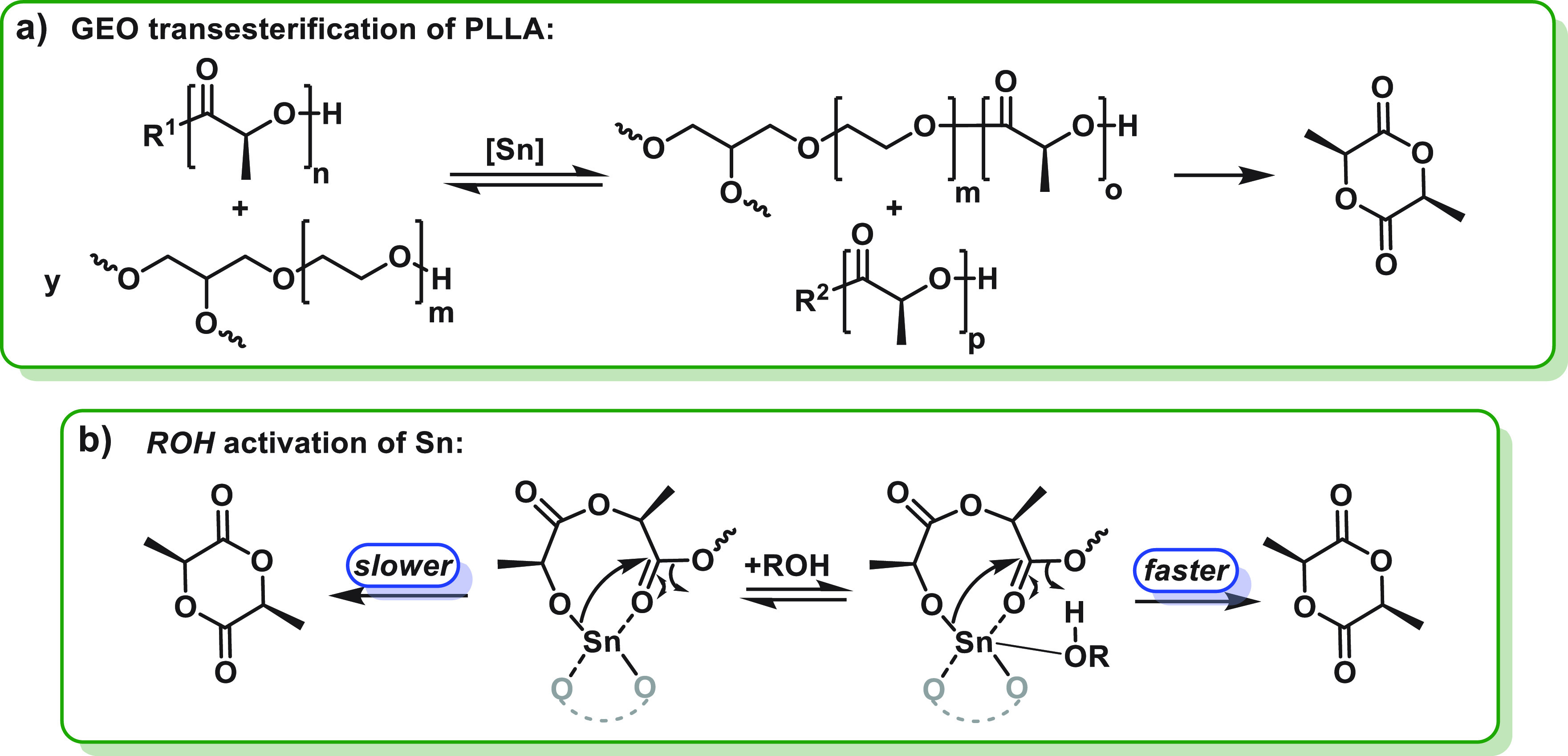
Poly(l-lactic acid) (PLLA) is a leading commercial polymer produced from biomass, showing useful properties for plastics and fiber applications; after use, it is compostable. One area for improvement is postconsumer waste PLLA chemical recycling to monomer (CRM), i.e., the formation of l-lactide (l-LA) from waste plastic. This process is currently feasible at high reaction temperatures and shows low catalytic activity accompanied, in some cases, by side reactions, including epimerization. Here, a commercial Sn(II) catalyst, applied with nonvolatile commercial alcohol, enables highly efficient CRM of PLLA to yield l-LA in excellent yield and purity (92% yield, >99% l-LA from theoretical max.). The depolymerization is performed using neat polymer films at low temperatures (160 °C) under a nitrogen flow or vacuum. The chemical recycling operates with outstanding activity, achieving turnover frequencies which are up to 3000× higher than previously excellent catalysts and applied at loadings up to 6000× lower than previously leading catalysts. The catalyst system achieves a TOF = 3000 h at 0.01 mol % or 1:10,000 catalyst:PLLA loading. The depolymerization of waste PLLA plastic packaging (coffee cup lids) produces pure l-LA in excellent yield and selectivity. The new catalyst system (Sn + alcohol) can itself be recycled four times in different PLLA "batch degradations" and maintains its high catalytic productivity, activity, and selectivity.
聚(L-乳酸)(PLLA)是一种由生物质生产的领先商业聚合物,在塑料和纤维应用中显示出有用的性能;使用后,它可堆肥。一个有待改进的领域是消费后废PLLA化学回收为单体(CRM),即从废塑料中形成L-丙交酯(L-LA)。该过程目前在高反应温度下可行,并且显示出低催化活性,在某些情况下还伴随着包括差向异构化在内的副反应。在此,一种商业Sn(II)催化剂与非挥发性商业醇一起使用,能够实现PLLA的高效CRM,以优异的产率和纯度(产率92%,相对于理论最大值的L-LA>99%)生成L-LA。解聚在低温(160°C)下于氮气流或真空下使用纯聚合物薄膜进行。化学回收以出色的活性运行,实现的周转频率比以前的优秀催化剂高出多达3000倍,并且在比以前的领先催化剂低多达6000倍的负载量下应用。该催化剂体系在0.01 mol%或1:10,000的催化剂:PLLA负载量下实现TOF = 3000 h。废PLLA塑料包装(咖啡杯盖)的解聚以优异的产率和选择性产生纯L-LA。新的催化剂体系(Sn + 醇)本身可以在不同的PLLA“批次降解”中循环使用四次,并保持其高催化生产率、活性和选择性。