Department of Palliative Care, Calvary Mater Newcastle, Newcastle, NSW, Australia.
Faculty of Health and Medicine, University of Newcastle, Newcastle, NSW, Australia.
BMC Palliat Care. 2023 Sep 1;22(1):124. doi: 10.1186/s12904-023-01239-9.
Residential aged care facilities is one of the most common places to deliver of end of life care. A lack of evidence regarding preferred place for end of life care for residents of aged care facilities impacts on delivery of care and prevents assessment of quality of care. This paper reports the preferences, current status of end of life care and enablers and barriers of care being delivered in line with the wishes of residents of participating aged care facilities.
We collaborated with six equally sized aged care facilities from the Greater Newcastle area, New South Wales, Australia. An audit of the quality of end of life care for residents was conducted by retrospective medical record review (n = 234 deceased patients). A retrospective review of emergency department transfers was conducted to determine the rate of transfer and assign avoidable or not. Qualitative focus group and individual interviews were conducted and analysed for barriers and enablers to end of life care being delivered in accordance with residents' wishes.
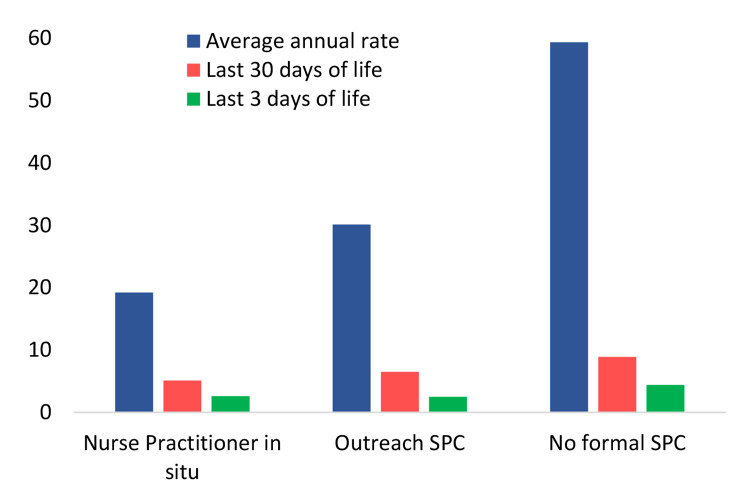
Most residents (96.7%) wished to remain in their residential aged care facility if their health deteriorated in an expected way. Residents of facilities whose model of care integrated nurse practitioners had the lowest rates of emergency department transfers and timelier symptom management at end of life. Family decision making influenced location of death (either supporting or preventing care in place of patient preference).
CONCLUSION(S): To better provide care in accordance with a person's wishes, aged care facilities need to be supported to enable end of life care insitu through integrated care with relevant palliative care providers, education and communication strategies. Family and community health and death literacy interventions should accompany clinical innovation to ensure delivery of care in accordance with residents' preferences.
养老院是提供临终关怀服务的最常见场所之一。由于缺乏有关养老院居民临终关怀首选地点的证据,这会影响护理的提供,并阻碍对护理质量的评估。本文报告了参与养老院居民的偏好、临终关怀的现状以及符合居民意愿提供的护理的促成因素和障碍。
我们与澳大利亚新南威尔士州纽卡斯尔地区的六家同等规模的养老院合作。通过回顾性病历审查(n=234 名已故患者)对居民临终关怀的质量进行了审计。对急诊科转院情况进行了回顾性审查,以确定转院率,并确定是否可以避免转院。对障碍和促成因素进行了定性焦点小组和个人访谈,并进行了分析,以确定是否可以按照居民的意愿提供临终关怀。
如果居民的健康状况按照预期恶化,大多数居民(96.7%)希望留在他们的养老院。护理模式整合了执业护师的养老院的居民,急诊科转院率最低,临终时症状管理也更及时。家庭决策影响死亡地点(支持或不支持患者的选择)。
为了更好地按照一个人的意愿提供护理,需要为养老院提供支持,通过与相关姑息治疗提供者的综合护理、教育和沟通策略,在当地提供临终关怀。家庭和社区健康以及死亡知识干预措施应伴随临床创新,以确保按照居民的意愿提供护理。