
用于新冠病毒逆转录聚合酶链反应检测的干拭子核酸提取与基于离心柱的核酸提取对比研究
Dry Swab-Based Nucleic Acid Extraction vs. Spin Column-Based Nucleic Acid Extraction for COVID-19 RT-PCR Testing: A Comparative Study.
作者信息
Khan Mohammed Faraaz, Roopa C
机构信息
Department of Microbiology, Kamineni Institute of Medical Sciences, Narketpally, Telangana, India.
Department of Microbiology, SVS Medical College, Mahabubnagar, Telangana, India.
出版信息
Can J Infect Dis Med Microbiol. 2023 Aug 23;2023:6624932. doi: 10.1155/2023/6624932. eCollection 2023.
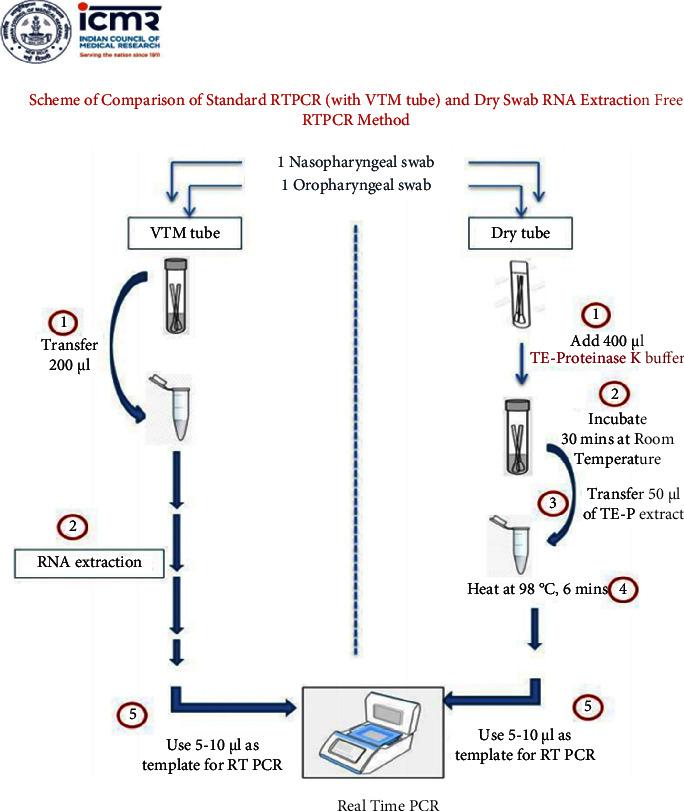
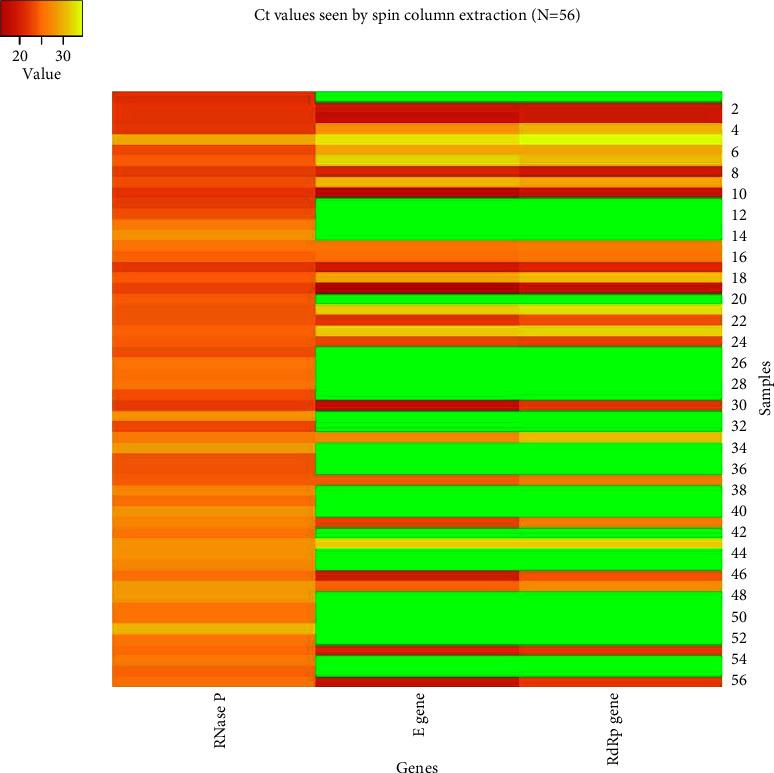
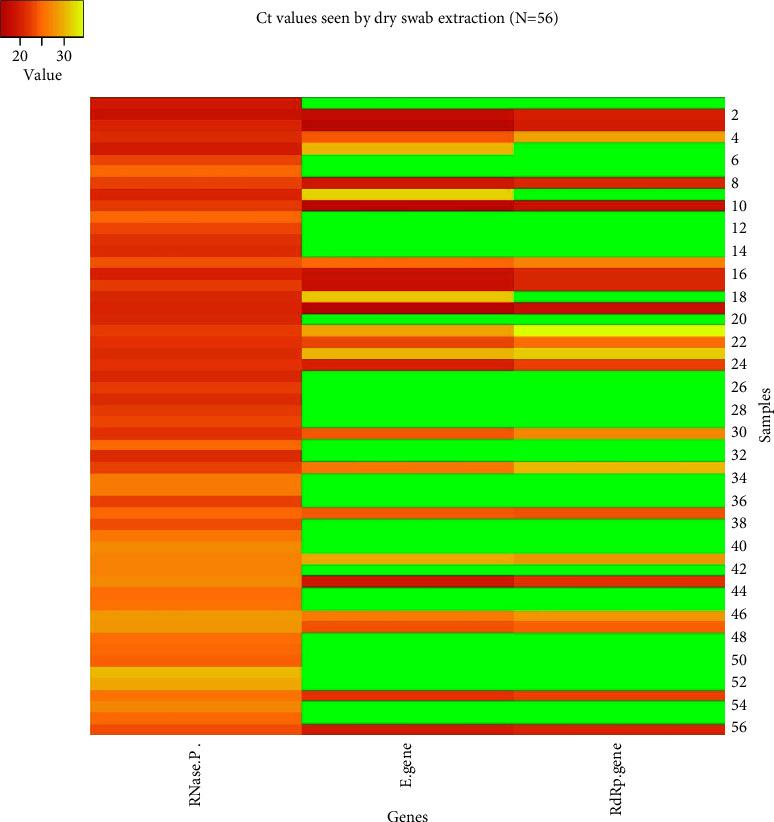
Conventional nucleic acid extraction involves usage of spin columns to isolate the RNA, but this is labor intensive. This study compares the spin column method with a dry swab-based method of extraction using a proteinase K buffer and subsequent heat inactivation. A total of 56 subjects were tested for COVID-19 by RT-PCR with probes targeting the E and RdRp genes by collecting two nasopharyngeal and two oropharyngeal swabs and subjecting one set to nucleic acid extraction by spin column and the other set to dry swab-based methods. Out of the 56 samples tested, 27 were positive for VTM-based extraction and 29 were negative. Dry swab-based extraction produced 22 positive results (sensitivity = 81.48%) and 34 negative results. The E gene was detectable in 25 samples by the dry swab method out of 27 samples that tested positive by the VTM-based method (sensitivity = 92.5%). The RdRp gene was detectable in 22 samples by the dry swab method out of 27 samples that tested positive by the VTM-based method (sensitivity = 81.48%). Concordance was 91% with discordance at 9% and a Kappa value of 0.82, indicating almost perfect agreement between the two methods. Our findings indicate that the dry swab method of nucleic acid extraction is a useful alternative to conventional spin column-based extraction with comparable sensitivity and specificity. The trial was registered with the Clinical Trials Registry of India (CTRI) with a CTRI registration number of CTRI/2021/12/038792.
传统的核酸提取需要使用离心柱来分离RNA,但这一过程 labor intensive。本研究将离心柱法与一种基于干拭子的提取方法进行了比较,该方法使用蛋白酶K缓冲液并随后进行热灭活。通过收集两根鼻咽拭子和两根口咽拭子,将其中一组样本用离心柱法进行核酸提取,另一组样本用基于干拭子的方法进行核酸提取,共有56名受试者通过针对E基因和RdRp基因的探针进行RT-PCR检测COVID-19。在检测的56个样本中,基于病毒运输培养基(VTM)的提取方法有27个呈阳性,29个呈阴性。基于干拭子的提取方法产生了22个阳性结果(灵敏度 = 81.48%)和34个阴性结果。在基于VTM的方法检测呈阳性的27个样本中(灵敏度 = 92.5%),通过干拭子法在25个样本中检测到了E基因。在基于VTM的方法检测呈阳性的27个样本中(灵敏度 = 81.48%),通过干拭子法在22个样本中检测到了RdRp基因。一致性为91%,不一致性为9%,Kappa值为0.82,表明两种方法之间几乎完全一致。我们的研究结果表明,核酸提取干拭子法是传统离心柱法的一种有用替代方法,具有相当的灵敏度和特异性。该试验已在印度临床试验注册中心(CTRI)注册,CTRI注册号为CTRI/2021/12/038792。



 Zotero 插件