Finn Damien R, Rohe Lena, Krause Sascha, Guliyev Jabrayil, Loewen Achim, Tebbe Christoph C
Thünen Institute for Biodiversity, Johann Heinrich von Thünen Institute, 38116, Braunschweig, Germany.
Thünen Institute for Climate-Smart Agriculture, Johann Heinrich von Thünen Institute, 38116, Braunschweig, Germany.
Appl Microbiol Biotechnol. 2023 Nov;107(21):6717-6730. doi: 10.1007/s00253-023-12752-5. Epub 2023 Sep 6.
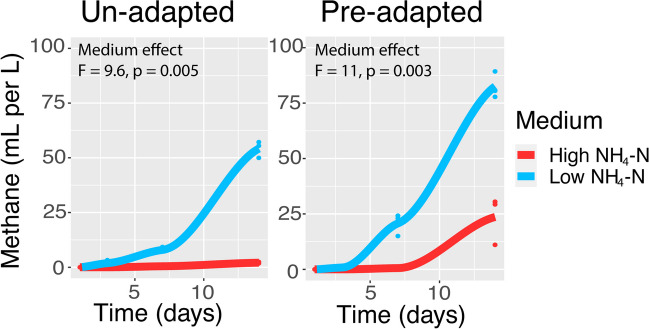
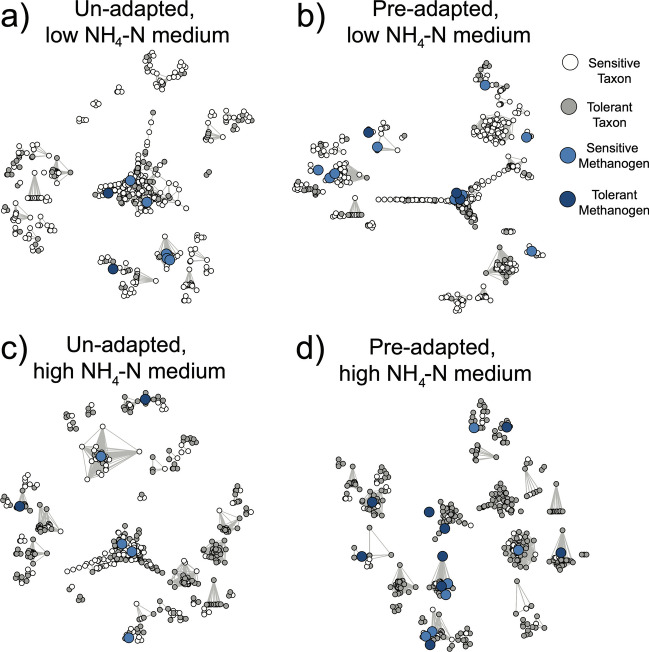
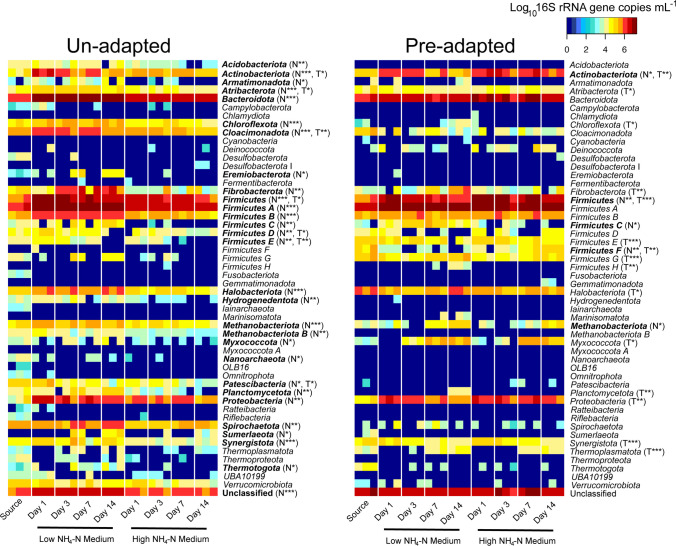
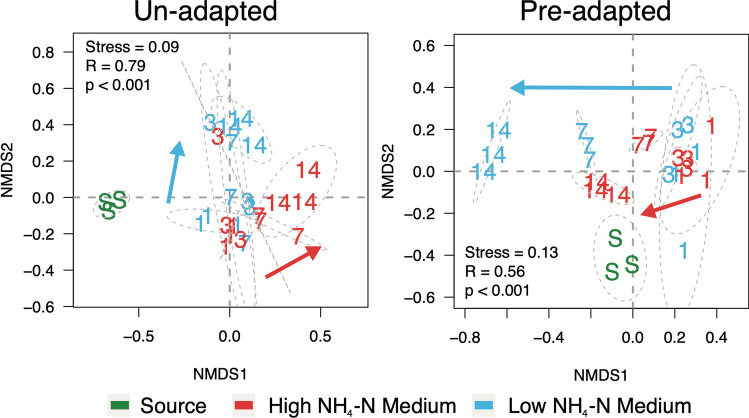
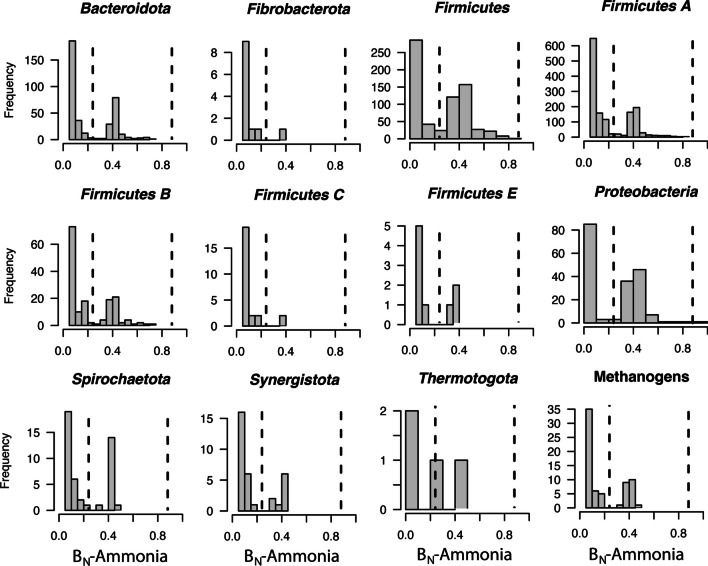
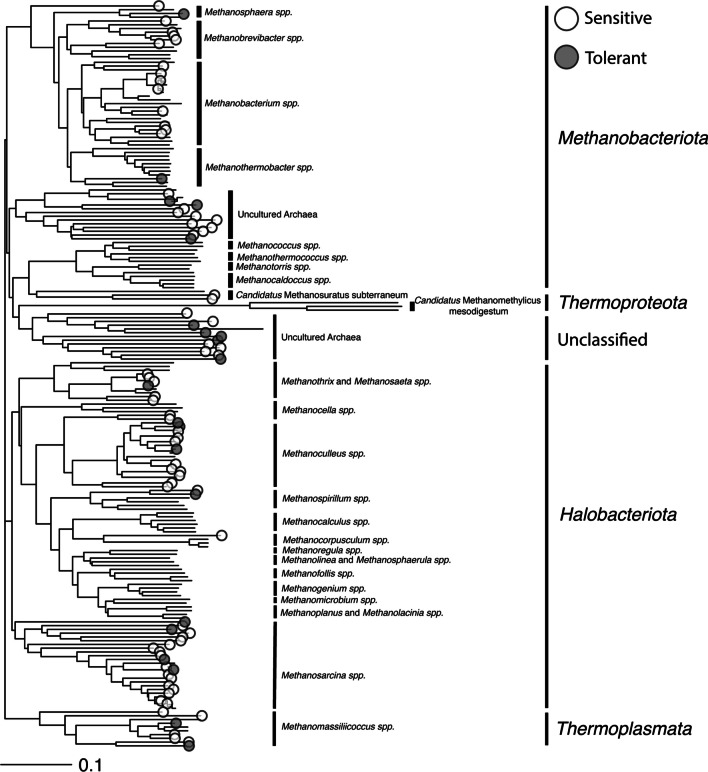
Ammonia (NH) inhibition represents a major limitation to methane production during anaerobic digestion of organic material in biogas reactors. This process relies on co-operative metabolic interactions between diverse taxa at the community-scale. Despite this, most investigations have focused singularly on how methanogenic Archaea respond to NH stress. With a high-NH pre-adapted and un-adapted community, this study investigated responses to NH inhibition both at the community-scale and down to individual taxa. The pre-adapted community performed methanogenesis under inhibitory NH concentrations better than the un-adapted. While many functionally important phyla were shared between the two communities, only taxa from the pre-adapted community were robust to NH. Functionally important phyla were mostly comprised of sensitive taxa (≥ 50%), yet all groups, including methanogens, also possessed tolerant individuals (10-50%) suggesting that potential mechanisms for tolerance are non-specific and widespread. Hidden Markov Model-based phylogenetic analysis of methanogens confirmed that NH tolerance was not restricted to specific taxonomic groups, even at the genus level. By reconstructing covarying growth patterns via network analyses, methanogenesis by the pre-adapted community was best explained by continued metabolic interactions (edges) between tolerant methanogens and other tolerant taxa (nodes). However, under non-inhibitory conditions, sensitive taxa re-emerged to dominate the pre-adapted community, suggesting that mechanisms of NH tolerance can be disadvantageous to fitness without selection pressure. This study demonstrates that methanogenesis under NH inhibition depends on broad-scale tolerance throughout the prokaryotic community. Mechanisms for tolerance seem widespread and non-specific, which has practical significance for the development of robust methanogenic biogas communities. KEY POINTS: • Ammonia pre-adaptation allows for better methanogenesis under inhibitory conditions. • All functionally important prokaryote phyla have some ammonia tolerant individuals. • Methanogenesis was likely dependent on interactions between tolerant individuals.
氨(NH₃)抑制是沼气反应器中有机物料厌氧消化过程中甲烷产生的主要限制因素。该过程依赖于群落尺度上不同分类群之间的协同代谢相互作用。尽管如此,大多数研究仅聚焦于产甲烷古菌如何应对氨胁迫。本研究以高氨预适应和未预适应的群落为对象,在群落尺度及个体分类群层面探究了对氨抑制的响应。预适应群落比未预适应群落能在抑制性氨浓度下更好地进行甲烷生成。虽然两个群落共享许多功能上重要的门类,但只有预适应群落的分类群对氨具有抗性。功能上重要的门类大多由敏感分类群(≥50%)组成,但所有类群,包括产甲烷菌,也都有耐受性个体(10 - 50%),这表明耐受性的潜在机制是非特异性且广泛存在的。基于隐马尔可夫模型的产甲烷菌系统发育分析证实,氨耐受性并不局限于特定分类群,即使在属水平也是如此。通过网络分析重建共变生长模式,预适应群落的甲烷生成最好由耐受性产甲烷菌与其他耐受性分类群(节点)之间持续的代谢相互作用(边)来解释。然而,在非抑制条件下,敏感分类群重新占据主导地位,表明氨耐受机制在没有选择压力时可能对适应性不利。本研究表明,氨抑制条件下的甲烷生成依赖于原核生物群落的广泛耐受性。耐受机制似乎广泛且非特异性,这对稳健的产甲烷沼气群落的发展具有实际意义。要点:• 氨预适应使在抑制条件下能更好地进行甲烷生成。• 所有功能上重要的原核生物门类都有一些氨耐受性个体。• 甲烷生成可能依赖于耐受性个体之间的相互作用。