Soundwave Hearing, LLC, 619 Enterprise Drive #205, Oakbrook, IL, 60523, USA.
Northwestern Medical Group, 675 N. St. Clair, Suite 15-200, Chicago, IL, 60611, USA.
Sci Rep. 2023 Sep 6;13(1):14667. doi: 10.1038/s41598-023-40495-w.
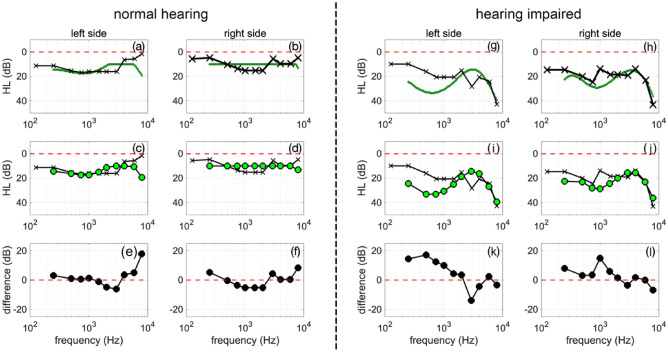
One in six Americans suffers from hearing loss. While treatment with amplification is possible for many, the acceptance rate of hearing aids is low. Poor device fitting is one of the reasons. The hearing aid fitting starts with a detailed hearing assessment by a trained audiologist in a sound-controlled environment, using standard equipment. The hearing aid is adjusted step-by-step, following well-described procedures based on the audiogram. However, for many patients in rural settings, considerable travel time to a hearing center discourages them from receiving a hearing test and treatment. We hypothesize that hearing assessment with the patient's hearing aid can reliably substitute the hearing test in the clinic. Over-the-counter hearing aids could be programmed from a distance and fine-tuned by the hearing aid wearer. This study shows that a patient-controlled hearing assessment via a hearing aid in a non-clinical setting is not statistically different from an audiologist-controlled hearing assessment in a clinical setting. The differences in hearing obtained with our device and the Gaussian Process are within 3 dB of the standard audiogram. At 250 Hz, the sound delivery with the hearing aid used in this study added an additional reduction of sound level, which was not compensated.
六分之一的美国人患有听力损失。虽然许多人可以通过放大治疗来治疗,但助听器的接受率很低。设备适配不当是其中一个原因。助听器适配始于在声音控制环境中由经过培训的听力学家进行详细的听力评估,使用标准设备。助听器是根据听力图逐步调整的,遵循经过充分描述的程序。然而,对于许多农村地区的患者来说,到听力中心的大量旅行时间使他们不愿接受听力测试和治疗。我们假设使用患者的助听器进行听力评估可以可靠地替代诊所中的听力测试。非处方助听器可以远程编程,并由助听器佩戴者进行微调。这项研究表明,通过非临床环境中的助听器进行的患者控制的听力评估与临床环境中由听力学家控制的听力评估在统计学上没有差异。我们的设备和高斯过程获得的听力差异在标准听力图的 3dB 以内。在 250Hz 时,本研究中使用的助听器的声音传递增加了额外的声级降低,而没有进行补偿。