African Institute for Development Policy (AFIDEP), Lilongwe, Malawi.
Equity and Social Policy, ODI, London, UK.
BMC Public Health. 2023 Sep 6;23(1):1734. doi: 10.1186/s12889-023-16558-y.
Maternal mortality in low- and middle-income countries (LMIC) has reduced considerably over the past three decades, but it remains high. Effective interventions are available, but their uptake and coverage remain low. We reviewed and synthesised evidence from systematic reviews on interventions to increase healthcare services utilisation to reduce maternal mortality in LMICs.
We searched Medline PubMed and Cochrane Library databases for systematic reviews published between January 2014 and December 2021, investigating interventions to increase healthcare services uptake among pregnant women in LMICs. We used the AMSTAR tool (A Measurement Tool to Assess Systematic Reviews) to assess the methodological quality of the included reviews. We extracted data on the interventions and their effects and grouped them into broad groups based on the outcomes reported in each systematic review.
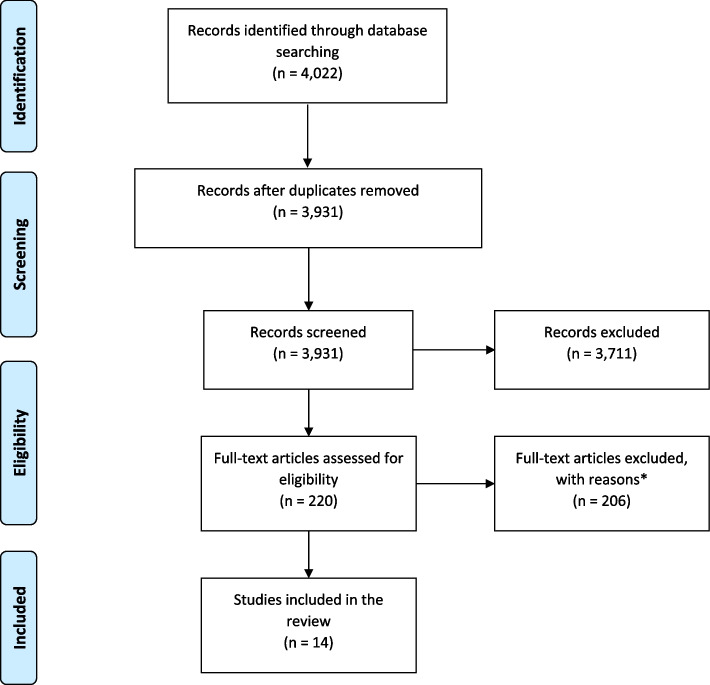
We retrieved 4,022 articles. After removing duplicates and screening, we included 14 systematic reviews. Male-partner interventions were effective in increasing skilled birth attendance (SBA) postnatal visits and maternal antiretroviral (ART) uptake for HIV-positive pregnant women. However, there was no evidence of their effectiveness on increased early ANC initiation or adequate ANC visits. Mobile health interventions were effective in increasing adequate ANC visits, SBA, facility-based service utilisation, early ANC initiation, and adherence to nutritional supplements. Incentive-based interventions, particularly financial incentives, were effective in increasing the number of ANC visits but not postnatal visits. Facility-based interventions were effective in increasing postnatal visits, maternal ART initiation and uptake, immunisation uptake and follow-up ANC visits. None of the reviews assessed their impact on SBA or adequate ANC visits. Community-based interventions were effective in increasing SBA, ANC service utilisation, ART initiation and uptake, and nutritional supplements and immunisation uptake.
Our findings show that the different interventions effectively improved different outcomes on the maternal healthcare continuum. Implementing these interventions in combination has the potential to enhance healthcare service uptake further.
在过去的三十年中,中低收入国家(LMIC)的孕产妇死亡率已经大幅下降,但仍居高不下。虽然有有效的干预措施,但它们的采用率和覆盖率仍然很低。我们对旨在增加医疗服务利用以降低 LMIC 孕产妇死亡率的干预措施的系统评价进行了综述和综合分析。
我们在 Medline PubMed 和 Cochrane Library 数据库中搜索了 2014 年 1 月至 2021 年 12 月期间发表的系统评价,调查了增加 LMIC 孕妇获得医疗服务的干预措施。我们使用 AMSTAR 工具(评估系统评价的测量工具)评估纳入的评价的方法学质量。我们提取了干预措施及其效果的数据,并根据每个系统评价报告的结果将其分组为广泛的类别。
我们检索到 4022 篇文章。在去除重复项和筛选后,我们纳入了 14 项系统评价。男性伴侣干预措施可有效增加熟练分娩护理(SBA)产后访视和 HIV 阳性孕妇的抗逆转录病毒(ART)治疗的采用率。然而,没有证据表明它们能有效增加早期 ANC 开始或适当 ANC 访问的频率。移动健康干预措施可有效增加适当的 ANC 访问、SBA、以设施为基础的服务利用、早期 ANC 开始和营养补充剂的依从性。基于激励的干预措施,特别是经济激励,可有效增加 ANC 访问次数,但不能增加产后访视次数。以设施为基础的干预措施可有效增加产后访视、产妇 ART 启动和采用率、免疫接种率和后续 ANC 访问。没有一篇综述评估了它们对 SBA 或适当 ANC 访问的影响。基于社区的干预措施可有效提高 SBA、ANC 服务利用、ART 启动和采用率以及营养补充剂和免疫接种率。
我们的研究结果表明,不同的干预措施有效地改善了孕产妇保健服务链上的不同结果。结合实施这些干预措施有可能进一步提高医疗服务的采用率。