Department of General Medicine, Monash Health, Clayton, Victoria, Australia.
Department of Emergency Medicine, Western Health, Footscray, Victoria, Australia.
Am J Case Rep. 2023 Sep 7;24:e940967. doi: 10.12659/AJCR.940967.
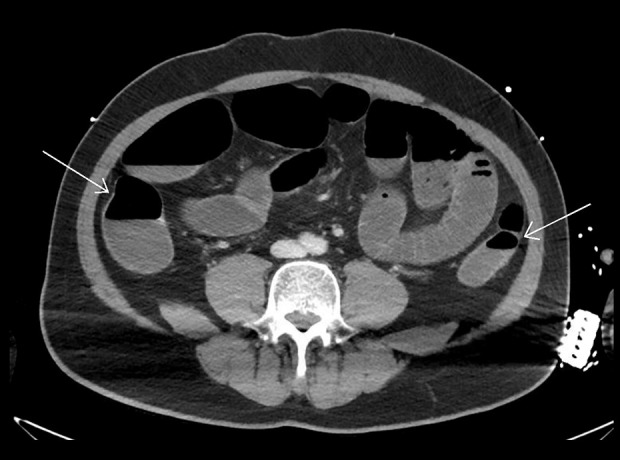
BACKGROUND Infectious diarrheal illnesses such as rotavirus gastroenteritis are significant contributors to childhood morbidity and mortality, especially in low socio-demographic index regions. Major advances in addressing this issue include sanitation and clean water initiatives, as well as rotavirus immunization. In Australia, a robust vaccination program has significantly reduced childhood rotavirus infections, leading to decreased hospitalizations and mortality. However, cases of adult rotavirus still occur, and although these adult patients usually do not require interventional management, it is possible for them to present critically unwell and require resuscitation. CASE REPORT A previously well 65-year-old man presented to the Emergency Department febrile and hypotensive with severe diarrhea attributed to rotavirus. Clinically, he presented with mixed hypovolemic and septic shock. Despite initial resuscitation, he had multiple severe acute end-organ complications, secondary to poor perfusion. He acquired an acute kidney injury, type-2 myocardial infarction, and ischemic hepatic injury. The mainstay of management was rapid fluid resuscitation, continuous renal replacement therapy, and monitoring in the Intensive Care Unit; however, it was crucial to empirically treat for other causes of shock. CONCLUSIONS To the best of our knowledge, there is a scarcity of reports documenting the management of severe rotavirus gastroenteritis in adults. We recommend advising elderly patients to avoid contact with individuals with diarrheal illnesses, especially rotavirus gastroenteritis. Clinicians should also promote awareness regarding the potential severity of a disease that is typically managed conservatively, and be aware that intervention can be required in severe gastroenteritis.
轮状病毒胃肠炎等感染性腹泻病是导致儿童发病率和死亡率的重要原因,尤其是在社会人口指数较低的地区。解决这一问题的主要进展包括改善环境卫生和提供清洁用水,以及轮状病毒免疫接种。在澳大利亚,一项强有力的疫苗接种计划显著减少了儿童轮状病毒感染,导致住院和死亡率降低。然而,成人仍会发生轮状病毒病例,尽管这些成年患者通常不需要介入治疗,但他们也可能病情危急,需要复苏。
一位既往健康的 65 岁男性因轮状病毒感染导致发热和低血压而到急诊科就诊,腹泻严重。临床上,他表现为混合性低血容量性和感染性休克。尽管进行了初步复苏,但由于灌注不良,他出现了多种严重的急性终末器官并发症。他发生了急性肾损伤、2 型心肌梗死和缺血性肝损伤。治疗的主要方法是快速液体复苏、连续肾脏替代治疗和在重症监护病房监测;然而,必须经验性地治疗其他原因引起的休克。
据我们所知,目前很少有文献报道成人严重轮状病毒胃肠炎的管理方法。我们建议告知老年患者避免与患有腹泻病的人接触,尤其是轮状病毒胃肠炎患者。临床医生还应提高对这种通常以保守方式治疗的疾病的严重程度的认识,并意识到在严重胃肠炎时可能需要干预。