Murthy Sanjay K, Weizman Adam V, Kuenzig M Ellen, Windsor Joseph W, Kaplan Gilaad G, Benchimol Eric I, Bernstein Charles N, Bitton Alain, Coward Stephanie, Jones Jennifer L, Lee Kate, Peña-Sánchez Juan-Nicolás, Rohatinsky Noelle, Ghandeharian Sara, Sabrie Nasruddin, Gupta Sarang, Brar Gurmun, Khan Rabia, Im James H B, Davis Tal, Weinstein Jake, St-Pierre Joëlle, Chis Roxana, Meka Saketh, Cheah Eric, Goddard Quinn, Gorospe Julia, Kerr Jack, Beaudion Kayla D, Patel Ashley, Russo Sophia, Blyth Jonathan, Blyth Stephanie, Charron-Bishop Diane, Targownik Laura E
Department of Medicine, University of Ottawa, Ottawa, Ontario, Canada.
The Ottawa Hospital IBD Centre, Ottawa, Ontario, Canada.
J Can Assoc Gastroenterol. 2023 Sep 5;6(Suppl 2):S97-S110. doi: 10.1093/jcag/gwad015. eCollection 2023 Sep.
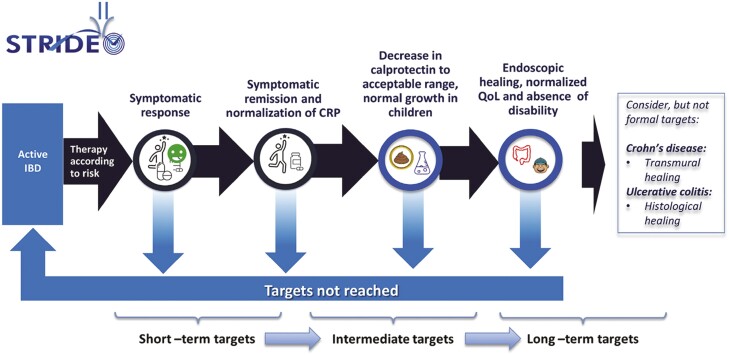
The therapeutic landscape for inflammatory bowel disease (IBD) has changed considerably over the past two decades, owing to the development and widespread penetration of targeted therapies, including biologics and small molecules. While some conventional treatments continue to have an important role in the management of IBD, treatment of IBD is increasingly moving towards targeted therapies given their greater efficacy and safety in comparison to conventional agents. Early introduction of these therapies-particularly in persons with Crohn's disease-combining targeted therapies with traditional anti-metabolite immunomodulators and targeting objective markers of disease activity (in addition to symptoms), have been shown to improve health outcomes and will be increasingly adopted over time. The substantially increased costs associated with targeted therapies has led to a ballooning of healthcare expenditure to treat IBD over the past 15 years. The introduction of less expensive biosimilar anti-tumour necrosis factor therapies may bend this cost curve downwards, potentially allowing for more widespread access to these medications. Newer therapies targeting different inflammatory pathways and complementary and alternative therapies (including novel diets) will continue to shape the IBD treatment landscape. More precise use of a growing number of targeted therapies in the right individuals at the right time will help minimize the development of expensive and disabling complications, which has the potential to further reduce costs and improve outcomes.
在过去二十年中,由于包括生物制剂和小分子药物在内的靶向治疗的发展和广泛应用,炎症性肠病(IBD)的治疗格局发生了显著变化。虽然一些传统治疗方法在IBD的管理中仍然发挥着重要作用,但鉴于靶向治疗相对于传统药物具有更高的疗效和安全性,IBD的治疗正越来越倾向于采用靶向治疗。早期引入这些疗法——特别是在克罗恩病患者中——将靶向治疗与传统抗代谢免疫调节剂相结合,并针对疾病活动的客观标志物(除症状外),已被证明可以改善健康结局,并且随着时间的推移将越来越多地被采用。在过去15年中,与靶向治疗相关的成本大幅增加,导致治疗IBD的医疗支出激增。引入成本较低的生物类似物抗肿瘤坏死因子疗法可能会使这一成本曲线下降,从而有可能使更多患者能够使用这些药物。针对不同炎症途径的新型疗法以及补充和替代疗法(包括新型饮食)将继续塑造IBD的治疗格局。在合适的时间对合适的个体更精确地使用越来越多的靶向治疗,将有助于最大限度地减少昂贵且致残的并发症的发生,这有可能进一步降低成本并改善治疗效果。