Vickneswaran Mathavan, Carolan James C, Saunders Matthew, White Blánaid
School of Chemical Sciences, Dublin City University, Glasnevin, Dublin 9, Ireland.
Department of Biology, Maynooth University, Maynooth, Co. Kildare, Ireland.
Heliyon. 2023 Aug 23;9(9):e19416. doi: 10.1016/j.heliyon.2023.e19416. eCollection 2023 Sep.
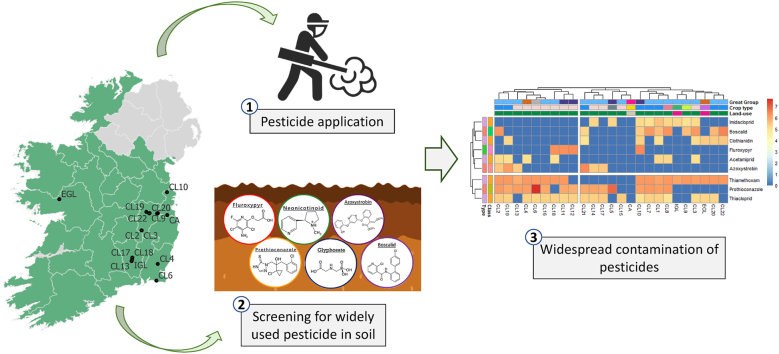
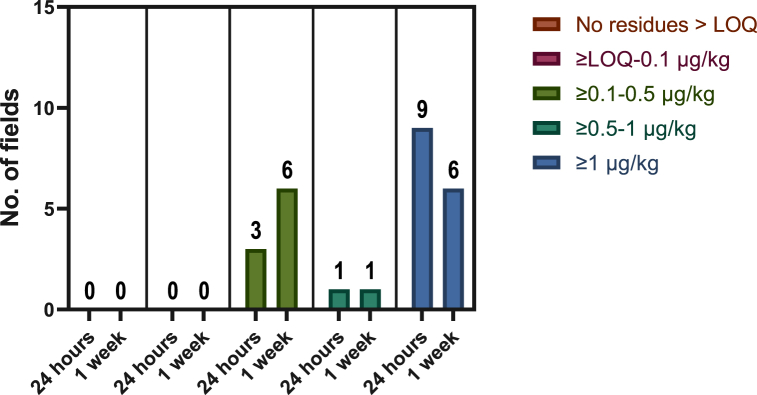
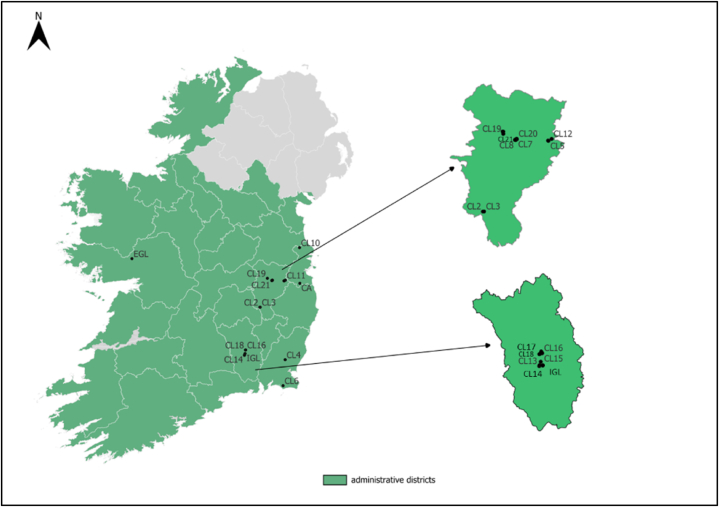
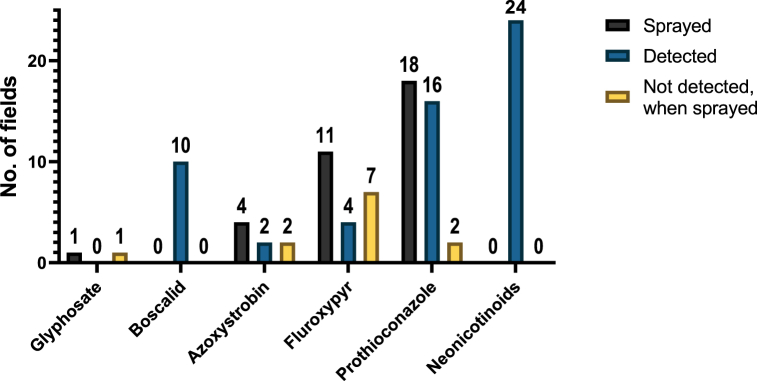
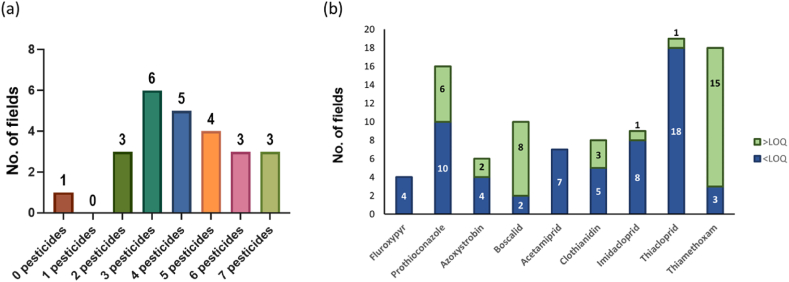
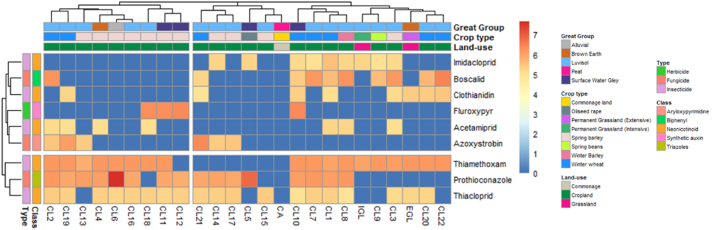
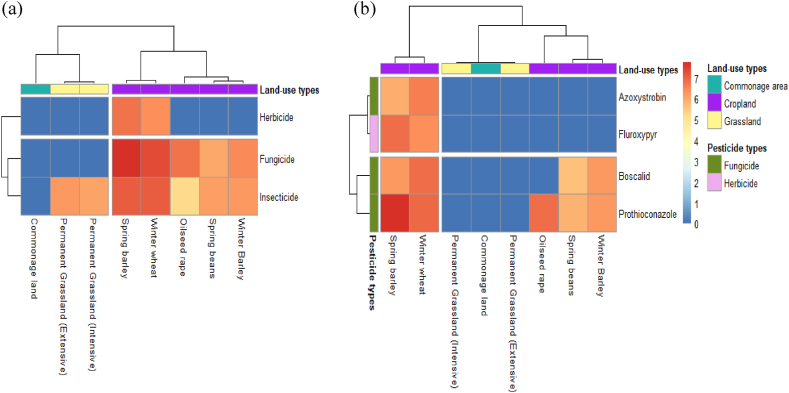
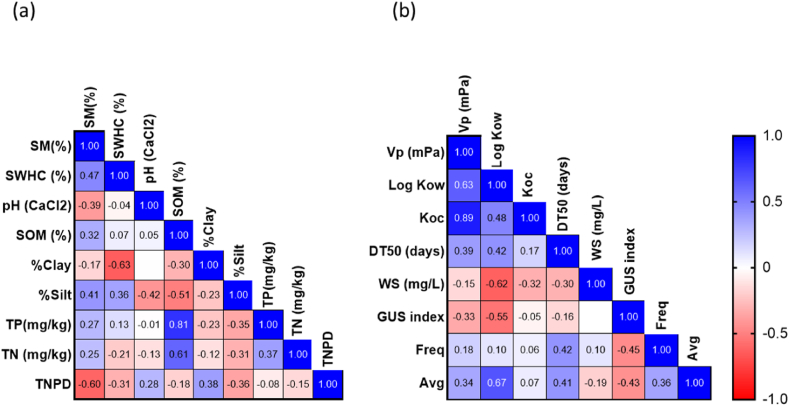
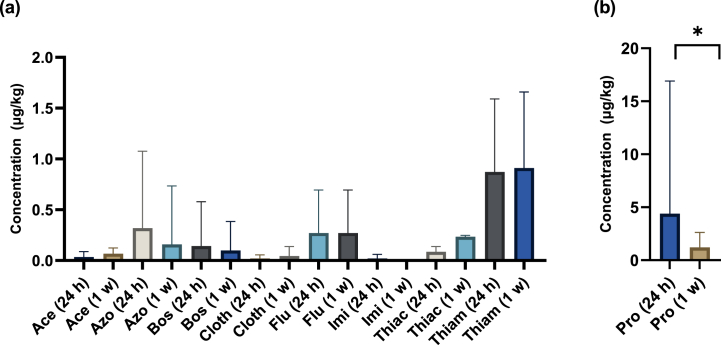
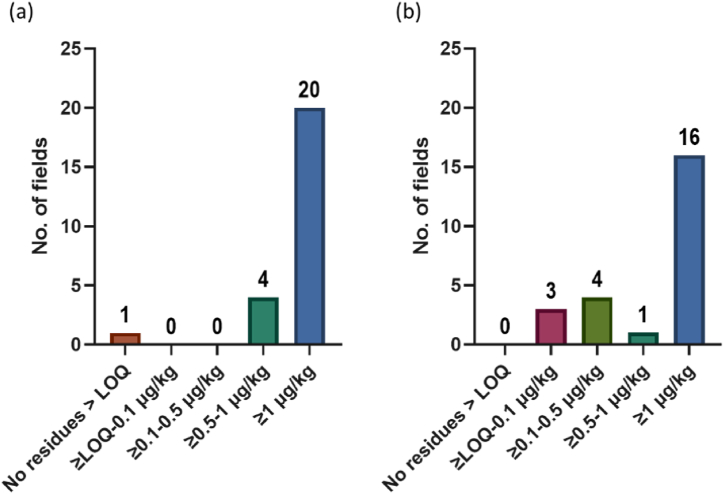
To establish meaningful and sustainable policy directives for sustainable pesticide use in agriculture, baseline knowledge of pesticide levels in soils is required. To address this, five pesticides and one metabolite widely used in Irish agriculture and five neonicotinoid compounds pesticides were screened from soils from 25 fields. These sites represented a diversity of soil and land use types. Prothioconazole was detected in 16 of the 18 sites where it had been recently applied, with the highest maximum concentration quantified of 46 μg/kg. However, a week after application only four fields had prothioconazole concentrations above the limit of quantification (LOQ). Fluroxypyr was applied in 11 sites but was not detected above LOQ. Glyphosate and AMPA were not detected. Interestingly, neonicotinoids were detected in 96% of all sampling sites, even though they were not reported as recently applied. Excluding neonicotinoids, 60% of sites were found to contain pesticide residues of compounds that were not previously applied, with boscalid and azoxystrobin detected in 15 of the 25 sites sampled. The total number of pesticides detected in Irish soils were significantly negatively correlated with clay fraction, while average pesticide concentrations were significantly positively correlated with log values. 17 fields were found to have total pesticide concentrations in excess of 0.5 μg/kg, even when recently applied pesticides were removed from calculations. Theoretical consideration of quantified pesticides determined that azoxystrobin has high leaching risk, while boscalid, which was detected but not applied, has an accumulation risk. This information provides insight into the current level of pesticide contamination in Irish agricultural soil and contributes to the European-level effort to understand potential impacts of pesticide contamination in soil.
为制定有关农业中可持续使用农药的有意义且可持续的政策指令,需要了解土壤中农药水平的基线知识。为解决这一问题,从25块田地的土壤中筛选了5种在爱尔兰农业中广泛使用的农药及其一种代谢物,以及5种新烟碱类化合物农药。这些地点代表了多种土壤和土地利用类型。在最近施用了丙硫菌唑的18个地点中的16个检测到了丙硫菌唑,最高定量浓度为46μg/kg。然而,施用一周后,只有4块田地的丙硫菌唑浓度高于定量限(LOQ)。在11个地点施用了氟草烟,但未检测到其浓度高于定量限。未检测到草甘膦和氨甲基膦酸。有趣的是,在所有采样地点的96%中都检测到了新烟碱类,尽管它们并未被报告为近期施用。排除新烟碱类后,发现60%的地点含有以前未施用的化合物的农药残留,在25个采样地点中的15个检测到了啶酰菌胺和嘧菌酯。爱尔兰土壤中检测到的农药总数与粘粒含量显著负相关,而平均农药浓度与log值显著正相关。即使在计算中去除近期施用的农药后,仍有17块田地的总农药浓度超过0.5μg/kg。对定量农药的理论分析表明,嘧菌酯具有高淋溶风险,而检测到但未施用的啶酰菌胺具有累积风险。这些信息有助于了解爱尔兰农业土壤中农药污染的当前水平,并为欧洲层面了解土壤中农药污染的潜在影响的努力做出贡献。