National Center for Liver Cancer, Second Military Medical University, Shanghai, China.
International Cooperation Laboratory on Signal Transduction, Eastern Hepatobiliary Surgery Hospital, Second Military Medical University, Shanghai, China.
Clin Transl Med. 2021 Apr;11(4):e379. doi: 10.1002/ctm2.379.
4-phenylbutyric acid (4-PBA) is a low molecular weight fatty acid that is used in clinical practice to treat inherited urea cycle disorders. In previous reports, it acted as a chemical chaperone inhibiting endoplasmic reticulum (ER) stress and unfolded protein response signaling. A few studies have suggested its function against hepatic fibrosis in mice models. However, its role in hepatocarcinogenesis remained unknown.
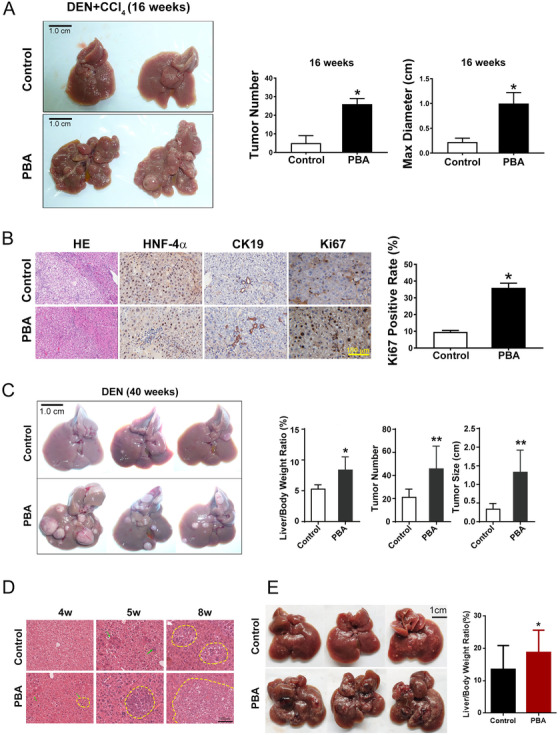
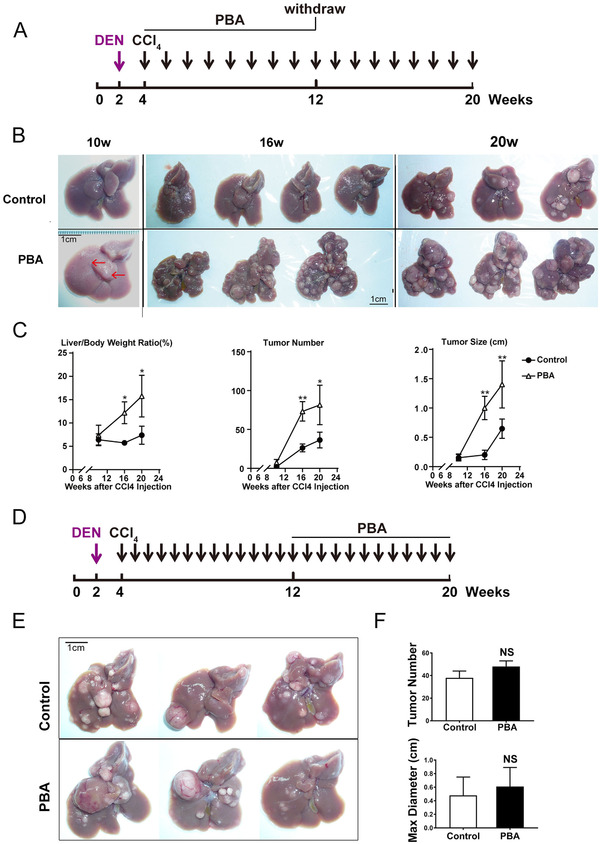
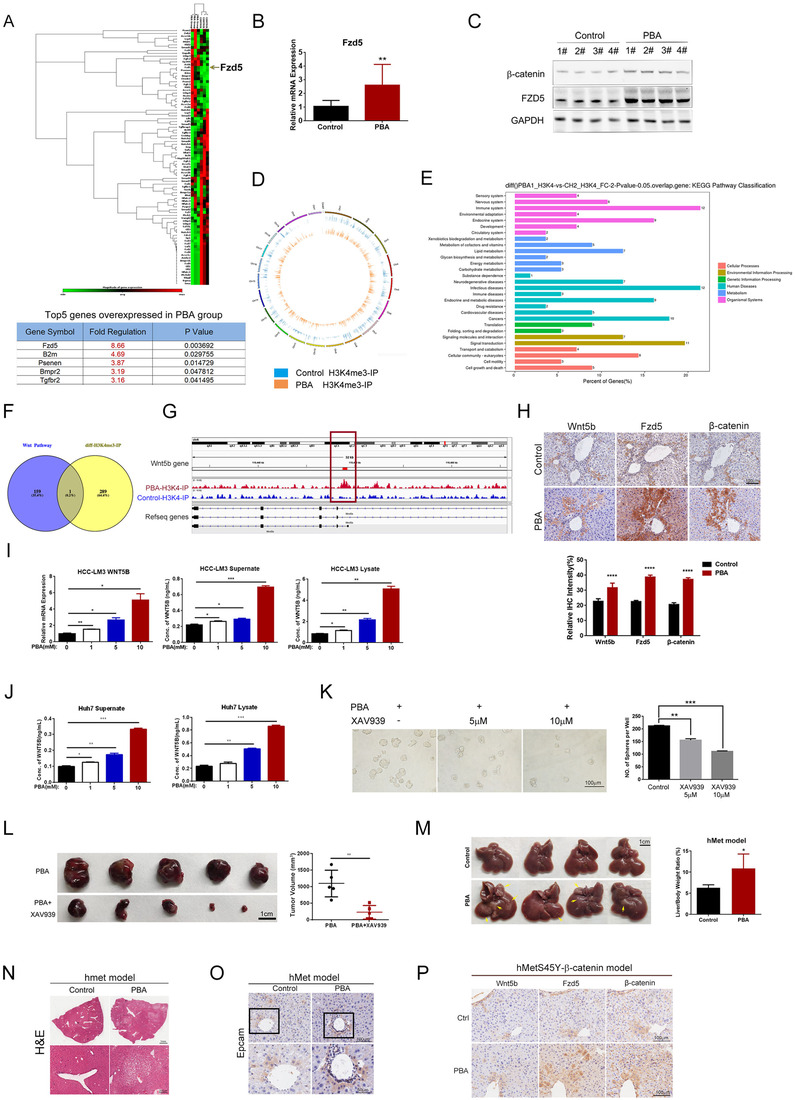
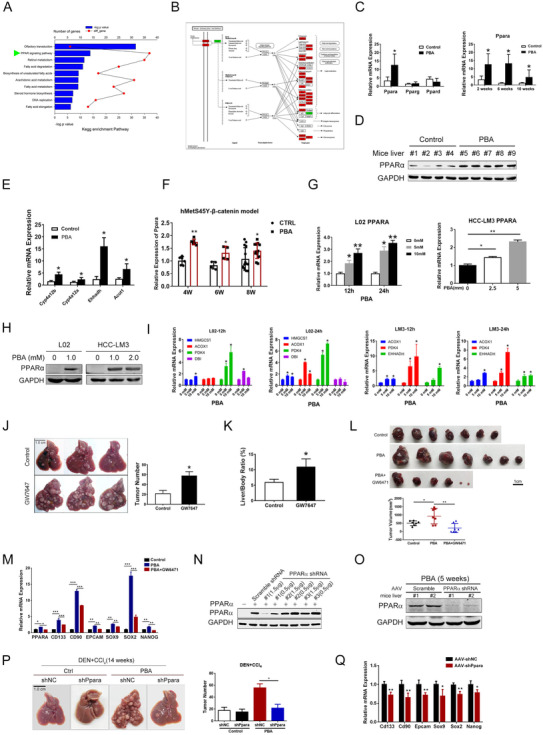
4-PBA was administered alone or in combination with diethylnitrosamine to investigate its long-term effect on liver tumorigenesis. The role of 4-PBA in oncogene-induced hepatocellular carcinoma (HCC) mice model using sleeping beauty system co-expressed with hMet and β-catenin point mutation (S45Y) was also observed. RNA-seq and PCR array were used to screen the pathways and genes involved. In vitro and in vivo studies were conducted to explore the effect of 4-PBA on liver and validate the underlying mechanism.
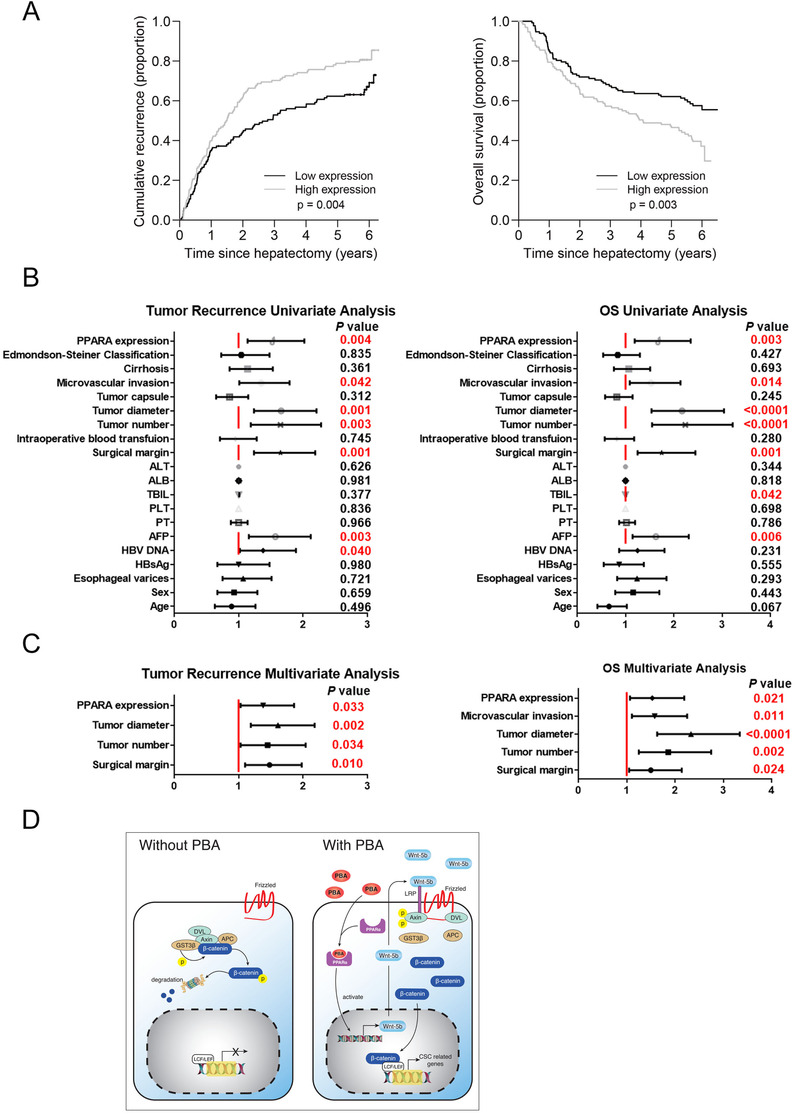
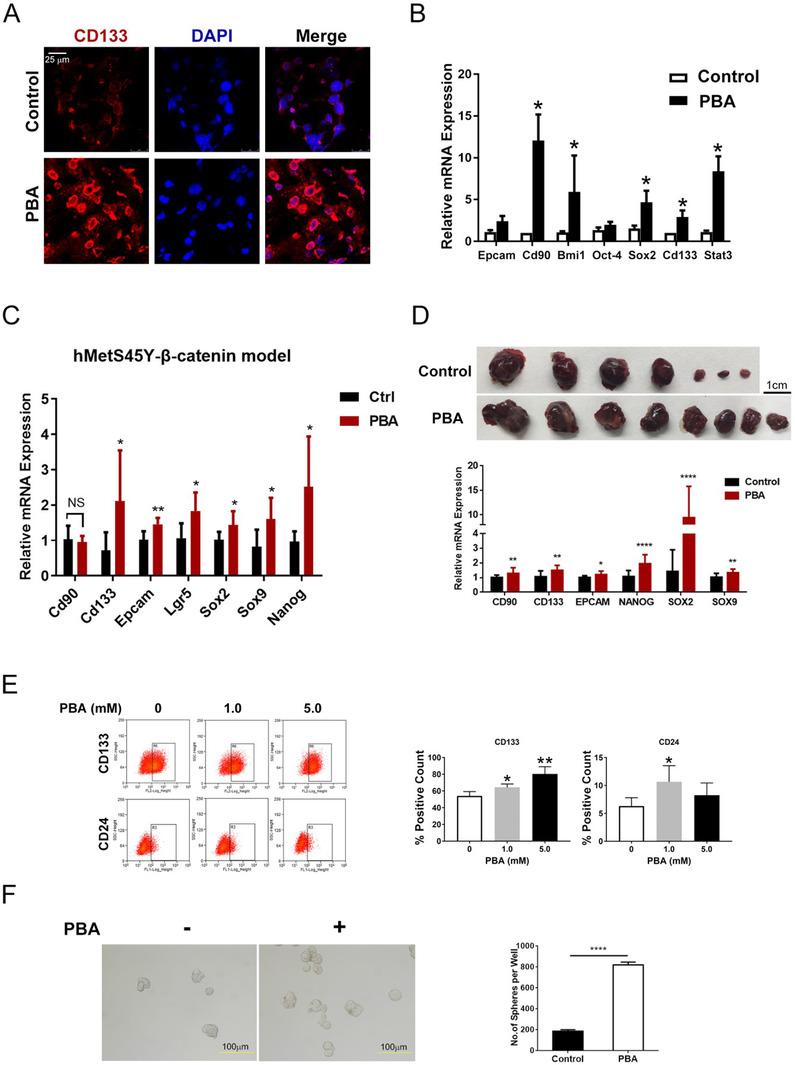
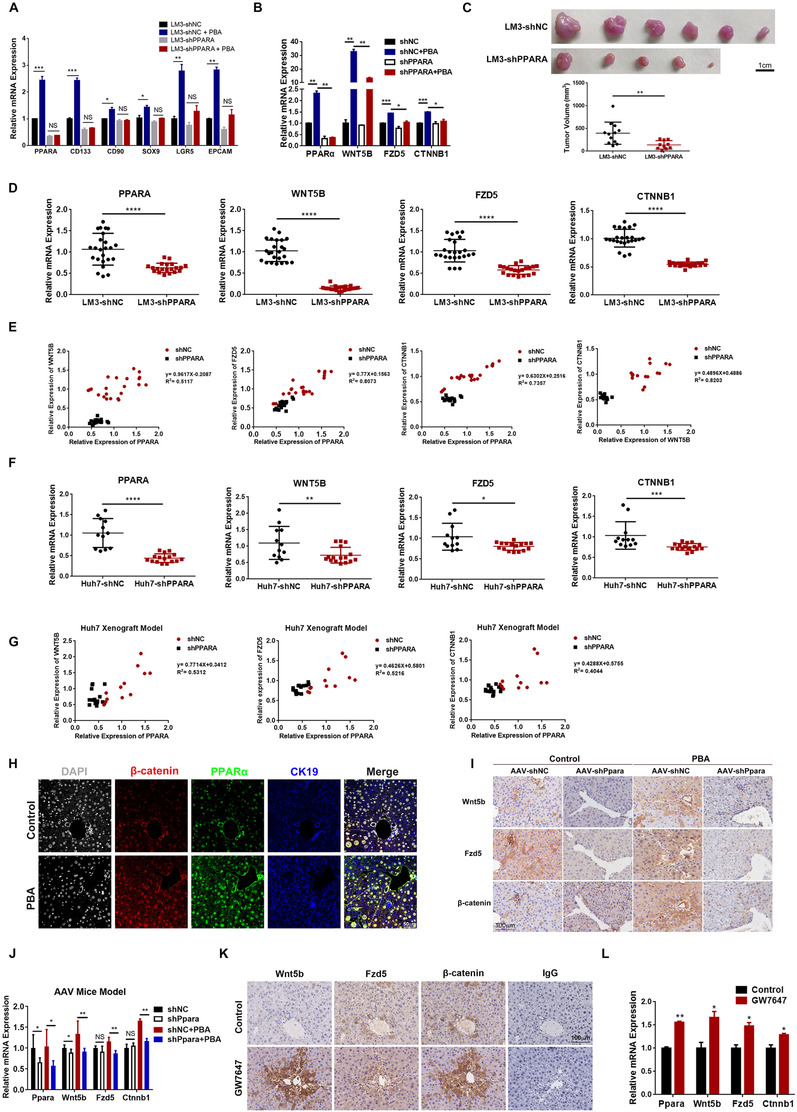
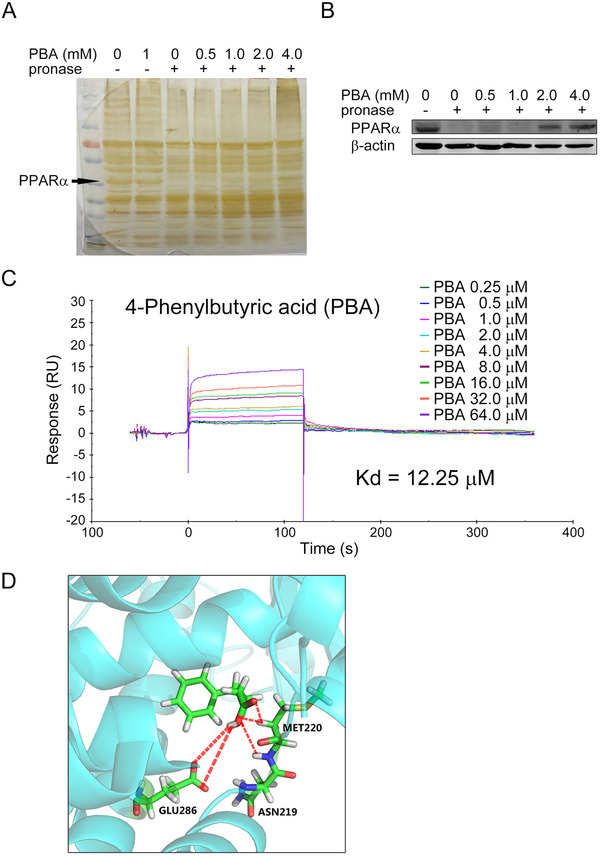
4-PBA alone didn't cause liver tumor in long term. However, it promoted liver tumorigenesis in HCC mice models via initiation of liver cancer stem cells (LCSCs) through Wnt5b-Fzd5 mediating β-catenin signaling. Peroxisome proliferator-activated receptors (PPAR)-α induced by 4-PBA was responsible for the activation of β-catenin signaling. Thus, intervention of PPAR-α reversed 4-PBA-induced initiation of LCSCs and HCC development in vivo. Further study revealed that 4-PBA could not only upregulate the expression of PPAR-α transcriptionally but also enhance its stabilization via protecting it from proteolysis. Moreover, high PPAR-α expression predicted poor prognosis in HCC patients.
4-PBA could upregulate PPAR-α to initiate LCSCs by activating β-catenin signaling pathway, promoting HCC at early stage. Therefore, more discretion should be taken to monitor the potential tumor-promoting effect of 4-PBA under HCC-inducing environment.
4-苯丁酸(4-PBA)是一种低分子量脂肪酸,已在临床实践中用于治疗遗传性尿素循环障碍。在以前的报告中,它作为一种化学伴侣,抑制内质网(ER)应激和未折叠蛋白反应信号。一些研究表明,它在小鼠模型中具有抗肝纤维化的作用。然而,其在肝癌发生中的作用尚不清楚。
单独或联合使用二乙基亚硝胺(DEN)给予 4-PBA,以研究其对肝肿瘤发生的长期影响。还观察了使用睡眠美人(SB)系统共表达 hMet 和 β-连环蛋白点突变(S45Y)的致癌基因诱导的肝细胞癌(HCC)小鼠模型中 4-PBA 的作用。使用 RNA 测序和 PCR 阵列筛选涉及的途径和基因。进行了体外和体内研究,以探索 4-PBA 对肝脏的影响并验证潜在机制。
单独的 4-PBA 不会导致长期的肝肿瘤。但是,它通过 Wnt5b-Fzd5 介导的β-连环蛋白信号转导启动肝癌干细胞(LCSCs),从而促进 HCC 小鼠模型中的肝肿瘤发生。4-PBA 诱导的过氧化物酶体增殖物激活受体(PPAR)-α负责激活β-连环蛋白信号转导。因此,干预 PPAR-α 可逆转 4-PBA 在体内诱导 LCSCs 和 HCC 发展。进一步的研究表明,4-PBA 不仅可以通过转录上调 PPAR-α 的表达,还可以通过保护其免受蛋白水解来增强其稳定性。此外,4-PBA 高表达可预测 HCC 患者的预后不良。
4-PBA 可以通过激活β-连环蛋白信号通路上调 PPAR-α 来启动 LCSCs,从而促进早期 HCC 的发生。因此,在 HCC 诱导环境下,应更加谨慎地监测 4-PBA 潜在的促肿瘤作用。